

How to Tell if It’s Disease or Stress on Tomato Plants
Views: 618
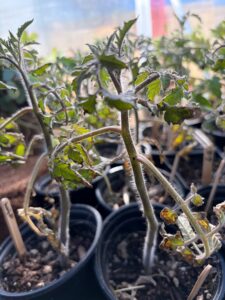
An entire flat of “Wapsipinicon Peach” tomatoes looked awful this spring with inward curling leaves and crispy edges. I almost tossed the entire lot. My initial concern was a viral infection, which I didn’t want to pass along to my other plants, but something in my gut (or 40+ years of gardening!) told me to hang onto them. I did. And after I planted one in a Wall-O-Water a couple of weeks ago, it now looks perfectly healthy, confirming my suspicion of a physiological problem. But how can you tell the difference? Here are a few ways to determine whether it’s a stress-related problem or a disease.
Key to Common Problems of Tomatoes
Is It Just One Variety?
Even though the “Wapsi Peach” (as my Iowa friend tells me they are called) tomatoes looked sickly, my first reason to pause was that it was the entire tray. Every Wapsi plant looked bad, but none of my other varieties did. If it were a disease issue, chances are at least one other plant variety would show signs. I kept the Wapsi tomatoes away from the others to some degree, just to be safe.
Damage Patterns Are Symmetrical
The other odd symptom was that the damage was nearly identical across all the Wapsi Peach plants. If you’re dealing with a pest or a disease, you’ll usually see erratic patterns. Some diseases, such as Early Blight, typically first appear as lesions on the lower parts of the plant. This holds true for Septoria Leaf Spot.
Other issues, like herbicide damage and bacterial canker, are typically found primarily on new growth. For the Wapsi tomatoes, it was consistent throughout the plant regardless of the leaf age.
It Didn’t Follow General Disease Symptoms
There’s no doubt that curling leaves and crispy edges are potential indicators of disease. But one or two symptoms don’t create a diagnosis. Sorting through potential culprits, nothing fit. Once again, this made me consider the physiological aspect, especially because the Wapsi Peach is an heirloom variety. Although many heirlooms are beloved for their history and flavor, their weakness is often a lack of vigor. This doesn’t mean all heirlooms are like this.
Choosing Disease and Pest Resistant Seeds
Could It Be Herbicide Drift?
One other aspect to consider is herbicide drift, which can travel farther than we think and affect new plants particularly easily. Of course, because these features began showing up when the plants were still indoors, that was quickly ruled out in this situation.
How About Mineral Deficiencies?
OopsOriginally, I also speculated on specific mineral deficiencies, though I was puzzled about what they might be, since they were growing in the same potting soil as every other tomato this year. It didn’t make sense that one variety would thrive while another struggled, although once again, these are heirlooms.
Mineral deficiencies can often mimic disease issues. You might have yellow or distorted leaves, crispy edges, and distinct veining with a lack of magnesium, potassium, nitrogen, calcium, or iron. While this can be exacerbated with stressful conditions such as inconsistent watering or heat stress, it didn’t seem to answer the whole question.
Does It Thrive In a Different Environment?
The answer occurred when I planted the Wapsi Peach outside. I figured it was a live-or-die moment. Within a week, it started to look better, and now you can’t even tell the difference. I planted another plant five days ago, and I already notice improvements. That answers my question. It is a physiological response by this specific variety.
It’ll be interesting to try this Wapsi Peach this summer because it looks like a delicious tomato that deserves its popularity, but we’ll see if I grow it again next year. It’s unnerving to have plants that don’t look healthy, and it’s hard to even give them away to friends. But at least it’s good to know that they are healthy and are just a little fussy at the beginning.
Meet Amy Grisak

Amy is a freelance author and photographer in Great Falls, MT who specializes in gardening, foods, and sustainable agriculture. She provides information on every kind…
Amy's Recent Posts
Pros and Cons of Setting Out Plants Early
Beetles: The Good, the Bad, and the Ugly
Amy's Videos
Membership Has Its Perks

- Ask The Expert Questions
- Newsletter Archive
- PlantersPlace Magazine
- Members Photo Gallery
- Product Ratings & Reviews
- Garden Club Samples
Here’s more information about gardening that you’re going to want

Watch a Gardening Video
Learn About Osmocote Products

Read a Gardening Blog