

The Art of the Rolling Harvest: Portable Patios
Views: 405

What’s a Mobile Garden?
For most gardeners, permanence is a luxury. Whether you are navigating rental restrictions, managing a shifting event space, or simply chasing the sunlight across a shaded patio, portability becomes powerful. Designing a container garden with mobility in mind does not mean sacrificing aesthetics or yield; rather, it turns your garden into a dynamic, living system that can adapt to both seasons and your lifestyle. Dive into the art of the rolling harvest: portable patios!
Why Weight Matters
The central idea of a mobile garden is “weight management.” Traditional terracotta and concrete pots are beautiful, but they are anchors. Heavy anchors. To keep your garden mobile, prioritise lightweight materials like high-density resin, fibreglass, or woven fabric containers. These materials reduce the load significantly, ensuring that even when filled with wet soil, the container remains moveable. Fabric grow bags, like this 30 Gallon “Root Pouch” from Home Depot, are a favourite among mobile gardeners. They feature sturdy handles and breathable walls that air-prune roots, preventing them from becoming root-bound while making the entire plant easy to lift and shift.
Move It!
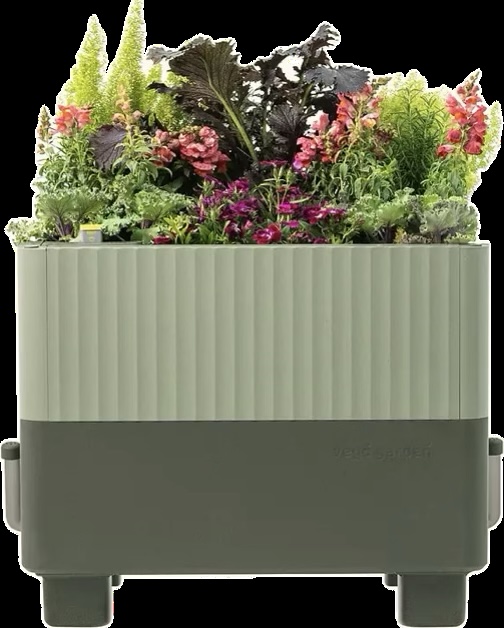
Mobility also unlocks the strategy of “sun chasing.” In urban environments or balconies with limited exposure, a static plant might only receive four hours of light. By placing heavy feeders—like tomatoes, peppers, or citrus trees—on rolling caddies or in planters with built-in casters, you can rotate them throughout the day to maximise solar intake. Vēgo offers this rolling cutie made especially for citrus trees. This technique is equally valuable for “season extension.” When an early frost threatens, a mobile garden isn’t doomed; it simply rolls indoors or under a covered awning, allowing you to keep tender perennials like lemons or hibiscus alive year-round. Another great option, especially if you REALLY like your pretty [heavy] containers, is adding wheels to them. DeVault makes a 16″ square plant dolly with handles that is a great way to give motion to what you are already working with. Instead of repotting your favourite ceramic pot, place it on a heavy-duty dolly. The aforementioned can handle up to 500 pounds and uses rubber wheels rather than plastic, which helps roll smoothly over concrete joints and pavers without getting stuck. A triumph!
Power Towers
Finally, consider taking the high road. Go vertical! Stackable modular towers allow you to grow as many as fifty plants in the footprint of one. I love this one the Garden Tower 2 Move and Grow Bundle is a one-stop solution from Ed’s Plant Shop and More. It’s a fantastic choice for high-yield gardening in tight spaces like balconies. A composting vertical system that occupies just 4 square feet boasts a specialised caster kit that allows you to rotate the massive tower 360 degrees. The plants on the “back” side (there is no actual back side)get equal sunlight without needing to disassemble the stack. This a particularly good choice for vegetable gardening.
If you opt for a similar model, note that because they are often built around a central water column or composting tube, they can be heavy. Mounting them on a heavy-duty dolly transforms them into a spinning salad bar. You can rotate the tower daily to ensure even growth on all sides, preventing the “blind side” die-off previously mentioned. By embracing these mobile strategies, you stop fighting your environment and start working with it, creating a lush sanctuary that moves where you need it, when you need it.
Meet Elizabeth Morse

I specialize in creating productive gardens for my clients (garden consults), showing them how to use fresh foods (private chef & cooking classes) and enjoying…
Elizabeth's Recent Posts

Seasonal Swaps: Dahlias for HOT Summers
The Anatomy of a Perfect Pot
Elizabeth's Videos


Membership Has Its Perks

Become a registered user and get access to exclusive benefits like...
- Ask The Expert Questions
- Newsletter Archive
- PlantersPlace Magazine
- Members Photo Gallery
- Product Ratings & Reviews
- Garden Club Samples
More information about container gardening that you’re going to want

Gardening Podcasts

Got a Container Gardening Question?

Learn About Osmocote Products