

8 Summer Flowers for Pots That Bloom Nonstop All Season
Views: 1894
Specially chosen for their resilience, these 8 annuals excel in containers, maintaining their beauty through triple-digit heat. While deadheading is unnecessary, a strategic mid-season pruning can work wonders. I love the notion of pretty, low-maintenance planters. Trimming these varieties back by half—ideally timed with a summer getaway—results in a revitalised display of blooms that often surpasses the plant’s initial growth. Here are 8 summer flowers for pots that bloom nonstop all season:
Angelonia
Also known as Summer Snapdragon, Angelonia is an ideal accent that loves full sun and handles dry spells with ease. It won’t wilt in the heat and the pure white blooms pop beautifully against green foliage and other colourful annuals. Expect Angelonia to grow upward of a foot, and a single mid-season pruning can encourage even more blooms. While the common Serena series is a great starting point, I prefer the lush, trailing habit (most Angelonia have a vertical habit) of Angelface® Cascade Snow from Proven Winners; its crisp white flowers stay vibrant all the way to the ground.
Bacopa
Another delightful trailing plant whose dainty white flowers thrive in everything from part shade to full sun. The key to its success is moisture; these blooms will persist all season long as long as the soil stays consistently damp. If the flowering begins to taper off, simply cut the stems back by half in mid-summer to trigger a fresh flush. While white is the classic choice—especially the exceptionally large and heat-tolerant Snowstorm® Giant Snowflake®—you can also find striking varieties in pink and purple to spill beautifully over the edges of your planters. This cultivar is famous for having much larger, jumbo blooms than other varieties and unlike older varieties, this one is designed to bounce back and return to bloom within just a few days.
Euphorbia
Euphorbia is a versatile essential that works beautifully in both sun and shade, producing a cloud of tiny white blossoms that resemble baby’s breath. Unlike many container plants, this filler is highly drought-tolerant and performs best when you avoid overwatering. It’s also incredibly easy to propagate from cuttings, and many gardeners successfully overwinter it indoors as a houseplant to get a head start on the next season. While there are many versions, Diamond Frost® remains a favourite for its airy texture and nonstop performance and is widely considered the “gold standard” of garden fillers because it masterfully balances a delicate, ethereal aesthetic with almost indestructible toughness. While it looks like a fragile cloud of baby’s breath, it is actually a high-performance workhorse that thrives in scorching triple-digit heat and survives dry spells with ease.
Impatiens
While there are newer, sun-loving varieties on the market, prefer the classic, budget-friendly types that I can buy by the flat to brighten up the shady corners of my garden. I was recently surprised to find that these traditional favorites can actually handle quite a bit of sun as well. For me, these flowers are nostalgic and classy; they remind me of the giant pots of white Impatiens my mother kept all around our swimming pool when I was a child.
To recreate that timeless look, I highly recommend the Super Elfin™ White series—they are exceptionally reliable, bloom early, and provide that crisp, clean aesthetic that never goes out of style. It is the go-to cultivar for anyone buying by the flat because it is bred specifically for high-volume planting. It has a compact, mounded habit that stays tidy in containers without getting “leggy” too quickly. Most importantly, it is famous for its “basal branching,” which means the plant fills out from the bottom up, creating a solid carpet of white blooms that can handle both deep shade and occasional sun exposure.</p>
Petunias
While Petunias are famous for their love of full sun, I’ve found they are surprisingly adaptable, performing beautifully even in partial shade. Although many gardeners spend time deadheading to boost blooms, not necessary. Again, I find that a single mid-summer ‘haircut’—cutting them back by about half—is more than enough to keep them vibrant. They are remarkably resilient when it comes to watering and offer a true rainbow of color options, though I’m particularly partial to the rich pinks and purples. While high-end cultivars are tempting, I am always satisfied with the reliable performance of more affordable six-pack varieties like the ‘Dreams’ series. In shades like ‘Dreams Midnight’ or ‘Dreams Rose Morn,’ these plants provide a lush, professional look without the premium price tag.
Salvia
Salvia is a fantastic choice for adding height and structure to a container, especially the striking ‘Victoria Blue’ variety. Victoria Blue stands out for its intense, deep violet flower spikes that provide a striking vertical “thriller” element and a rare pop of true blue in high-heat containers. It is also remarkably resilient, often surprising gardeners by self-sowing or returning after mild winters while effortlessly attracting butterflies and bees all season long. They are famously drought-tolerant and perform best in full sun, though they are versatile enough to handle partial shade quite well. Just a quick word of advice: always check the projected height on the tag before you buy. Some Salvias can become quite tall, making them better suited for larger pots rather than small, compact containers.
Verbena
While I adore the varied shades of Verbena, many varieties I’ve tested require frequent trimming to keep the blooms coming. That isn’t the case with ‘Imagination’ Verbena’, an award-winning cultivar that stays covered in deep violet-purple clusters without the extra work. These plants are incredibly versatile, performing well in everything from partial shade to full sun, and while they can handle a bit of drought, they truly thrive when kept consistently moist. Unlike many trailing types, the ‘Imagination’ variety is especially useful for adding airy height and texture to your container arrangements.
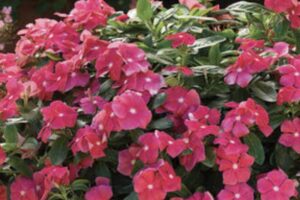
Vinca
Often called periwinkle, Vinca is a sun-loving powerhouse that is remarkably drought-tolerant, making it much more resilient than its shade-loving lookalikes. While the plants stay relatively compact in my containers, they provide a steady, vibrant pop of color that lasts all summer. For a variety that truly thrives in the heat, I highly recommend the Cora® Cascade Cherry Vinca; it is specifically bred to resist soil-borne diseases and offers a lush, trailing habit that fills a pot beautifully.
Achieving a vibrant, low-maintenance display from May until frost is all about selecting the right ‘heatproof’ champs. By combining the vertical interest of Victoria Blue Salvia, Imagination Verbena, and Angelonia with the colorful versatility of Petunias, Vinca, and Impatiens, you create a lush, resilient foundation. Filling the gaps with the airy ‘mist’ of Diamond Frost Euphorbia and the delicate trails of Snowstorm Giant Snowflake Bacopa completes the look, providing a variety of textures that thrive even when temperatures top 100 degrees. The secret to their longevity is a simple mid-summer trim; by cutting these varieties back by half before you head off on vacation, you ensure that you return to a container garden that is refreshed, rejuvenated, and blooming even more vigorously than when you left.
Meet Elizabeth Morse

I specialize in creating productive gardens for my clients (garden consults), showing them how to use fresh foods (private chef & cooking classes) and enjoying…
Elizabeth's Recent Posts
Seasonal Swaps: Dahlias for HOT Summers
The Anatomy of a Perfect Pot
Elizabeth's Videos
Membership Has Its Perks

- Ask The Expert Questions
- Newsletter Archive
- PlantersPlace Magazine
- Members Photo Gallery
- Product Ratings & Reviews
- Garden Club Samples
More information about container gardening that you’re going to want

Gardening Podcasts

Got a Container Gardening Question?
Learn About Osmocote Products