
Corn Earworm on Eggplant
Views: 1
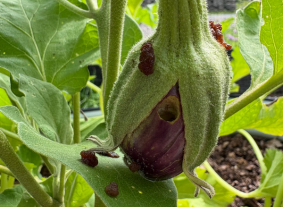
Eggplant can be a magnet for hungry garden pests, and one of the more frustrating is the corn earworm. I recently experienced some pest damage on a growing eggplant fruit in my garden, and after some research concluded it was most likely caused by something called the corn earworm.
Despite its name, this caterpillar doesn’t limit itself to corn. It also feeds on eggplant, tomatoes, peppers, and a wide range of other crops. On eggplant, the biggest problem may not be what the caterpillar eats on the outside of the plant, but what happens when it tunnels into a developing fruit.
What Is a Corn Earworm?
The corn earworm (Helicoverpa zea) is the caterpillar of a night-flying moth. Corn is one of its preferred hosts, but the larvae also feed on eggplant, tomatoes and other vegetables. They’re sometimes called tomato fruitworms when they’re found feeding on tomatoes.
By the time I noticed the damage it left behind, the corn earworm has long gone. I read that these caterpillars vary considerably in color, ranging from green to brown, pink or nearly black. They have a brown head and usually have alternating light and dark stripes along the body. The adult moths lay their eggs singly on host plants, and the tiny caterpillars begin feeding after they hatch.
How to Identify Corn Earworm Damage
As I recall, I noticed a few dots on a leaf that could have developed into the corn earworm caterpillars. Don’t be like me and not do anything about possibly developing pests. Inspect your eggplant plants regularly, especially once they’re in fruit production mode. Corn earworm caterpillars may chew on leaves, stems, flowers, and other plant parts, but developing fruit is particularly vulnerable. The caterpillar can bore directly into the fruit, leaving a hole and tunneling inside.
Frass is another big clue. The caterpillar’s excrement, aka frass, can accumulate around the entry hole or inside the fruit. In the accompanying photo, the brown material around the opening in the eggplant is consistent with frass from a caterpillar feeding inside the fruit. Once inside a fruit, a caterpillar is difficult to reach with a spray, and its feeding damage can create openings for bacteria and fungi that cause additional decay.
Damage isn’t limited to the fruit, either. Young larvae may feed on shoots and other tender plant tissue, so check stems and petioles for holes or chewing damage as well. I did notice a small hole further up on the petiole of this particular eggplant, as well as the giant hole in the fruit.
How to Manage Corn Earworms
Check your plants every time you are in the garden. Look over leaves, flowers, stems and developing fruit, and remove damaged fruit and any caterpillars you find. Don’t leave damaged fruit on the plant or in the garden.
For gardeners who choose to use an insecticide, timing is important. Treatments are most effective against young caterpillars before they tunnel into protected plant tissue or fruit. Products containing Bacillus thuringiensis (Bt)—a biological control product—can be effective against young larvae, but always make sure a product is labeled for use on eggplant and the particular pest, and follow the label directions.
Once a corn earworm has burrowed into an eggplant, there’s not much you can do to save it. Bypass the compost bin and chuck it in the trash so those pests don’t live another generation.
For my part, I’ve decided to invest in some insect netting for the next growing season.
Meet Ellen Wells

When you’re raised on a farm, you can’t help but know a thing or two about gardening. Ellen Wells is our expert on edible gardening.…
Ellen's Recent Posts
Testing DIY Ollas in a Vegetable Garden
Baby Jack Eggplant
Membership Has Its Perks

- Ask The Expert Questions
- Newsletter Archive
- PlantersPlace Magazine
- Members Photo Gallery
- Product Ratings & Reviews
- Garden Club Samples
More information about edible gardening that you’re going to want

Edible Gardening Videos

Edible Gardening Podcasts

Got a Edible Gardening Question?