
Curing Sweet Potatoes: How to Prepare Your Harvest for Storage
Views: 8
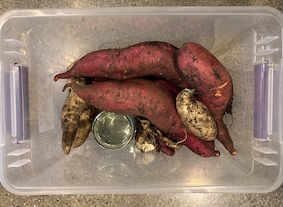
In my previous blog post, I told you about how my crop of sweet potatoes fared this summer. Specifically, I compared the white-skinned White Bonita and the burgundy pink-skinned Bayou Belle. After harvesting sweet potatoes, curing them is an important step before long-term storage.”
Why is Curing Sweet Potatoes Important?
That is an excellent question. The goal of curing sweet potatoes is not about drying them. The aim with curing is to heal any damage that may have occurred during harvest while conditioning them for long-term storage.
Digging and handling them in general can cause tiny cuts, scrapes, and bruises in the delicate skin. During curing, the sweet potatoes develop a protective layer over these wounds, reducing moisture loss and the chance of rot.
Curing also thickens and strengthens the outer skin. While harvesting I noticed merely touching them with my fingers causes the very thin skin to slip away from the flesh. Curing the skins makes them less vulnerable to damage during handling and storage.
Other reasons to take the time to cure your sweet potatoes include improved storage life, flavor and texture.
How to Cure Sweet Potatoes After Harvest
One quick note before we begin the curing process: Don’t wash your sweet potatoes before curing. That will injure the skins. Carefully brush off any loose soil. You can scrub for proper dirt removal later on.
Once the tubers are harvested, they need to be placed in a warm and humid environment for seven to ten days. Ironically, most of us harvest sweet potatoes in October or later when the weather has become cool and dry. That means you need to create a warm and humid environment yourself.
While some folks will close off a room, turn up the heat and add in a humidifier, a YouTuber known as The Millennial Gardener developed technique that doesn’t sacrifice one of your rooms and waste precious heat. He places the sweet potatoes in a sturdy plastic storage bin such as you would use for storing shoes or seasonal decorations. For humidity he adds a large (gallon or less) water-filled jar (no cover) to the bin as a source of humidity.
But wait, there’s more! To create the warm conditions, The Millennial Gardener sets the bin on top of a seedling heat mat connected to a thermostat. He sets the thermostat to 85F, inserts the thermostat’s heat probe into the bin, and sets the bin’s cover on loosely. If covered tightly, the warm, humid and stale conditions are perfect for encouraging rot. And we don’t want that!
My Sweet Potato Curing Setup: A DIY Simple Solution
I don’t have a room I can seal off and turn the temperature up high. I also don’t want to invest in a seedling heat mat nor a thermostat to go along with it. What do I have? I have a very small room at the core of my house where my washer, dryer and small chest freezer live. The room is barely twice as wide as the machines themselves. But thanks to the freezer being on constantly, the room remains at least 78F at all times. More when the dryer is on. I simply set up the bin as the YouTuber recommended and counted on the heat of that little room to create some humidity.
After the 7-10 day curing process, he recommends storing the sweet potatoes in a cool, dark place for at least six weeks for the flavor to really develop. That’s where I am right now in my post-harvest process. I’ll report back on that in an upcoming post.
Meet Ellen Wells

When you’re raised on a farm, you can’t help but know a thing or two about gardening. Ellen Wells is our expert on edible gardening.…
Ellen's Recent Posts
Growing Sweet Potatoes: White Bonita vs. Bayou Belle
Growing Sweet Potatoes: Slips vs. Old Tubers
Membership Has Its Perks

- Ask The Expert Questions
- Newsletter Archive
- PlantersPlace Magazine
- Members Photo Gallery
- Product Ratings & Reviews
- Garden Club Samples
More information about edible gardening that you’re going to want

Edible Gardening Videos

Edible Gardening Podcasts

Got a Edible Gardening Question?