

Goji Berries are Delicious, but a Little Invasive
Views: 5105
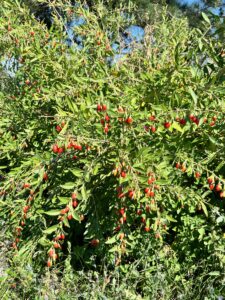
A friend gave me a Goji berry plant a few years ago. She warned me that it can be a little invasive, but I thought I had the perfect place. I was wrong. The Goji berry is taking over, and now I need to decide what to do with it.
Goji Berries Have All the Right Stuff
It makes sense to want to grow a hearty shrub that produces delicious berries, which are almost as superfood-like in terms of antioxidants and health benefits. Gogi berries, Lycium barbarum, fit the bill. Native to Asia, they’ve been used for thousands of years for food and medicine, including regulating insulin, combating glaucoma, and improving liver function, among many other positive attributes.
Additionally, it thrives exceptionally well in my clay-heavy, alkaline soil, despite harsh winters and a significant lack of precipitation. Adding to its appeal, the deer don’t eat it because of its thorny nature. What’s not to love?
But They Take Over
Well, this year, runners began appearing in the keyhole garden as well as the herb spiral, growing through several feet of soil. Like giant tentacles below the mulch, my guess is the runners have radiated at least 10 feet from the original plant. I will have to deal with this this fall, or risk it completely taking over two of my favorite beds.
My plan is to completely dig out the main plant, along with as many small ones as I can remove fairly intact, and I will plant them more towards the back of the property. They will make an exceptional windscreen. I figure that if I can do this in the fall, when we naturally have more moisture and a lower risk of stress due to heat or drought, they should take off in the spring. And even if they grow at the same rate, as they are now, they’re not gonna hurt anything. They can spread until its heart’s content, and we will have plenty of berries.
Growing Your Own Goji Berries
If you want to grow your own Goji berry, which I highly recommend, you can start them from seeds. One of the easiest methods to do this would be winter sewing, typically around the start of the New Year. The way I like to do my winter sowing is to cut a window in a milk jug and add approximately 3 to 4 inches of sterile potting mix. I scatter the seeds, water it thoroughly, tape the window shut, and place it outside in the snow. Winter conditions stratification is often required by plants such as the Goji berry, and it is remarkable how well things germinate.
Pests and Diseases of Goji Berries
Another option if you’re starting your own plans is to dig a runner from somebody else’s garden, or find bare-root plants somewhere. Soak them in water for about 8 to 12 hours first, and then plant them where you want them.
As I mentioned, despite our poor soil, they are thriving. I would ensure that ample water is provided during the first year to establish the plans. Afterwards, they are impressively drought-tolerant, although I do water at least once a week when we are going to a dry spell. But the more you water, the happier the plants will be, and the more berries you will have.
Technically, Goji berries will just keep growing and be happy as a clam on their own, but you can increase production by some careful pruning. In areas of the country that are more humid, it’s useful to trim out branches up to 15 inches high from the soil line to offer better air circulation. There aren’t many diseases that affect Goji berries, although powdery mildew is one notable exception.
When to Harvest the Goji Berries
Harvest the berries when they’re bright, red, and slightly soft. They have a tart flavor, but make a delicious juice. You can also add them to your morning yogurt, salads, or smoothies, or even dehydrate the berries for later use. Of course, you can always freeze them. I have not tried making jams or jellies with them, though, so I’m not sure what amount of sugar and pectin would be needed. I have a lot of berries coming on this summer, so maybe I will pick enough to give that a try.
Goji berries are great when planted in an area where they can spread out. If you’re looking for a hardy fruiting shrub that produces a lot of berries, consider having one in your landscape.
Meet Amy Grisak

Amy is a freelance author and photographer in Great Falls, MT who specializes in gardening, foods, and sustainable agriculture. She provides information on every kind…
Amy's Recent Posts
The Pros and Cons of a Sunflower Forest
Peony Problems
Amy's Videos
Membership Has Its Perks

- Ask The Expert Questions
- Newsletter Archive
- PlantersPlace Magazine
- Members Photo Gallery
- Product Ratings & Reviews
- Garden Club Samples
Here’s more information about gardening that you’re going to want

Watch a Gardening Video
Learn About Osmocote Products

Read a Gardening Blog