

How to Tell the Difference Between Weather Stress and Disease
Views: 948
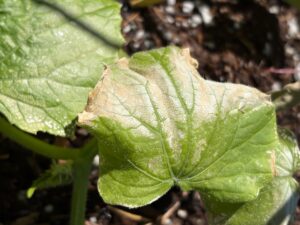
It’s been a whacky weather year! One week, we experienced several days around 90 degrees F, then the temperature plummeted, and we enjoyed a weekend of 40-degree temps and much-welcomed rain. The plants looked rough. I had several friends reach out to ask why their plants looked unhealthy, so I wanted to explain how to tell the difference between weather stress and disease.
What Happens When the Weather Changes Rapidly?
Heat brings its own issues, but when there is a sudden shift from hot, dry weather to cold, wet weather, the plants don’t have time to acclimate, which affects them on a cellular level.
Hot and Dry
When we are going through an excessively warm period, transpiration, the loss of water through the leaves, increases. As a result, plants try to conserve water by closing, or at least partially closing, the pores on their leaves. This reaction even affects the roots if the soil becomes too warm, because the roots will not utilize the soil water. Subsequently, the plant goes into survival mode.
This is why your plants might wilt in the late afternoon during particularly hot spells. And leaves can become sun scorched. I noticed some of my cucumber leaves had this appearance, with parts of the foliage turning beige. Other times, plants can yellow or even have leaf edges that turn brown. While this is sometimes a sign of an infection of some sort, when it occurs during or right after a hot, sunny day, you can pretty much bet it is due to the weather and not disease. The reality is that the plants are unable to utilize nutrients because their systems are kind of shut down to deal with the heat stress.
Cold and Wet
This stress is exacerbated when weather conditions change dramatically. In our recent experience, as I mentioned, we went from record-setting daytime temperatures to record rainfall, cold days, and even colder nights.
Preparing and Planting a Garden in a Cold, Wet Spring
When the weather turns cold and wet, plants experience a completely different type of physiological changes to survive. It’s no surprise that root metabolism slows. They don’t pull up and use soil nutrients nearly as efficiently when it is cold. Plus, roots need oxygen, and waterlogged soil lacks it.
The cell membranes in plants also become less flexible when there is a sudden, dramatic shift in temperature. It takes a little while for the plants to catch up. This is one reason why I wasn’t overly concerned with the odd-looking veining and discoloration on my tomato plants. It happened right after this major weather change, plus the rest of the plant looks fine.
How to Determine Whether It’s Stress or Disease
If you were going through a similar situation in your own garden, you need to ask yourself a few questions:
~ Are all the similar plants affected? Looking at the tomatoes, they all seem to have a similar leaf pattern regardless of the species. And this occurred right after our weather shift. Stress often creates a more even pattern, as well. If there are random spots or discolorations, that could indicate disease.
~ Are there distinct spots, rings, fuzzy areas, or obviously rotting portions? If not, I would lean towards weather-related stress.
~ Are the symptoms becoming worse and spreading? This is when you really have to keep an eye on it, because if it appears to affect more of the plant after the weather moderates, you could be dealing with a disease issue.
I know the weather has been erratic across much of the country this year, so I hope this helps you sort out whether your plants are reacting to the added stress or if you have a disease issue to address.
Meet Amy Grisak

Amy is a freelance author and photographer in Great Falls, MT who specializes in gardening, foods, and sustainable agriculture. She provides information on every kind…
Amy's Recent Posts
Does Wildfire Smoke Affect Our Gardens?
What’s Eating My Strawberries?
Amy's Videos
Membership Has Its Perks

- Ask The Expert Questions
- Newsletter Archive
- PlantersPlace Magazine
- Members Photo Gallery
- Product Ratings & Reviews
- Garden Club Samples
Here’s more information about gardening that you’re going to want

Watch a Gardening Video
Learn About Osmocote Products
Read a Gardening Blog