

What to do About Apple Scab and Pear Scab
Views: 1704
It’s been a glorious summer with more rain than many of us can remember, but of course, we need to have something to talk about in the garden. This increase of moisture in cooler temperatures has led to some fungal issues in the fruit trees. Today we’re gonna talk about apple scab in pear scab, including how to identify it and what you can do.
What are those blotches?
A week or so ago I was checking my beloved pear tree that is producing fruit for the first time in eight or nine years. Despite wrapping it with poultry netting in a spiral fashion, creating a sort of maze, the deer simply pushed through everything and ate some of the pears on the perimeter of the tree. Grant and I have since put up a tall fence around the tree in the hopes that we can salvage the remaining pears.
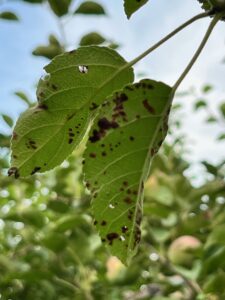
Yet, looking at the tree I noticed the upper leaves had leathery like markings on them. They didn’t seem to be suffering, just discolored. My initial thought is it was possibly hail, damage or stress from the extreme winds that we’ve had on occasion.
When I went to the west side of the mountains in the Flathead Valley last week, I examined my friends, mackintosh apple trees, and noticed the same on every one of them. The fruit on the trees looks great, but the leaves have a distressing appearance.
Why Do Our Apple Trees Still Have Their Leaves?
Scab is the culprit
Looking into the matter for both types of trees, the most likely culprit is apple and pear scab. These are fungal infections caused by Venturia inaequalis, and Venturia pirina, and they are most likely to arise during the cool wet weather, as we just experienced. The good news is, it most likely will not affect the fruit because the infection came on after the fruit set this spring. The bad news is it is potentially persistent without treatment.
Apple scab of apples and crabapples
What to do this year
This year, there isn’t a whole lot I can do about the situation. As the leaves fall, it is a good idea to break them up and dispose of them elsewhere to reduce the amount of spores in the soil surrounding the trees. That’s about the extent of action this season.
Actions for next spring
Next season is a different story, particularly if we continue in this cooler, wet pattern, which looks like might be the case according to the recent Farmers’ Almanac weather predictions for 2026. If it holds true for our region, we are looking at a cold and wet spring. The one thing I do not want to happen is to have this fungal infection, manifest early in the season and potentially affect the fruit.
One of the tasks in the spring will most likely be spraying with a copper or sulfur fungicide prior to bud break, then again when the first bits of green becomes visible in the spring. Experts recommend no overhead watering, but this is hard to avoid when Mother Nature does it for us.
I’ll also want to prune the trees more heavily. This year, I took out maybe 20%, but the canopy can be opened significantly more. This allows better air circulation and re-juices the fungal pressure. If there is some infection last year, if there is more space between the leaves, other parts of the tree may not become infected.
I am very grateful for the abundant fruit production this year, but I’m a little discouraged to have this trade off with the scab issues in both the apples and the pears. Hopefully by staying on top of it, we can have another great harvest next year without leathery looking spots on the leaves.
Meet Amy Grisak

Amy is a freelance author and photographer in Great Falls, MT who specializes in gardening, foods, and sustainable agriculture. She provides information on every kind…
Amy's Recent Posts
The Pros and Cons of a Sunflower Forest
Peony Problems
Amy's Videos
Membership Has Its Perks

- Ask The Expert Questions
- Newsletter Archive
- PlantersPlace Magazine
- Members Photo Gallery
- Product Ratings & Reviews
- Garden Club Samples
Here’s more information about gardening that you’re going to want

Watch a Gardening Video
Learn About Osmocote Products
Read a Gardening Blog