

How to Help Birds Prepare for Cold Weather
By Leslie Miller
With blizzards already affecting parts of the country, it’s time to consider how to help birds prepare for cold weather. Most migrants left their summer nesting areas long ago, while others are still on the move. This is November, but I still see V’s of ducks, geese, and cranes flying south here in the central flyway. Soon the transition from summer to winter populations will be complete, even here in the south.
Birds are naturally well-adapted to surviving winter, but there are some things you may wish to do to help. Food, water and shelter are a birds’ survival priorities. When you help them meet their needs, you get to enjoy their colorful presence all winter. For me, it’s hard to beat the beautiful contrasting colors of cardinals and jays against a snow-covered spruce, pine tree, or cedar.

Cardinal Foraging for Food (photo by Leslie Miller)
Why and What to Feed Your Birds
Birds need to build and maintain a healthy layer of fat in order to survive cold temperatures. In order to stay warm, they need calories to burn, just like people. Food is energy; easy food is easy energy.
Providing reliable, easy access to healthy food is the most beneficial way to help birds any time of the year. This is especially true in winter when natural food sources are scarce or difficult to access due to snow and ice.
Birds have distinct feeding strategies. Many common backyard birds eat a combination of seeds, berries, fruit, nuts, grains, insects, and/or fats. These are often available in commercial wild bird foods.
How to Feed Your Birds
While the species you attract depends on your location, there are some common feeding principles to help birds prepare for cold weather —
- Fill hang-tubes with sunflower seeds such as black oil sunflower seeds. This provides chickadees, titmice, goldfinches, and many other songbirds with a perch, with the food they prefer. Personally, I go through several tubes a day during extreme cold weather. Refill the tubes often if you have a lot of birds. Also, it’s good practice to clean your bird feeders once every two weeks to prevent the spread of diseases.
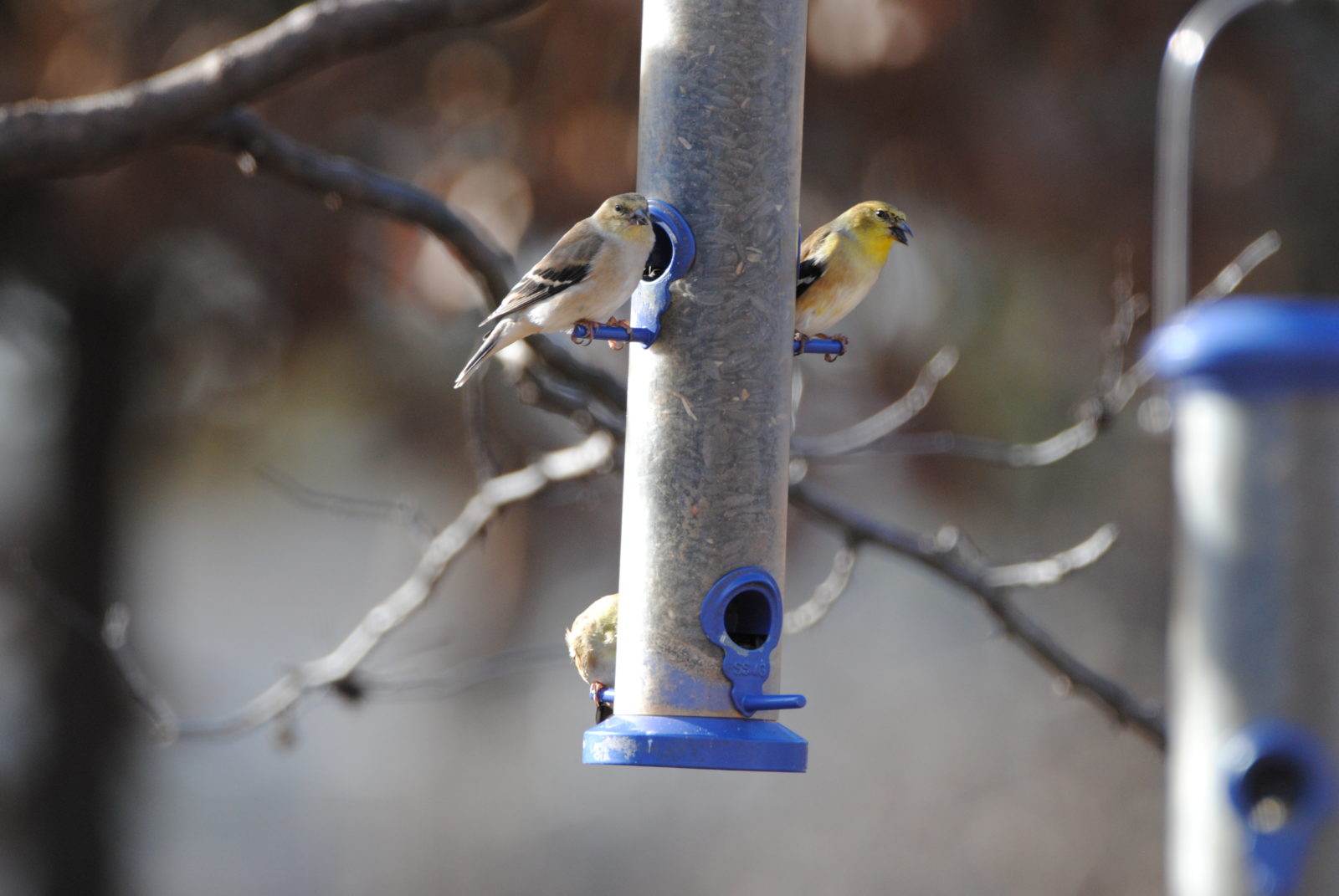
Hang-Tube Feeders (photo by Leslie Miller)
- Scatter cracked or whole corn on the ground for corvids (crows, ravens, and jays) and blackbirds. Even wild turkeys come into my yard for corn. In fact, corn attracts a variety of other animals such as deer, so beware. If you don’t want deer, opossums, and raccoons in your yard at night, don’t put out more corn than will be eaten by your birds during the day.
- Juncos, sparrows, cardinals, and others prefer to scratch on the ground or in low-lying areas for their food. If you use a wild bird mix either use a flat feeder or just spread the food on the ground. When it is snowing, put more food out if it gets covered by the snowfall. Don’t let old food build up or get moldy as this can make birds sick. As with tube-feeders, clean flat feeders routinely, and if you spread the mix on the ground, change the location occasionally.
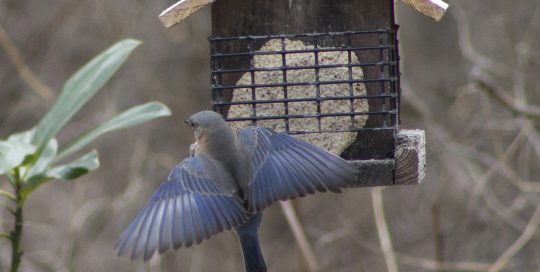
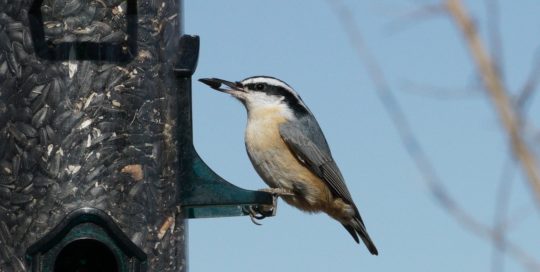
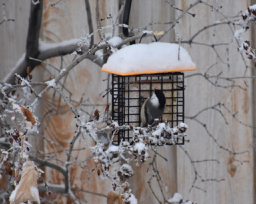
- Suet in hanging feeders is good for woodpeckers, nuthatches, and wrens. Many birds will eat suet, so don’t be surprised if you see a blue jay or chickadee on your feeders, too. Suet feeders should be cleaned frequently, as well.
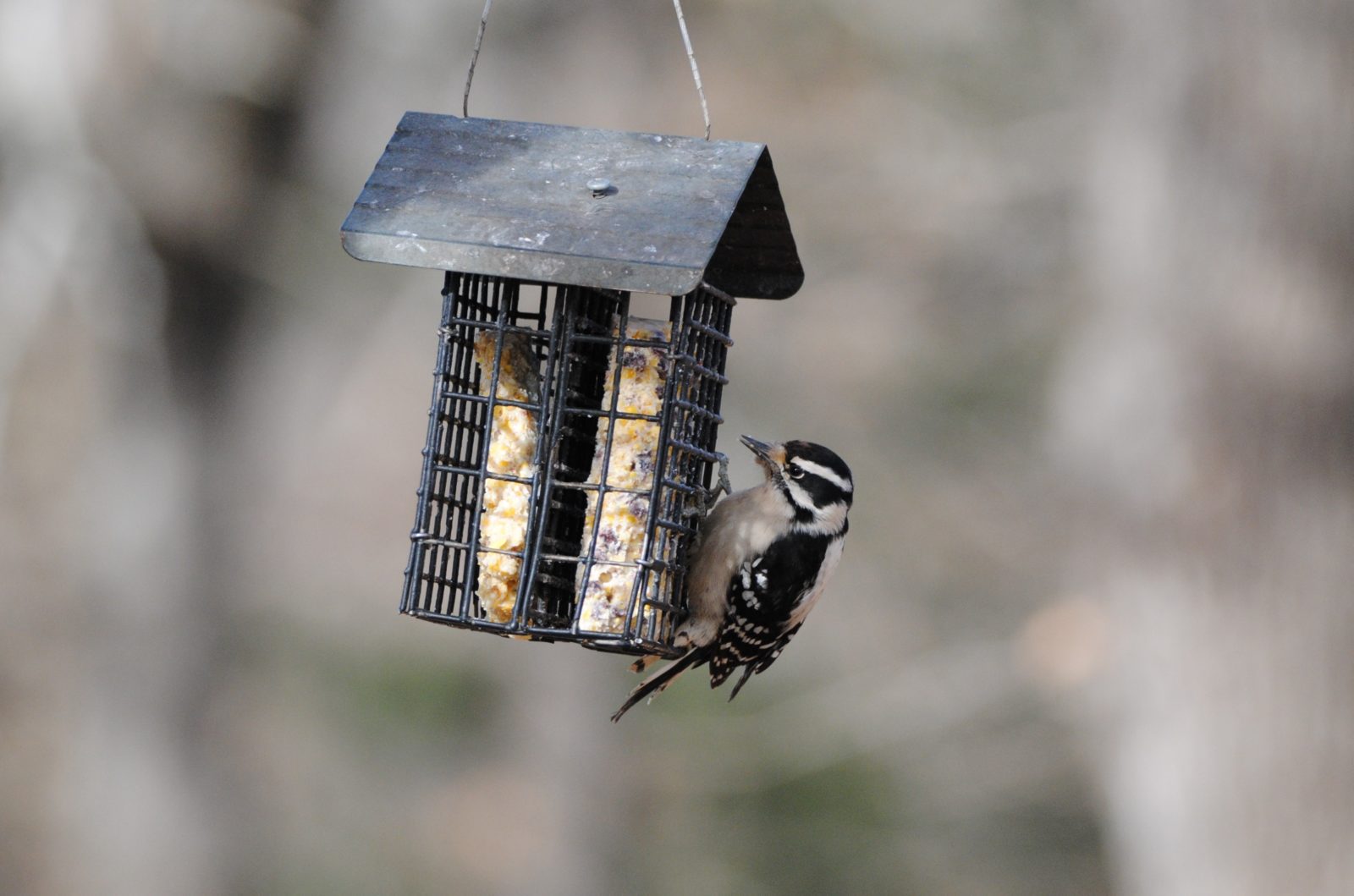
Suet in Hanging Feeders (photo by Leslie Miller)
Location Tips If You Use Bird Feeders
Locate your bird feeders in such a way as to avoid window hits. Here are some strategies to keep birds from hitting your windows:
- Position bird feeders far away enough from the house so birds have plenty of room to fly, even if panicked by a predator such as a hawk swooping through.
- Erect bird feeders next to a window, so if a bird does hit, it will not do so with enough momentum to hurt itself.
- Place bird feeders opposite a windowless part of your house.
- Keep screens on your windows.
- Keep drapes and blinds closed.
How to Provide Food for Birds Without Using a Feeder
Other ways to provide birds with the food they need is to keep an untidy garden over winter. Leave seed-heads in place; build brush piles; and provide safe places for bugs to overwinter. Allow ornamental grasses to remain uncut, leave dead branches where they fall, and create piles of un-mulched leaves. Birds eat bugs. The more bugs you have in your yard, the more food birds will have. Generally speaking, the more variety you have in your landscape, the better it is for birds.
Avoid dead-heading seed-producing flowers and grasses until spring. Leave old berries, fruit, and nuts in place. For many perennials, dead foliage left in place helps insulate them for winter, and the seeds are a food source for many songbirds. I love watching my goldfinches eating coneflower seeds and my chickadees picking the seeds out of my dead sunflowers. Cedar waxwings come through and feast on my pokeberries. I have a small acreage, but we leave the grass un-mowed in certain areas. The tall grass provides both food and shelter.
Brush and leaf piles are very attractive to birds. If you can find a corner of your yard for a brush and/or leaf pile, it will provide a spot where birds can find both food and shelter. It is fun to watch birds scratching and kicking the leaves around in their search for food and insects in the areas I leave unattended. It’s a great way to spot robins and sparrows, just look for the dancing leaves.
A note of caution: If you start feeding birds, you must keep it up during the harshest weather. Once the birds begin to rely on you for food in their daily routine. Suddenly suspending it when temperatures are at their worst could be fatal. Birds may expend energy to visit your yard every day, and if they expend that energy for nothing, it is a potentially costly trip for them. Once you start helping, keep helping, because they are now dependent on your assistance.
The Important of Water in Helping Birds Prepare for Cold Weather
When temperatures drop below freezing, melted water is a very important way to help birds. Adding water to the landscape is an easy way to attract a variety of birds.
There are a number of heated bird baths available commercially. Most of these are electric and require a cord connecting to an outlet somewhere. Some are battery operated. A few are solar-powered. If you like to have a dedicated water source, a heated birdbath is an option.
I do not recommend concrete birdbaths. The do not work very well in freezing weather because they are difficult to empty once the water freezes over. Only use concrete birdbaths if you have a safe way of heating them.
Avoid making birds perch on ice or icy surfaces to access water. If you break the ice on a pond, provide a perch for birds to access the water without falling in or getting stuck.
Whatever the water source, ensure it is shallow enough that birds won’t be injured or drown if they accidentally fall in. Make sure it has a nice rim or projection on which they can perch. I use an old frying pan that is easy to empty and refill.
How to Provide Birds with Shelter
Many birds, singly or in groups, shelter in cavities, holes, or abandoned buildings on cold nights and during bad weather. Bird nesting boxes (bird houses) are a good alternative. If you provide bird houses, make sure they are in good shape and cleaned out before cold weather begins.
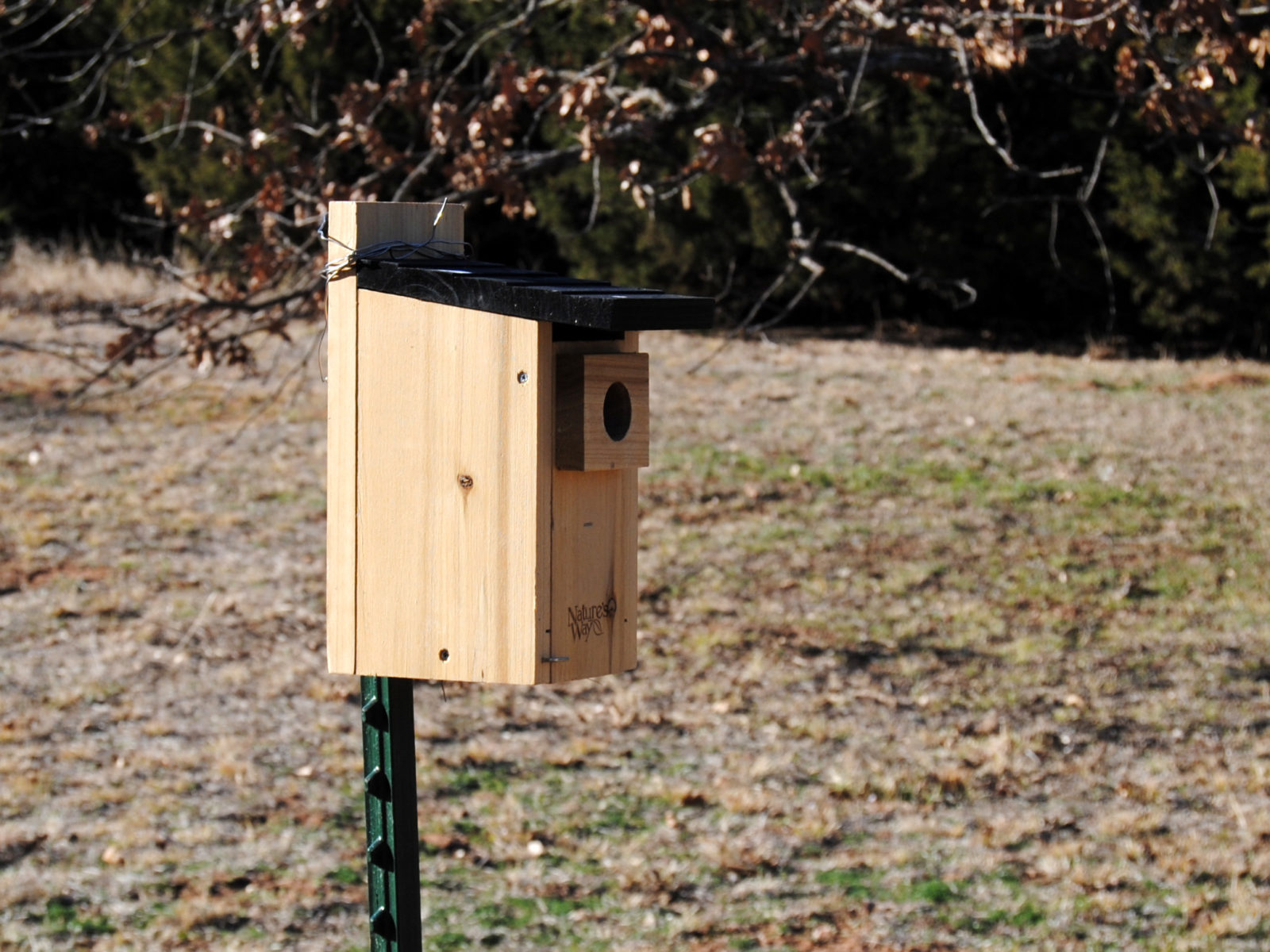
Nesting Box (photo by Leslie Miller)
If you have a property with dead trees or branches that may be safely left in place, woodpeckers often hollow out cavities that provide shelter and nesting holes for many different birds.
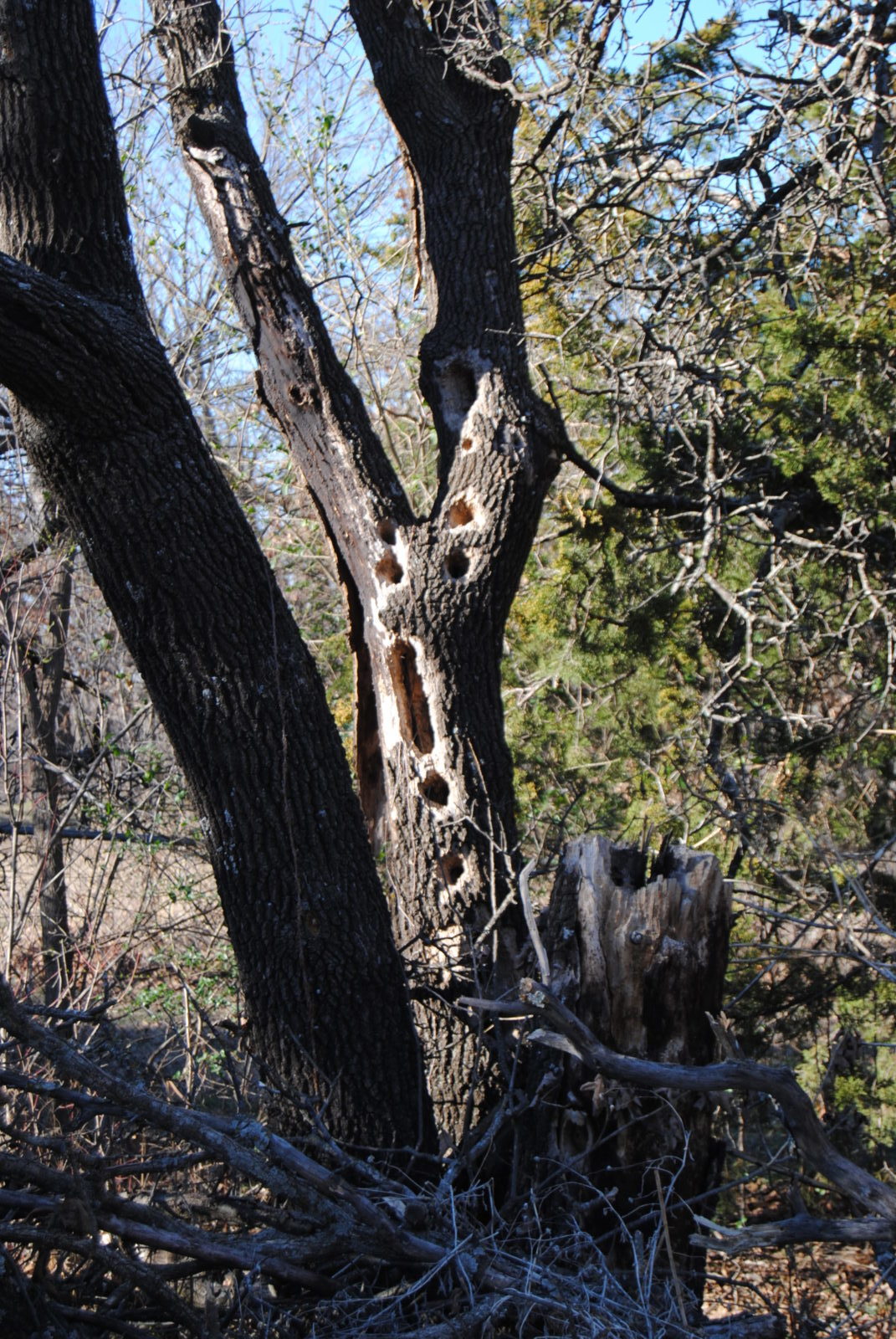
Woodpecker Cavities in Dead Tree (photo by Leslie Miller)
Tall grasses provide shelter to quail, sparrows, and other birds. Brush piles help wrens and a variety of other birds as well.
You can help the birds in your area survive the harshest winter when you focus on providing food, water and shelter.
Related Featured Articles
Related Videos
Related Blogs
Here’s more information about gardening that you’re going to want

Watch a Gardening Video
Learn About Osmocote Products
Read a Gardening Blog