

According to Ferry-Morse, the largest home gardening seed packet company in the U.S., flower seed sales in 2021 grew faster than sales of vegetable seeds. It seems that after a year of isolation and anxiety, people began embracing the ritual of growing plants for beauty’s sake. But the obvious reason? Seeds give you so much more for your money.
Springtime brings with it millions of ready-to-plant beauties. But sometimes starting plants from seed is best. There are thousands more varieties available in seed form than can be found fully grown at the local nursery. And in the case of poppies and Cosmos, they acclimate better to conditions if direct sown in the garden.
Poppies
Our dog, Poppy, died in March. The Jack Russell/Yorkie mix was named for her habit of popping over a fence just to be with us. We decided to make it the year of the Poppy. I had already purchased several varieties, as I did each year because they’re one of my favorite flowers.
The Poppy tribe is extensive, and I’ve just scratched the surface with three members—two in the Eurasian Papaver (puh-PAY-ver) genus, and another from the western U.S. Papaver somniferum (som-NIFF-err-um) is also known as the Opium poppy, but its seeds are used in food as well. It offers an extensive variety of flower colors and shapes, from white to red; from picotee to double forms. It easily self-sows in most climates.
The blood red Remembrance Day Poppy from the First World War was a member of Papaver rhoeas (P. ROH-ee-as), a species that has been hybridized to include ethereal shades of white, purple and pink.
While California poppy resembles other poppies, it’s actually in the genus Eschscholzia californica (es-SHOLT-zee-ah kal-ih-FOR-nik-ah). It’s native to western U.S., but is also easy to grow.
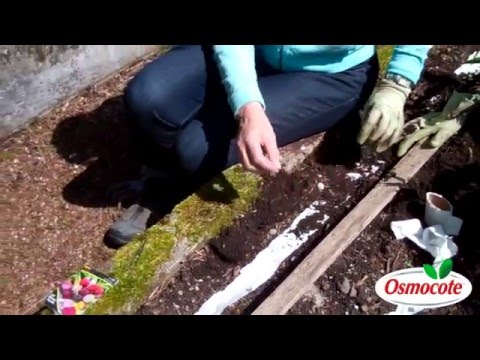
The easiest way to sow the tiny seeds is by mixing them with sandbox sand to help distribute them more easily. Scratch them in lightly with a cultivator, and then gently water in. I planted the seeds as it was starting to rain, saving the last task to nature. Like our Poppy, the plants are popping up in unexpected places, defying my plans and charming me with their resilience.

Cosmos
Just 25 years ago, Cosmos flourished in my very sunny garden. A heavy summer rain would bend their stems and soak their petals, but when the air dried out, up they’d pop, refreshed and ready to go. The most easily-found varieties originate from C. bipinnatus. All range in color from white to red and every shade in between.
Today, my garden’s brightest spots receive around four hours of full sun per day, which is not up to the recommended six or more hours. When Cosmos are grown in less than ideal light conditions, they tend to stretch beyond their stated maximum height. This year I’ll give one of the shorter varieties a try. Cosmos ‘White Pop Socks’ is said to grow just 28 inches tall. In my sun-challenged garden, it might top out at three feet.
For earliest bloom, Cosmos can be started early indoors four weeks before the last frost. But if you have six hours of full sun, and four months of hot summer temperatures, seeds can be direct sown as long as the soil is above 60 degrees F. Whichever method you choose, Cosmos will bloom approximately three months from sowing.
Marigold (Tagetes)
We tend to take Marigolds (Tagetes, pronounced tah-JEE-tees) for granted, either liking or hating their signature scent and waxy petals. In Discovering Annuals, author Graham Rice admits he prefers the French types (Tagetes patula), specifically the taller singles, for their adaptability. He avoids using the African types (Tagetes erecta). which he compares to plastic oranges on sticks. Despite their common names, both originated in Mexico.
The Aztecs bred the marigold for increasingly large blooms. When the Spanish invaded the region in the 1500s, they took marigold seeds back to Spain and then exported them to France and northern Africa. The seeds grew wild in Africa, especially the large double-flowered types. So when seeds, which originated in North America, were imported back into the U.S., they became known as African marigolds. The smaller-flowered types had been cultivated in France, and so became known as French marigolds.
- Sow seeds 6 inches apart and cover with ¼ inch of fine soil.
- Firm soil lightly, water and keep evenly moist.
- Seedlings emerge in 7-14 days.

Nasturtium (Tropaeolum)
When my niece was little, I showed her how to eat flowers. Although only four, she didn’t shy away from the strong taste of a chive blossom, so I introduced her to nasturtiums. Such pretty flowers certainly were fun to nibble, leading her to look around for other edibles. I had to invoke an alternative ending to the story of Sleeping Beauty—the version where she didn’t wake up after eating a poisonous plant. I told my niece not to eat any plant unless she asked me first.
Nasturtiums, or Tropaeolum (trope-ee-OH-lum), are native to the mountainous regions of Peru. A bit on the finicky side, nasturtium sulks in temperatures below 40 degrees F, but prefers cool summer evenings. I start them early so they’re in bloom by mid-June. When the summer heats up, it’s likely they will succumb to insects and humidity. I’ve had luck cutting them back and giving them a shot of weak fertilizer. In around three weeks or so, they start growing a new crop of leaves, and soon after, fresh flowers.
Tips on Tropaeolum:
- Completely cover the seeds as they need darkness to germinate, typically in 10 – 14 days.
- Avoid fertilizing nasturtium, as too many nutrients will stimulate leaf growth at the expense of flowers.
- I’ve had the best luck planting seed in early May for flowers in late June, as they take around eight weeks to flower after they’ve germinated.

Flower seeds are selling out quickly these days. Avoid disappointment by ordering as soon as the online sellers list their latest offerings. Local garden and feed stores generally display seeds after Christmas. If you’re like me, starting flowers from seed will open up a whole new class of gardening.
Seed sources:
Related Featured Articles
Related Videos

Related Blogs
Here’s more information about gardening that you’re going to want

Watch a Gardening Video
Learn About Osmocote Products
Read a Gardening Blog