

Growing Grapes in Containers – The Essentials
Views: 6849
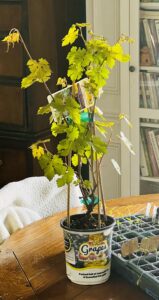
I have a fun tradition in my garden. If I happen upon a plant that shares a name with someone I love, I incorporate it into my plans. For instance, my nephew Hunter was honoured with an acorn squash last year by the same name. My Aunt Georgia lived on Cherokee Parkway and always gets a nod with “Cherokee Purple” tomatoes. My Mom (who goes by Sweetie to the Grandkids) is represented with “Little Sweetie” cherry toms. You get the idea. Imagine my delight when I began researching grape vines to add and discovered, “Vanessa.” The elder daughter of my life-long bestie and my namesake. She is the inspiration for growing grapes in containers – the essentials. I was able to source a plant locally, but bare root plants can be ordered from Fedco Seeds.
To start growing grapes in containers – the essentials are here:
Pro Tip: Select compact varieties that thrive in containers rather than sprawling vineyard types:
- Pixie Grape: Specifically bred for pots; stays around 3 feet tall.
- Somerset Seedless: A cold-hardy red grape with strawberry-like flavour.
- Flame Seedless: A popular, reliable red table grape for warmer climates.
- Marquette: A great cold-hardy wine grape for cooler regions.
- Material: Wooden barrels or light-colored resin pots are best because they don’t overheat the roots like thin, dark plastic.
- Drainage: Ensure the pot has large drainage holes. Consider adding a layer of pebbles or broken terracotta at the bottom to prevent clogging.
- Timing: Plant in early spring while the vine is still dormant.
- Depth: Plant the vine at the same depth it was in its nursery pot, keeping the graft union (the bulge on the stem) at least 2 inches above the soil.
- Watering: Container vines dry out quickly. Check the soil daily in summer; water whenever the top 1–2 inches feel dry.
- Feeding: Use a balanced organic fertilizer in spring. Once fruit appears, switch to a high-potassium feed (like tomato fertilizer) every 2 weeks until ripening begins.
- Support: Install a sturdy trellis, obelisk, or heavy-duty tomato cage immediately to avoid disturbing roots later.
- Pruning: Crucial for fruit production. Every late winter, prune back roughly 80–90% of the previous year’s growth, leaving just a few strong “spurs” with 2–3 buds each.
Meet Elizabeth Morse

I specialize in creating productive gardens for my clients (garden consults), showing them how to use fresh foods (private chef & cooking classes) and enjoying…
Elizabeth's Recent Posts
Potscaping: How to Block City Noise with Containers
The Lazy Gardener’s Secret to Stunning Fall Containers
Elizabeth's Videos
Membership Has Its Perks

- Ask The Expert Questions
- Newsletter Archive
- PlantersPlace Magazine
- Members Photo Gallery
- Product Ratings & Reviews
- Garden Club Samples
More information about container gardening that you’re going to want

Gardening Podcasts

Got a Container Gardening Question?
Learn About Osmocote Products