
Parsley, Flat and Curly
Views: 18909
I received an email from the California-based seed company Renee’s Garden last week suggesting that gardeners had time to sow one last batch of parsley. Along with that information they offered up several suggestions of and descriptions for parsley varieties that readers could try. I was surprised they suggested curly version. Why on earth would someone want to grow an herb that is best used as garnish? And then I was surprised that I was surprised at their suggestion, and then I was embarrassed for myself for being so judgy.
So right then and there I set out to educate myself on the differences between flat-leaved (also known as Italian) and curly (aka French) parsley. There are quite a few! This is what I learned.
Parsley’s Appearance and Texture
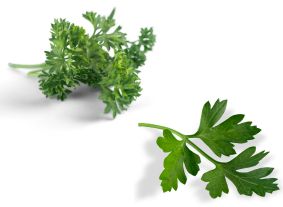
The major difference between the two is visual. The flat-leaved parsley has smooth, dark-green leaves. Many folks (including me) can confuse its flat leaf shape with that of cilantro. Curly parsley is (well, obviously) curly. Its color is somewhat lighter than that of its flat cousin. Its tight curls makes curly parsley a bit more difficult to chop—way more so than the flat-leaved edition.
Flavor and Uses
When it comes to using this herb in cooking, flat-leaved parsley is the favored version. That’s because it has a clean, slightly peppery flavor. Its assertiveness holds up well to cooking and using in warm and hot dishes. That’s why you’ll see it used to top soups and stews and integrated directly into dishes such as sauces, chimichurri and tabbouleh.
Curly parsley, on the other hand, is much milder. Eaten raw, it has a grassy, even bitter flavor, but still not as assertive as the curly version. Folks will chop it finely and add to salads or in other raw applications because it does not lend much flavor when cooked. For me personally, I do not like the feel of its curls on my tongue—perhaps that is why I have been so judgy about it.
Growing
When it comes to the garden, both curly and flat-leaved parsley are easy to grow. They say the flat parsley tends to be a bit more heat-tolerant and faster to mature.
Curly parsley does have one characteristic that flat-leaved parsley does not have—it lends much more visual interest in the garden. Whether in a vegetable or herb garden, or in a mixed container, the curly leaves add lots of texture that adds some excitement to a mixed planting. I may grow it just for that!
Preserving Parsley
Saving your parsley beyond harvest is different for both types. You can freeze the flat-leaved types and it’ll keep its flavor and color well when chopped and frozen in ice cube trays with a little water or olive oil. It’s better to dry curly parsley because it does not hold up to freezing well at all.
And now you know the differences between the two! Whichever you use—whether used fresh or preserved—parsley only enhances flavor to nearly anything salad or cooked dish you prepare.
Meet Ellen Wells

When you’re raised on a farm, you can’t help but know a thing or two about gardening. Ellen Wells is our expert on edible gardening.…
Ellen's Recent Posts
Growing Sweet Potatoes: Slips vs. Old Tubers
Growing Arugula
Membership Has Its Perks

- Ask The Expert Questions
- Newsletter Archive
- PlantersPlace Magazine
- Members Photo Gallery
- Product Ratings & Reviews
- Garden Club Samples
More information about edible gardening that you’re going to want

Edible Gardening Videos

Edible Gardening Podcasts

Got a Edible Gardening Question?