
Rat-Tail Radish Review
Views: 374
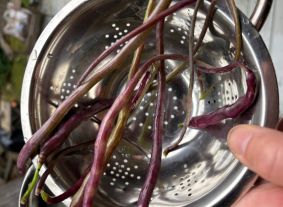
Rat-tail radishes were a new addition to my garden this spring, and I have a status update for you now that they have been growing for a while. I wrote about them earlier this year, but to recap what rat-tail radishes are, here’s a quick synopsis:
- Rat-tail radishes are the same species as your traditional radish (Raphanus sativus), but these are grown for their edible seed pods, not their bulbous roots.
- The pods have that same radish spiciness or bite as the bulbous root and can be used fresh, sauteed and pickled.
- The plants provide multiple harvests per plant.
Essentially, the only thing that rat-tail radishes have in common with your “regular” radishes is that spicy radish kick.
Due to a late start to spring due to cold weather and rain in the Northeast, I did not get to planting the rat-tail radishes until the end of May. That’s about 4 weeks later than average. I’m writing this in the latter half of July, and here’s my assessment of the crop so far.
Growth Habit
To produce a harvest, you need to let the radishes grow, flower and eventually produce seed pods. That’s completely different from traditional radishes. My initial blog post about this crop said the plants should grow to be about 3-5 feet tall. From this first growing experience, I find that that 3-ft. tall estimation is about right. BUT—that growth has been mostly tipped over and sprawling along the ground. In other words, they have a hard time standing erect. And the scraggly growth (to put it mildly) gets tangled. And when that happens, it’s just hard to see what is going on with the plants. For my next crop I will arrange some sort of staking.
Watering and Feeding
Due to my schedule, I’m not a consistent waterer and feeder. I do my best, though. I added a granular fertilizer a week or two after planting, and that did eventually kick in. Since then they’ve been growing at a steady pace. And as for watering, I water deeply about twice a week. Adding a layer of leaf mulch during a heat wave helped tremendously.
Harvesting Rat-Tail Radish Pods
In my last post I mentioned that typically the pods are harvested when they are still young and tender. I’ve harvested them young and tender and older and less tender. Both are fine, and it all depends on what you’ll do with the harvested pods. I would prefer picking when younger, but again, with the tangle of branches and pods due to them tipping over, it’s hard to see. I can say that the pods coloration goes from a bland greenish to a lovely muted eggplant-purple color.
Because you don’t have to pull up the whole plant to harvest like you would with “regular” radishes, rat-tail radishes keep producing pods for weeks on end. As long as the plants are growing and flowering, they’ll produce pods. I’ve been harvesting pods for about a month or so, and the plants just keep going. Do pull the pods on a regular basis to encourage more flowering.
Uses
I’ve been quite happy chopping my rat-tail radishes for use in salads and throwing in at the end of scrambling some eggs. I am dreaming of harvesting small ones to layer into a tomato and mayo sandwich sometime soon. It’ll be a nice spicy addition. I suspect I will want to pull out my row of radishes sometime in August for a fall planting of kale. In that case I will use the whole harvest for pickling. And I may leave one plant to grow on, harvest and dry the pods and see if I can use the seeds for next season. Looks like I will have another rat-tail radish crop update next year to report back on that topic.
Meet Ellen Wells

When you’re raised on a farm, you can’t help but know a thing or two about gardening. Ellen Wells is our expert on edible gardening.…
Ellen's Recent Posts
DIY Ollas for Raised Bed Vegetable Gardens
Grow Fava Beans and Improve Your Soil
Membership Has Its Perks

- Ask The Expert Questions
- Newsletter Archive
- PlantersPlace Magazine
- Members Photo Gallery
- Product Ratings & Reviews
- Garden Club Samples
More information about edible gardening that you’re going to want

Edible Gardening Videos

Edible Gardening Podcasts

Got a Edible Gardening Question?