

Peony Problems
Views: 2
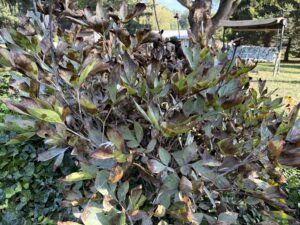
During a recent trip to Ohio, I saw something I’d never noticed before: peonies affected by some pathogen. I was shocked. In our dry climate, they rarely show any disease and are fairly free of pests. But in the more humid conditions of the Midwest, they are obviously vulnerable to other issues.
Powdery Mildew
Most gardeners are familiar with powdery mildew, although it is more likely found in the vegetable garden. Even for us, it is hard to escape a summer season without zucchini showing signs of this fungal disease. Normally, it does not negatively affect the plant except for appearance.
Peonies are definitely prone to this infection during warm, humid seasons, which seems to be all of the time back in Ohio. Like most plants with this condition, you’ll notice white spots on the leaves, and it will often spread to all the foliage. If this occurs early in the season, trim out the affected stems. One key consideration with powdery mildew is promoting ample air circulation. If it continues to be a problem, you can use a fungal remedy, such as a copper fungicide or Neem. But it really shouldn’t hurt the plant overall.
Leaf Blotch (also called Peony Measles)
Another fungus is leaf blotch, Cladosporium paeoniae, sometimes called peony measles because it starts as reddish-purple spots that merge into larger ones. It’s usually apparent mid to late summer, well after bloom, and if left unchecked, it can harm the plant. Treat it with a fungicide and be sure to remove the affected foliage completely. Don’t put it in the compost pile.
Botrytis Blight
Also called gray mold, this fungus thrives in cooler, wet weather. It’s one of the most common diseases of peonies, especially in a cool, damp spring. When a plant is infected, its shoots often die off at ground level. If the plant is growing,, you’ll see a cankerous growth on the stems and leaves. When parts of the plant die and rot, they will usually be covered with a gray mold, hence the name, and these spores infect other plants.
To prevent this condition, you have to stay ahead of the game. In the fall, remove all the materials that you cut back, and add mulch around the plant to separate any potentially infected debris from the parent plant. Of course, it’s always good to make sure your peony has good drainage and air circulation, so if those conditions are less than ideal, autumn is a good time to relocate your peony. If you notice the start of an infection early in the season, treat it immediately and consistently over many weeks with a fungicide.
Leaf Blight
Another fungus, Phytophthora cactorum, affects plants in wet weather. Leaf blight causes black, leathery spots on the leaves and buds. Stems may develop black lesions that weaken them and cause them to tip over. In worst-case situations, it can affect the root crown and kill the entire plant. If this is the case, it will feel mushy at the base. As with other fungal infections, treat it appropriately and remove any debris at the end of the year.
While peonies are generally very low maintenance—one of those flowers you plant and don’t have to think about for a decade—sometimes they need a little extra help. Keep an eye on your favorite plants to keep them looking healthy and happy for years.
Meet Amy Grisak

Amy is a freelance author and photographer in Great Falls, MT who specializes in gardening, foods, and sustainable agriculture. She provides information on every kind…
Amy's Recent Posts
More Tools to Outsmart Pests
What is Eating My Tomato?
Amy's Videos
Membership Has Its Perks

Become a registered user and get access to exclusive benefits like...
- Ask The Expert Questions
- Newsletter Archive
- PlantersPlace Magazine
- Members Photo Gallery
- Product Ratings & Reviews
- Garden Club Samples
Here’s more information about gardening that you’re going to want

Watch a Gardening Video

Learn About Osmocote Products

Read a Gardening Blog