

What is Eating My Tomato?
Views: 942
Many of us love our tomatoes and cannot wait for them to ripen, but it can be disheartening when the fruit is gone or is riddled with holes. Let’s take a look at a few of the clues left behind to determine who ate your tomato.
Missing Fruit
You head out to check your plants only to find tomatoes – both green and red – missing. If there’s any foliage that is browsed, point the finger at the deer. Even though tomatoes are in the nightshade family and don’t seem very palatable, they still will eat the tops of the plants. They’ll also eat red and green tomatoes. Sometimes the entire fruit is gone, although sometimes you’ll see it with a bite taken out of it.
Another possible culprit is raccoons. They’re known to adore sweetcorn, but many have a penchant for fresh tomatoes. In many cases, they sample a few tomatoes before they start stealing them, so if you do find some with a bite taken out of them, be prepared for them to take the entire bunch the next night.
For both of these issues, a dirty barrier is the best remedy. For deer, you need to make it tall. Try to go at least 7 feet high with any fencing material. It’s trickier for raccoons, though, because they can climb over pretty much anything. You will want to work in a line or two of electric fencing into the equation.
Rodents are also known to steal tomatoes, although you’re more likely to find tomatoes with gnaw marks in them or just the skin left behind. Barriers are nearly impossible to use with mice and other rodents, but live traps or snap traps are an option.’
Pests of Tomatoes- North Carolina State Extension
Pinpricks on the Tomatoes
When the damage consists mostly of tiny pinpricks on the tomatoes, you are dealing with some sap-sucking insect, such as a stink bug or a leaf-footed bug.
They don’t chew holes; they insert their mouthparts and suck out the juices. This is why you might have to look hard to find any damage because it will be very tiny. But what you might see when you cut into the tomato is kind of a white, spongy tissue or pale blotches just below the skin from the damage.
If you have a mild infestation, it’s more of a matter of aesthetics and losing a few tomatoes. But if it becomes a problem, you can lean on insecticides containing pyrethrins or pyrethroids. One interesting caveat when it comes to treating the past: neither one of these responds to BT (Bacillus thuringiensis). That might work well with tomato hornworms, but it doesn’t do anything for stink bugs or leaf-footed bugs.
Stripped Clean
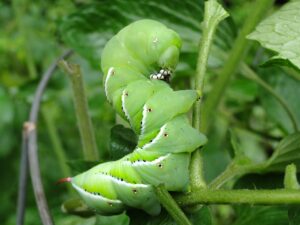
Speaking of hornworms, they are one of the most challenging tomato pests to pinpoint. By the time damage is evident, they’ve already eaten a lot of the plant. Sometimes only the stems are left, or big chunks are taken out of the tomatoes, both ripe and unripe. The giveaway is dark droppings, called frass, on the leaves or around the plant.
It’s easiest to spot them in the early morning or at dusk. Some people use a UV light, which is really fun to do. The best way to deal with them is to handpick them and pop them in a bucket of soapy water. Or, better yet, if you have chickens, give them a gourmet treat!
These are just a few examples of evidence you might see on your tomatoes to give you a clue as to what is eating them.
Meet Amy Grisak

Amy is a freelance author and photographer in Great Falls, MT who specializes in gardening, foods, and sustainable agriculture. She provides information on every kind…
Amy's Videos

Membership Has Its Perks

- Ask The Expert Questions
- Newsletter Archive
- PlantersPlace Magazine
- Members Photo Gallery
- Product Ratings & Reviews
- Garden Club Samples
Here’s more information about gardening that you’re going to want

Watch a Gardening Video

Learn About Osmocote Products

Read a Gardening Blog