

So, you got everything planted by Memorial Day. You watered, weeded, and fertilized. By the 4thof July the containers were lush, the perennials were in bloom, and your annuals were turning heads. In the weeks that follow, temperature climbed, the days were humid, and the nights, well, let’s just say the humidity was insufferable. What’s more, if you were gardening in my neck of the woods, you long since ran out of body parts for new bug bites.
Come late July, not only has your enthusiasm waned but even the plants are growing weary. In fact, they’re busy putting their energy into producing fruit and setting seeds, not in sending up show stopping blooms. It’s time for the mid-summer gardening refresh.
What is the mid-summer gardening refresh? Just follow this five step process: weeding, deadheading, mulching, staking, and adding some new plants.
Start the Mid-Summer Gardening Refresh with Weeding
Perhaps you headed up to the lake for a week. If you are like me, when you returned you couldn’t find your perennial borders anymore. It’s amazing how fast weeds can grow in just a week! There really is no way to sugar coat this one, you need to get out there and weed. Set aside a morning and just go for it. Sure, it’s easy to make excuses. My personal favorites – it’s too hot, it’s too rainy or it’s too sunny. But, the longer you ignore this problem, the worse it gets. You’ve got to regroup and counterattack. The takeback should be sudden and with no mercy! Eradicate them, now! Do it before they have a chance to set seeds. Otherwise, you’ll be confronted with a the new and larger crop of weeds next year.
Mid-Summer Is the Time for Deadheading
For myself, I find that sometimes mindless tasks are just what the doctor ordered. Especially when it’s end of July, and 95 degrees in the shade. The less I have to think about the better – other than swimming pools and cool drinks, of course. Deadheading can be a kind of therapeutic process, and maybe even better, it provides a sense of accomplishment.
‘I spent the morning gardening!’ I can announce to myself. When I return to the house for a snack, and pass the bathroom mirror, I take pleasure in seeing my hot, sweaty face. ‘You betcha,’ I think! Strolling around the garden, coffee cup in hand, plucking off dead flowers long since shriveled by the sun, counts as gardening. Indeed, it is an essential step if you want plants to be healthy. And, who doesn’t want to have a cultivated, well-cared for look in the remaining summer months.
Perennials, and some annuals too, respond so well to deadheading that they will offer a new flush of vigorous growth after being pruned back a bit. Removing spent blooms from perennials like catmint, bee balm, and purple coneflower not only keeps the plants from looking unkempt, but it often triggers new growth. Some annuals, such as zinnias, can be cut over and over, In fact, there is even a variety called ‘Cut and Come Again’. Use blooms for your indoor flower arranging!
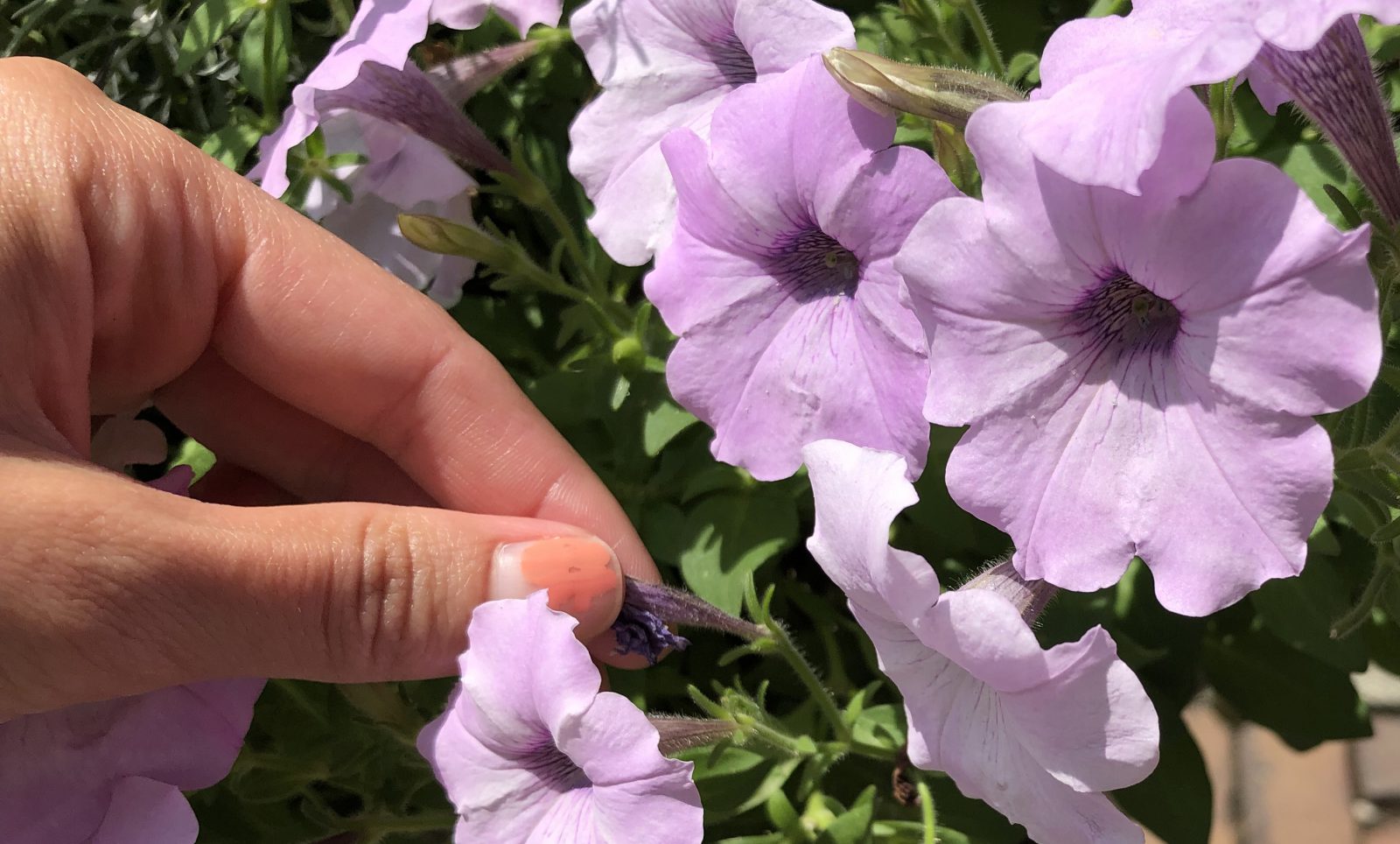
Deadheading Petunias – photo by Sarah Marcheschi
Include the Veggie Patch in the Mid-Summer Gardening Refresh
If you have been growing a veggie patch – or even if it’s just a couple of tomato plants – mid-summer is the time to make sure everything is staked properly. When plants grow tall and the fruit is full they start to weigh down the branches, or worse, they rot on the ground. That’s such a shame after all the effort to date, to say nothing of the wait. Another benefit of staking is it allows for added air circulation. That helps to stave off diseases.
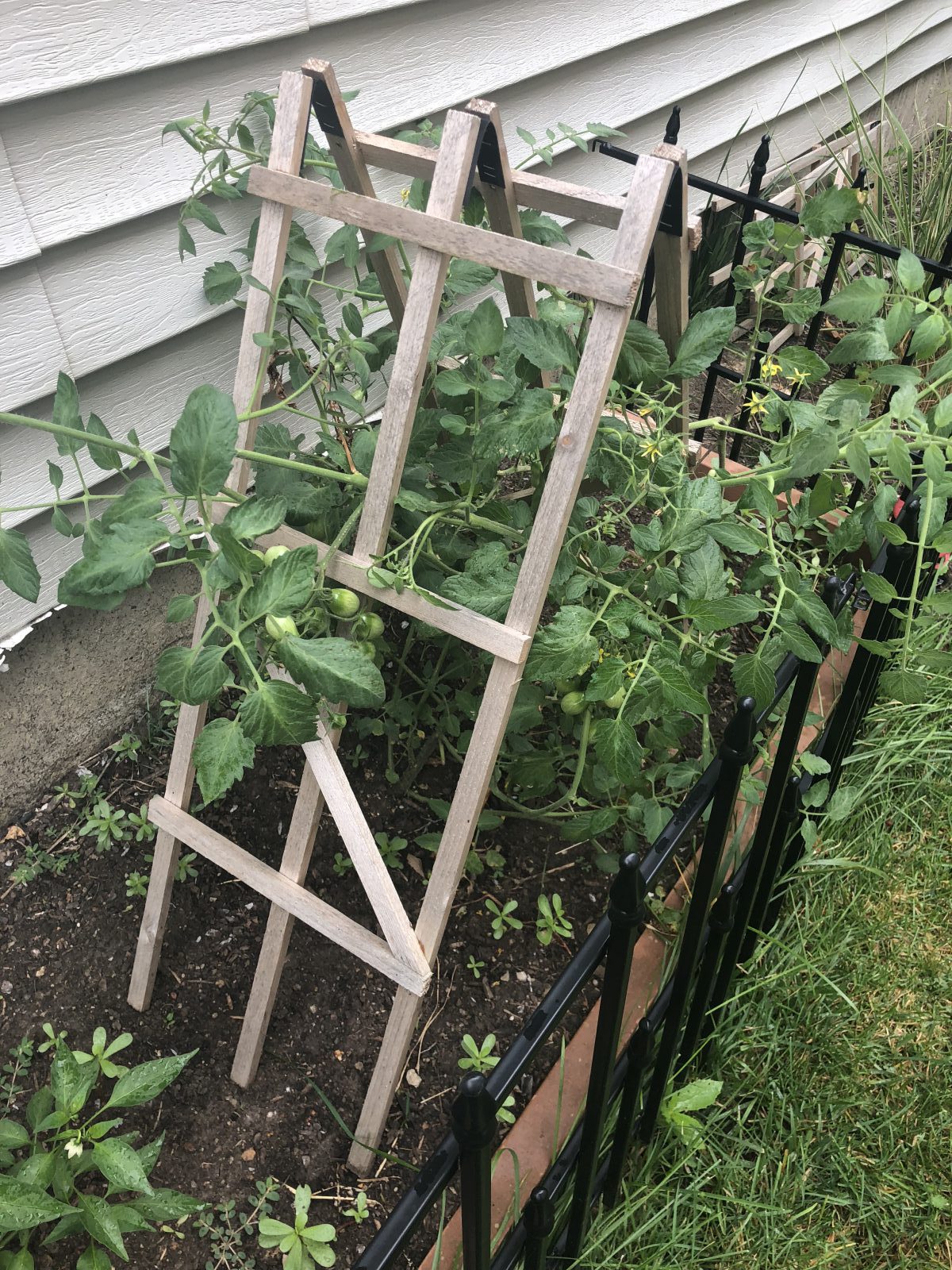
Staking Tomatoes – photo by Sarah Marcheschi
Staking is not just for tomatoes. Common veggie plants like squash, cucumbers, and beans also will benefit from a trellis or support of some kind. Loosely tie stems and vines to the support system with twine. Having a support system makes it easier to see when fruits are ripe and ready to be picked.
As is the case with perennials and annuals, some commonly grown herbs do well with a little deadheading, too. Frequent deadheading (pruning) will allow you to grow plants to the desired size and shape, and since you’ll want to harvest herbs for use in the kitchen, this is hardly a chore. Leafy plants like basil should be pruned to prevent flowers from forming. Pinch back the tips and any buds you see. Deadheading will delay the ageing process in woodier herbs, like thyme and rosemary, and will keep them producing new leaves.
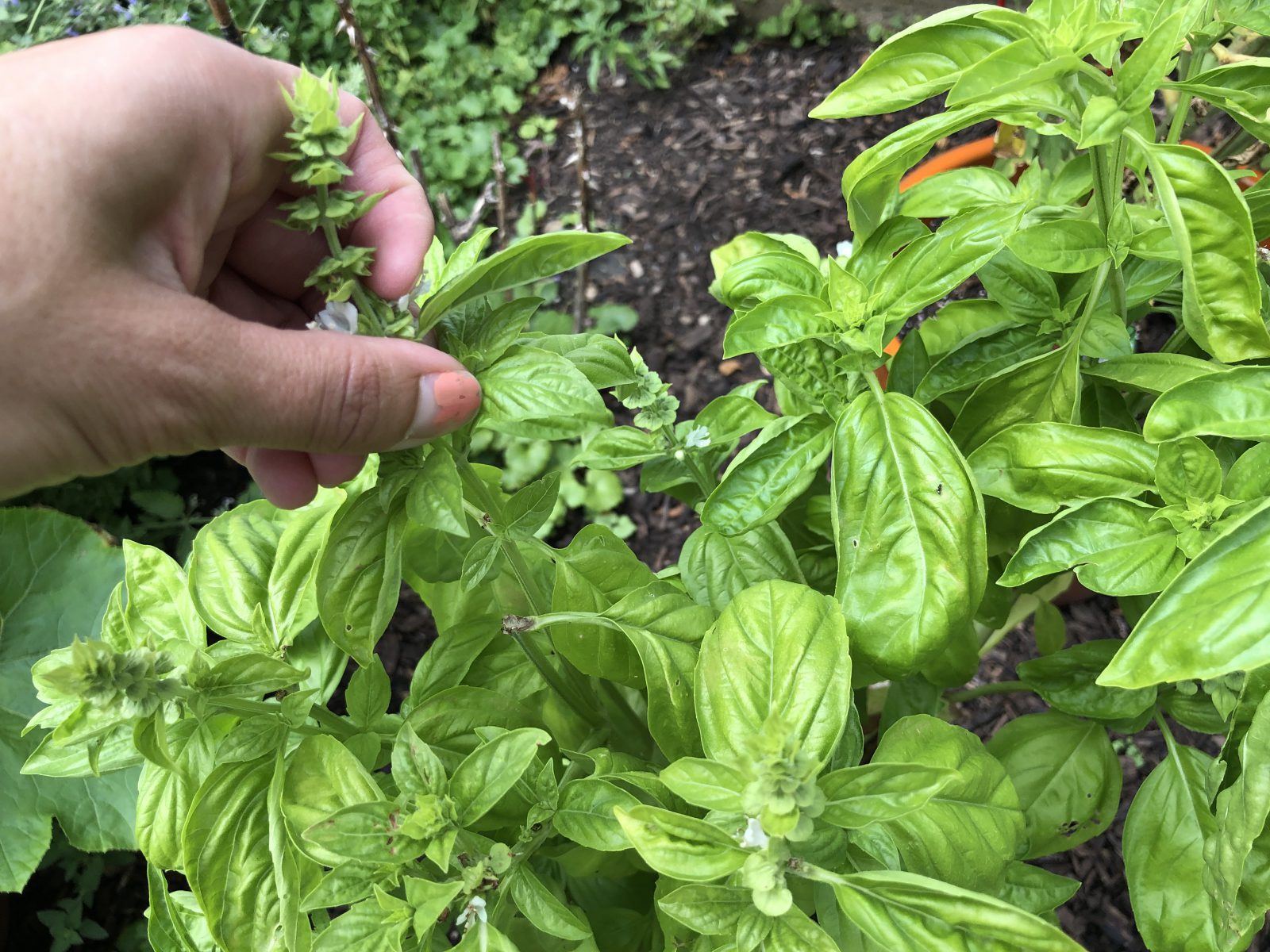
Deadheading Basil – photo by Sarah Marcheschi
Adding New Plants as Part of the Mid-Summer Gardening Refresh
I love visiting nurseries in mid-to-late summer. The aisles are finally quiet. I look for some annuals to tuck into my slightly tired containers and window boxes. Many shrubs and perennial plants go on sale as we approach the end of the season. That’s a good time to take a chance on something new. Mid-summer nursery shopping can be a three-for. You can stock your cart for a fraction of the cost, add some fresh color to the garden, and try something new. It’s exactly what is needed to stave off mid-summer boredom. Perennials like sedum, Russian sage, and rudbeckia are all good choices for late summer color, and they’ll keep coming back year-after-year. Fill in any gaps with annual plants such as verbena, alyssum, and nicotiana will prevent your garden from looking tired before its time.
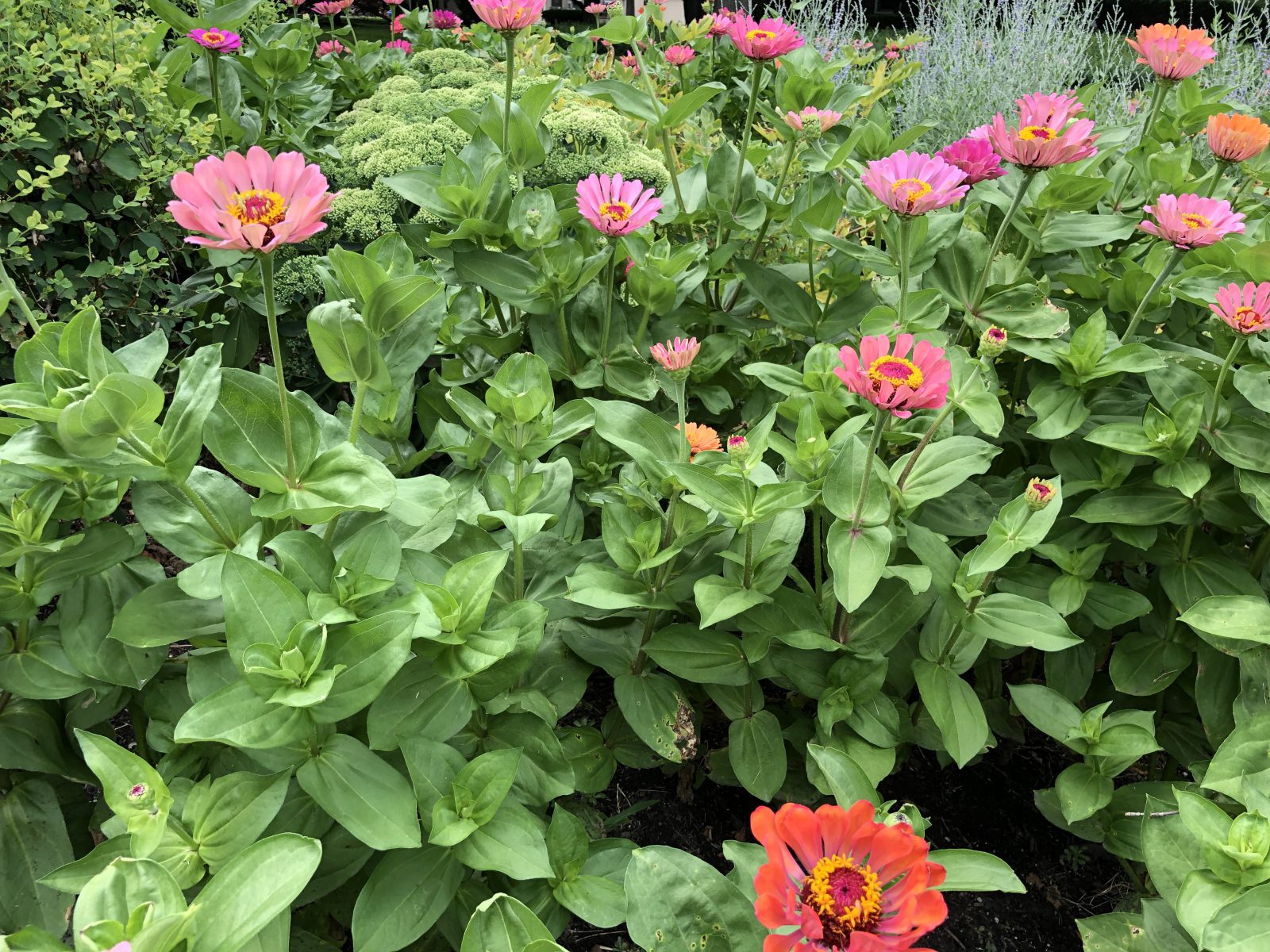
Zinnias, Sedums (buds about to bloom), and Russian Sage – photo by Sarah Marcheschi
Make Fresh Mulch Part of the Mid-Summer Garden Refresh
Once you’ve weeded, deadheaded, and spruced up your outdoor spaces with some new plants, it may be time to add a little fresh mulch. All that digging and traipsing through the garden has probably resulted in some of the wood chips being scattered around, and your plants – new and old — will fare much better in the late summer heat with a fresh layer of mulch to keep the soil cool and moist. If you still can, use the same mulch laid down earlier in the year. It will blend with the mulch already there as it ages an weathers.
The Wrap on the Mid-Summer Garden Refresh
Extend the joy and beauty of your garden with a mid-summer refresh. Three It’s a bit of work – perhaps made a bit unpleasant with high temperatures and humidity. But the rewards are great. Not only will the garden look better for the remainder of this season, but much of what you do this summer will bring benefits next season, too.
Related Featured Articles
Related Videos

Related Blogs
Here’s more information about gardening that you’re going to want

Watch a Gardening Video

Learn About Osmocote Products

Read a Gardening Blog

Find a Gardening Podcast
Membership has its perks!
Become a PlantersPlace member! Registered users can ask Marianne Binetti questions, create personal photo gallery and post product reviews.