

Every person that loves plants, or even dabbles in them from time to time, LOVES Springtime! The number of people that have houseplants has increased over the years and, like most, will tend to bring them inside during the colder months of the year. So, what do you do to get them ready to go back outside for the springtime? To keep them healthy, you need to do more than just throw them out the door!

Give them some room
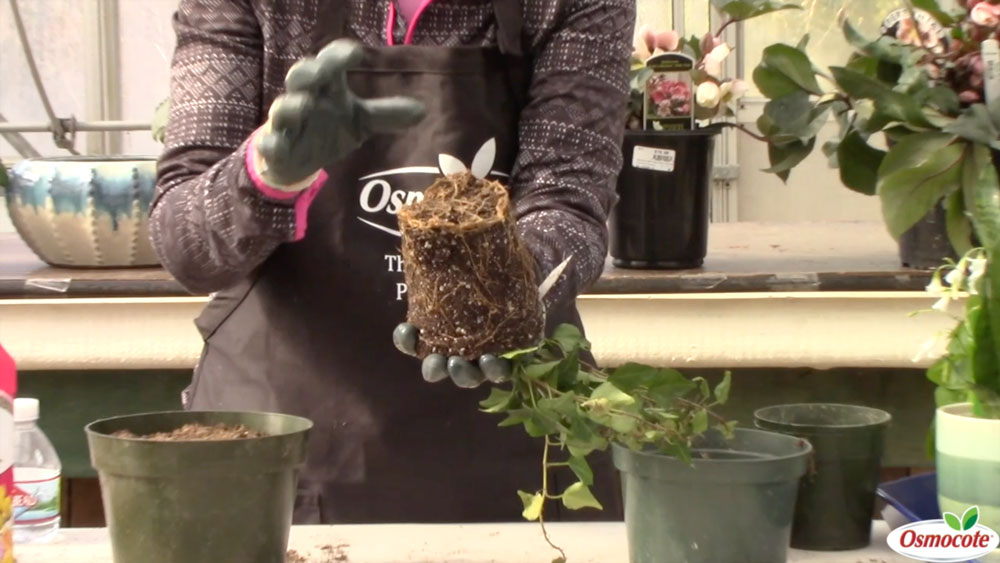
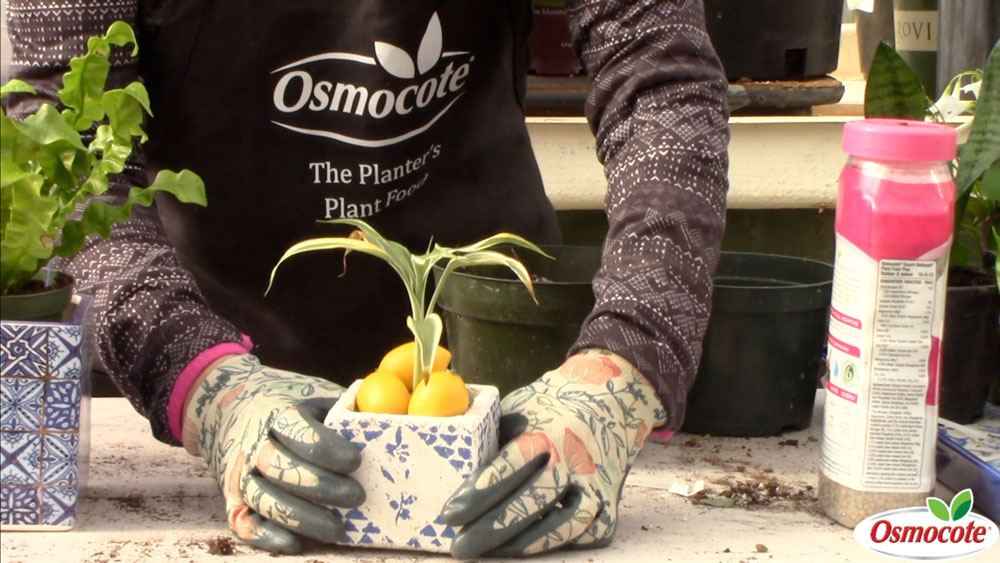
More than likely your plants will need to be repotted. This is especially true if you didn’t before you brought them in last Winter. The easiest way to tell is, gently pull the soil ball and plant out of the current pot. If you see a tangled mass of roots, then repot.
Gently tickle the roots to free them up and put them into a larger pot with your favorite, fresh, potting soil. If you cannot or do not want to put them into a bigger pot, then it will be time to do what is called root pruning. It is not as hard or as drastic as it sounds. Basically, you will want to cut about one-third of the roots off all around the root ball. The biggest key to remember is, estimating how much of the roots you have cut off, you will also need to cut about the same amount off the top of foliage. The reason being is, you have cut the food supply down, now you need to cut the demand for the food down. Then, it is just a matter of repotting in your favorite media, such as Miracle-Gro potting soil.
This is a great time to make sure that your pot isn’t cracked, the drainage holes aren’t clogged, and you do not have any salt buildup. The first two are easy. The salt buildup will look like a brown crust, usually around the drainage holes, the soil line around the top of the pot, and even on the top of the soil itself. This crust is a good indication that you are not watering the fertilizer in well enough or that you might be using too much. Scrub the pot clean while it is empty, replace the plant and adjust your feeding as needed.
Check for critters
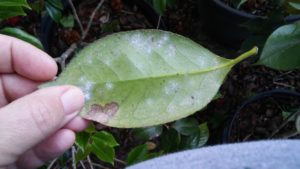
Hopefully, this will not be a problem if you did your due diligence last Winter when you brought the houseplants in. The biggest issue will be spider mites. They LOVE the dry conditions of a house during the cold months, and they can multiply very rapidly. If you see small webbing-like material among the tips of the stems and leaves with very tiny specs in them, you have spider mites. You can resort to a chemical control, but a spray of moderate strength water will usually be all that is needed.
Another pest to look for that enjoys your house are mealy bugs. They look like little pieces of cotton on the underside of leaves and in the crevices of stems. You can dab them off with a Q-tip dipped in alcohol or use some insecticidal soap. Make sure you make contact with the pest with whatever you use to get rid of it.
Other tidying up
Of course, there is always the, cutting off dead leaves, dusting the plant with a strong stream of water, and shaping of the plant. Many times, when a plant has been inside it will tend to grow more towards the light, or rather lanky, unless you turn the plant on a regular basis. Here, there are two trains of thought as to the action required, one is to just leave it and see if the plant itself rights itself and fills in the weaker side. The other is to prune it back to a symmetrical shape and then it will keep going that way. Personally, I just let the plant go about its business and it usually rights itself.
Feed me
Okay, time to be honest. Have you fed the plant at all over the winter? If you have, you should have been using a 50% dilution rate, just enough to keep the slower rate of growth happy. Well, your houseplant is about to go into overdrive and will need nutrients. Go ahead and feed them with your favorite plant food or apply a dose of Osmacote before you take them out. Make sure you follow the directions and water the plant well after applying.
While I am on the topic of water, beware of the notion that if the water is flowing out of the drain holes, it is watered. That can possibly be the farthest from the truth! If your soil mix has a lot of peat in its composition that root ball can become aquaphobic. Which is just a big word for afraid of water and it will not absorb it. When dry, peat moss can be hard to rehydrate, and you may need to soak the entire root ball in a bucket of water to saturate it completely. Use room temperature water, in this case. Allow the plant to soak until no more air bubbles rise from the pot. I have seen cases where the ball is so dry that it just floats. You will need to either push down on it or anchor it down somehow until moist.
Don’t burn the baby!

If you skip over everything else in this article, do NOT skip over this part! Just like humans, when we have been covered up, in the house and not getting as much sunlight during the Winter, Spring hits and we jump into our shorts and t-shirts rush outside and enjoy all that warmth and sun. That is how we can get a nasty sunburn. Houseplants can too!
Start out with short visits. Bring your plants out to the sun for brief periods of time, maybe 10-15 minutes a day for three or four days. Then lengthen that to 30-45 minutes a day for a couple of days. After that first week is over, you can go to a couple of hours a day. Eventually you’ll build up to that full glorious day they are looking for.
I know what you are saying. You do not have time to be running them out for short periods of time each day! There are just too many houseplants to do that with! Okay, no problem. Use different places of your yard that have shade for part of the day. An example would be a shed or garage that has early morning sun but cast shade in the afternoon. After a week or so, start moving the plants to the part that gets more sun longer in the day. Another possibility is utilizing a northern side of a building. As we get farther into the spring season, the sun is getting higher and higher into the northern sky, increasing the light each day by small proportions.
In conclusion
Your plants brought you comfort and joy during the dark winter months, now it is your turn to do the same for them. Bring them back outside to enjoy fresh air and sunshine from being cooped up indoors. Just follow the above steps and they will respond with flowers, color, or foliage. Again, like most life, plants enjoy the outdoors. That IS where they came from to begin with!
Related Featured Articles
Related Videos
Related Blogs
Here’s more information about gardening that you’re going to want

Watch a Gardening Video
Learn About Osmocote Products

Read a Gardening Blog