

Are you considering which new plants to add for fall color? Your garden can boast color well into November, depending on frost dates. Color can come from shade trees to ground covers. There are even some tropical plants that love cooler weather, and will now inch their way to epic proportions. Among the surprises, there are some Hydrangeas that display their prettiest blooms in late September.
This article provides a sampling of plants that can inject some color into the fall. The list includes five woody plants, two hardy perennials, and two tropical plants.
Which new plants to add for fall color? How about some woody plants!
Panicle Hydrangeas:
Dozens of new panicle Hydrangeas are introduced on a regular basis, but one of fall’s showiest is Hydrangea ‘Zinfin Doll’. Like most types (H. paniculata), cut its height by about one third in early spring and watch it rebound with flowers in late summer. The flower heads on panicle Hydrangeas start out white and gradually turn to pink. Spring Meadow Nursery has introduced a new variety with stronger stems. The nursery’s own Hydrangea hunter, Tim Wood, recommends seeking out Hydrangea ‘Quick Fire Fab’, which should be available soon. Panicle Hydrangeas are hardy to Zone 4. Click for more information about Hydrangeas.
Magnolia:
There are hundreds of Magnolia varieties, some that put on a show in spring only, others that obtain fall color, and many that offer branches of vibrant fruit beloved by birds. On of my favorites is Magnolia ‘Butterflies’ because it is has sunshine yellow flowers in late spring, and in the fall, its leaves turn a vibrant gold. Magnolia ‘Pink Charm’ has medium-pink flowers that open from deep pink buds. Its late season interest comes from the fruit that forms from pollinated flowers. Will these varieties work in your garden? The two magnolia varieties highlighted here thrive in Zone 5 – 9.
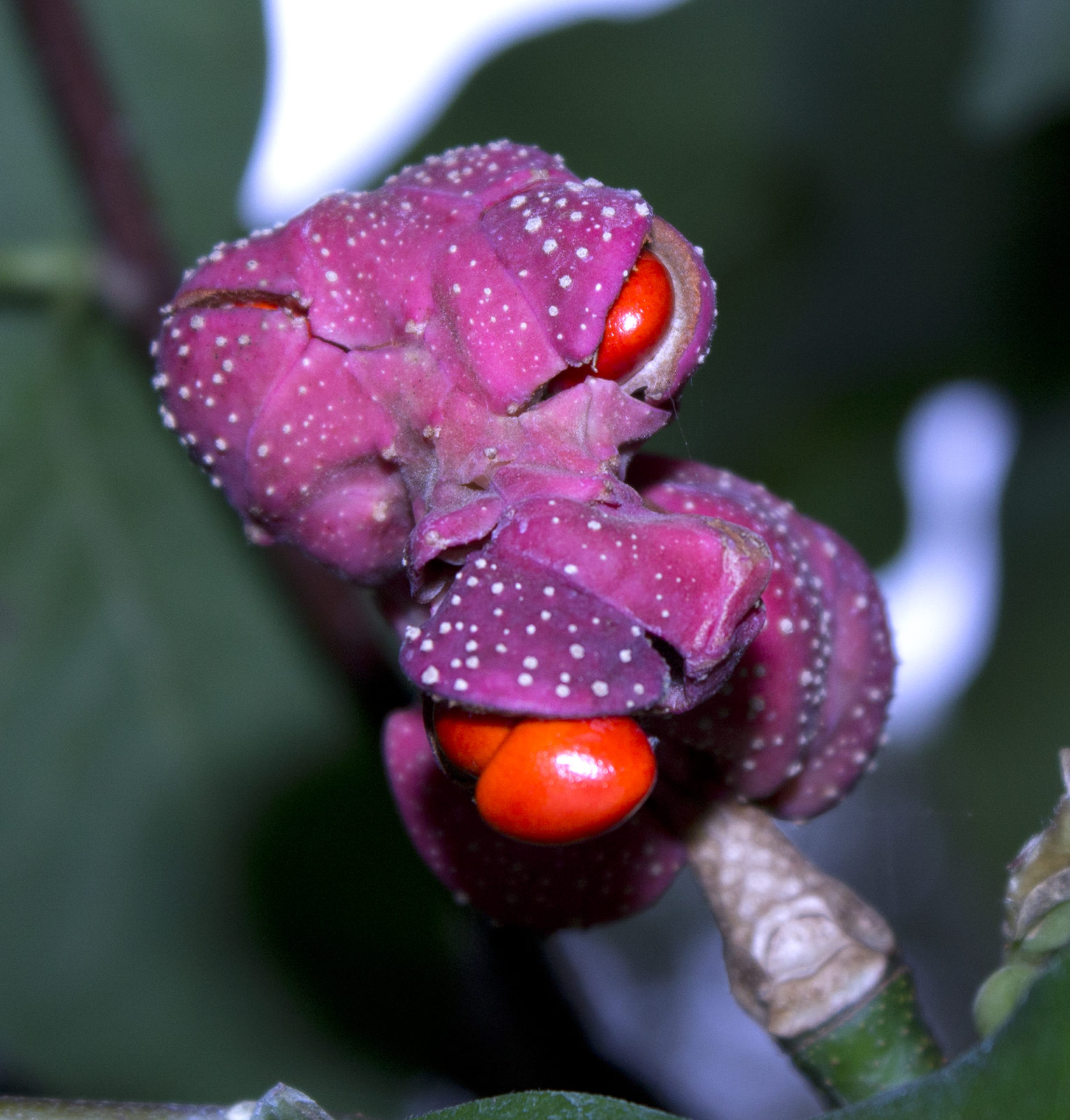
Seeds of the Magnolia are bright red, and beloved by birds. Photo by Jean Starr
Have you considered adding some trees?
Paperbark maple (Acer griseum):
This maple tree is on the dainty side (reaching 20’ – 30’) compared with its more typical cousins, the sugar maple and red maple (40’ – 75’). Leaves of the paperbark maple have a delicate shape and are guaranteed to turn a blazing red in the fall. Its common name comes from its trunk — deep mahogany and cinnamon in color with curling strips elegantly peeling away from the base. Paperbark maple is nearly extinct in its home country, China. I recommend using it more often, if you can find it. Paperbark maple is hardy in Zones 4-8, and grows best in full or part sun.
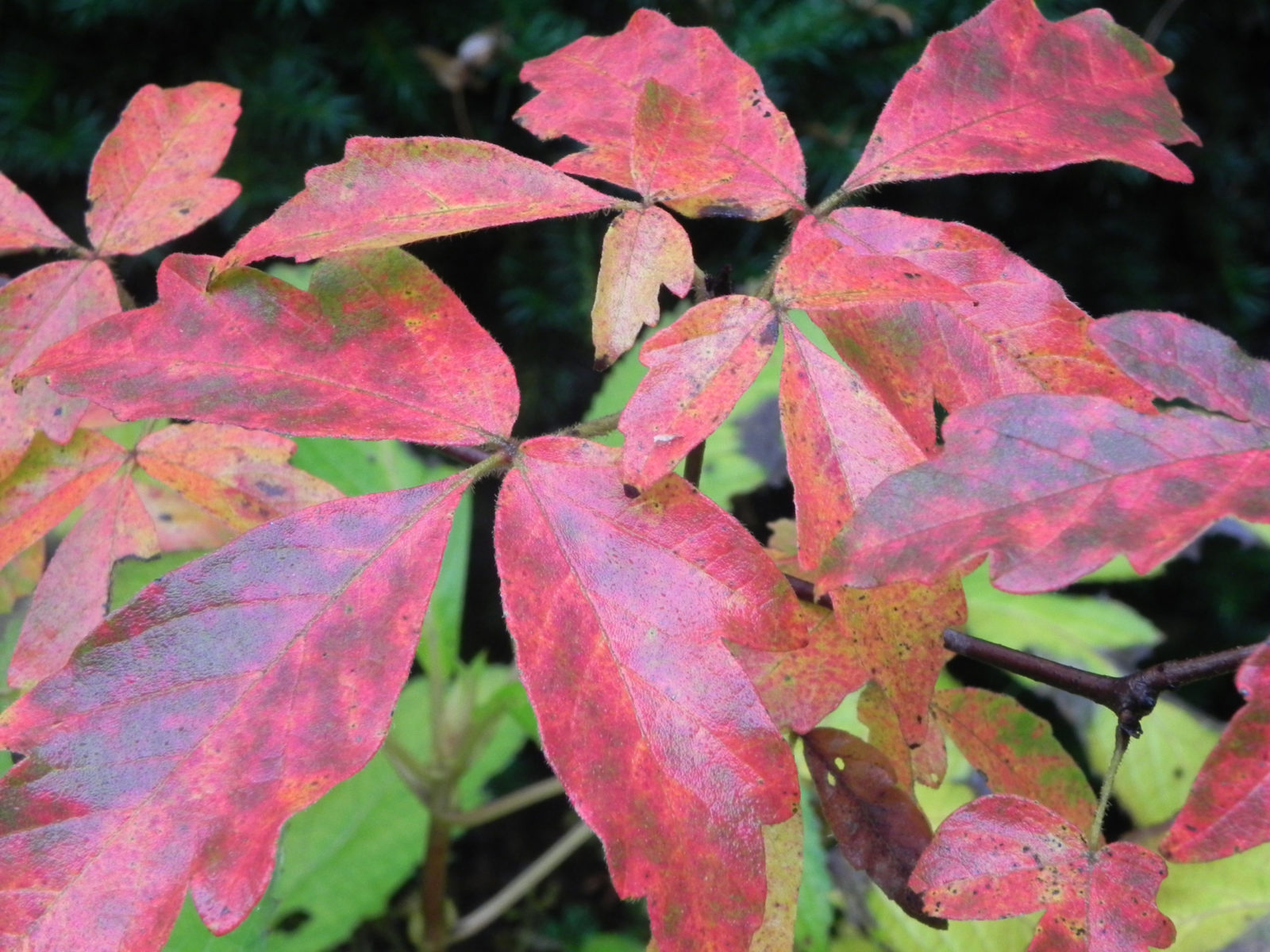
Paperbark maple is worth planting just for its fallcolor. Photo by Jean Starr
Katsura tree (Cercidiphyllum japonicum):
Cercidiphyllum japonicum qualifies as a three season tree that is hardy in Zones 4 – 8. In spring the new leaves have a pinkish tone. Over the course of the summer, the leaves become a bluish green. Come late fall, they gradually work up to a blazing gold. Shorter days and cooler temperatures causes these trees to drop their foliage which leaves skeletons of dramatic branches. This is especially the case with the weeping Katsura, a grafted tree which can have a larger spread than height. It can reach 15 to 25 feet high and 20 to 25 feet wide. This is not a tree you see very often. If you do, it will stop you in your tracks.
Ginkgo (Ginkgo biloba):
The colorful, fascinating ginkgo tree is one of the easiest to grow in the home landscape. One of the oldest known trees in the plant kingdom, this Asian native coexisted with the dinosaurs, its life traced back 200 million years. No other tree has the distinctive fan-shaped leaf, which turns bright gold in fall. Gingko is a long-lived, trouble-free, and beautiful tree that grows 50 to 80 feet tall. Shorter, dwarf cultivars are available.
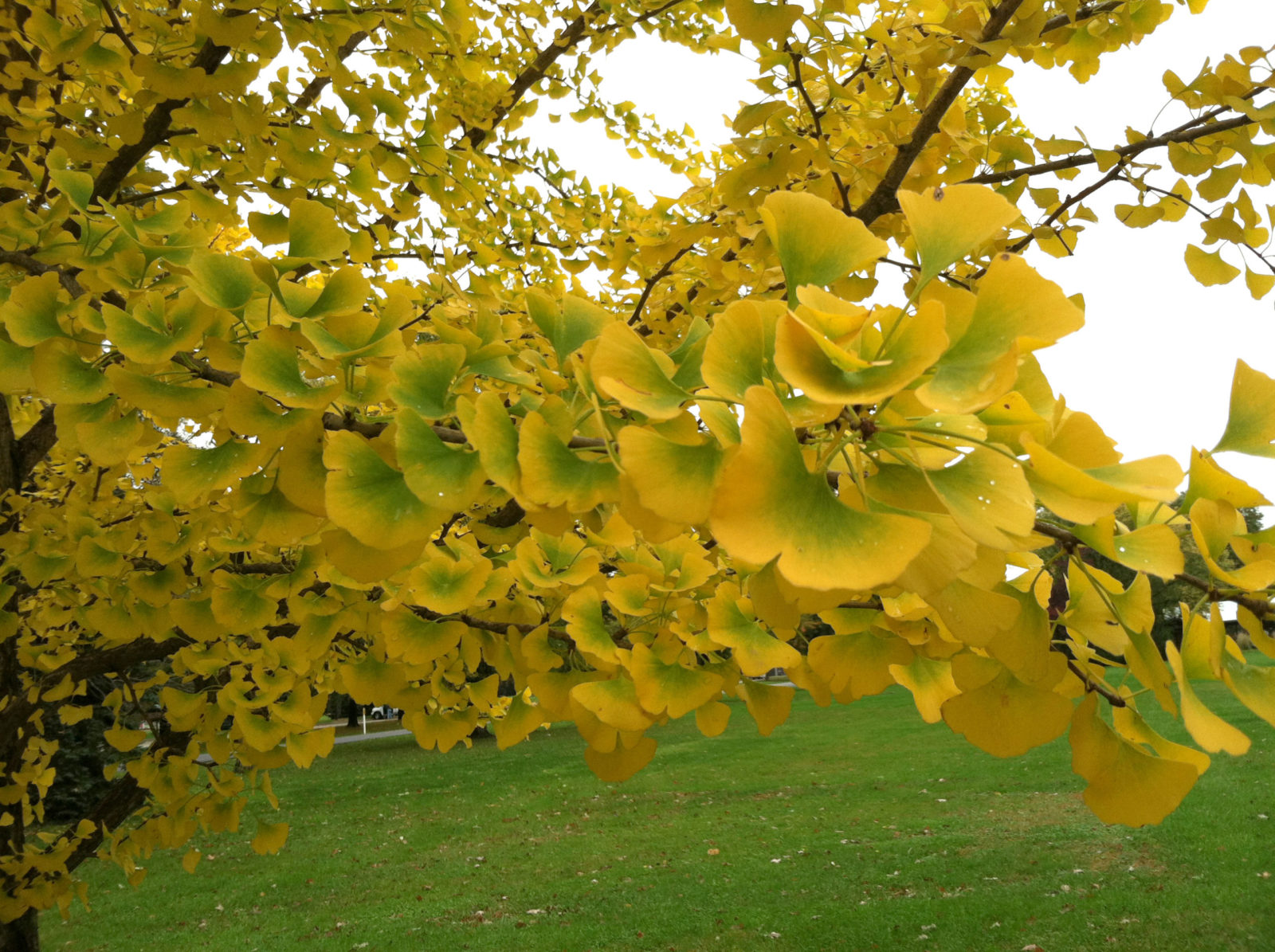
Bright gold complements the beautifully-fluted leaves of the Ginkgo tree. Photo by Jean Starr
Another idea for fall color – hardy perennials
Aralia ‘Sun King’:
As easily grown as Hosta, Aralia ‘Sun King’ was honored by the Perennial Plant Association as its 2020 Perennial Plant of the Year. One reasons for the award, the ‘Sun King’ keeps its bright gold leaves all summer, especially if it’s given supplemental water during hot, dry spells. And in fall, it offers up beautiful deep purple seed heads. Hardy in Zones 3 through 9.
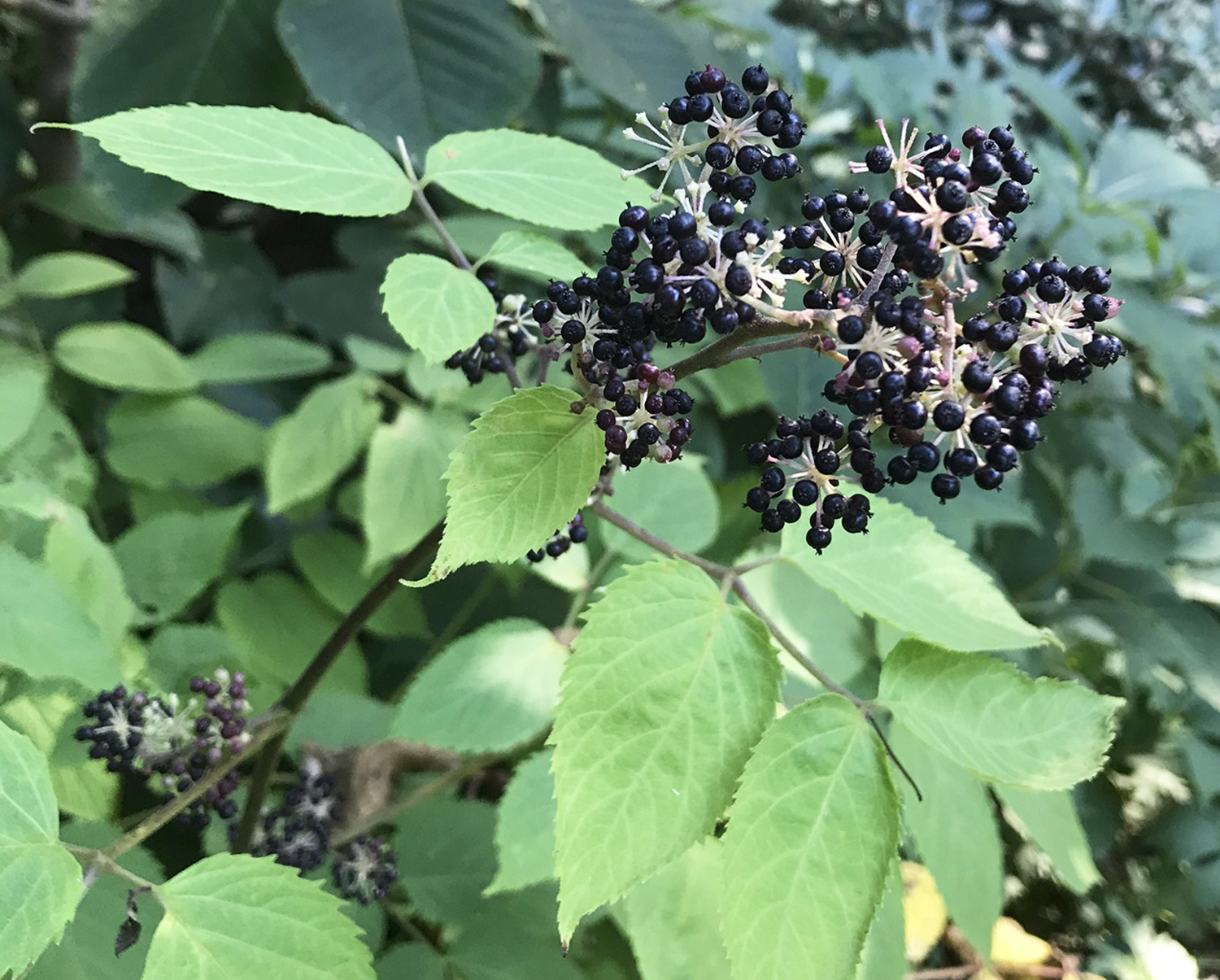
Capping off its chartreuse summer color, Aralia ‘Sun King’ forms dark purple berries in fall. Photo: Jean Starr
Hardy Begonia (Begonia grandis ‘Heron’s Pirouette’):
Yes, there is a Begonia that is winter hardy. This Chinese native is a strong-growing ground cover that works well planted under shrubs in shady, and partly shady areas. This plant has colorful blossoms and leaves. The blooms are pale pink and the leaves have veins on the reverse in burgundy. Begonia grandis reaches just under two feet tall and is hardy to Zone 6.
Why not try selected tropicals?
Passion Flower (Passiflora):
If you don’t live in a tropical climate, it could take an entire summer to coax passion flower into bloom. Luckily, many are tolerant of a light frost. For a final color fling, Passion flower has few equals. Find the biggest variety at Garden Knoll Exotic Plants.
Ornamental Sage (Salvia):
Salvias can survive through nights as low as 40 degrees F. For attracting hummingbirds, Salvia has few equals. One of the best is Salvia vanhouttei ‘Burgundy’, for its incredibly deep red color. Two fairly new varieties that are worth seeking out are ‘Wendy’s Wish’ and ‘Amistad’. Click for video about Salvia.
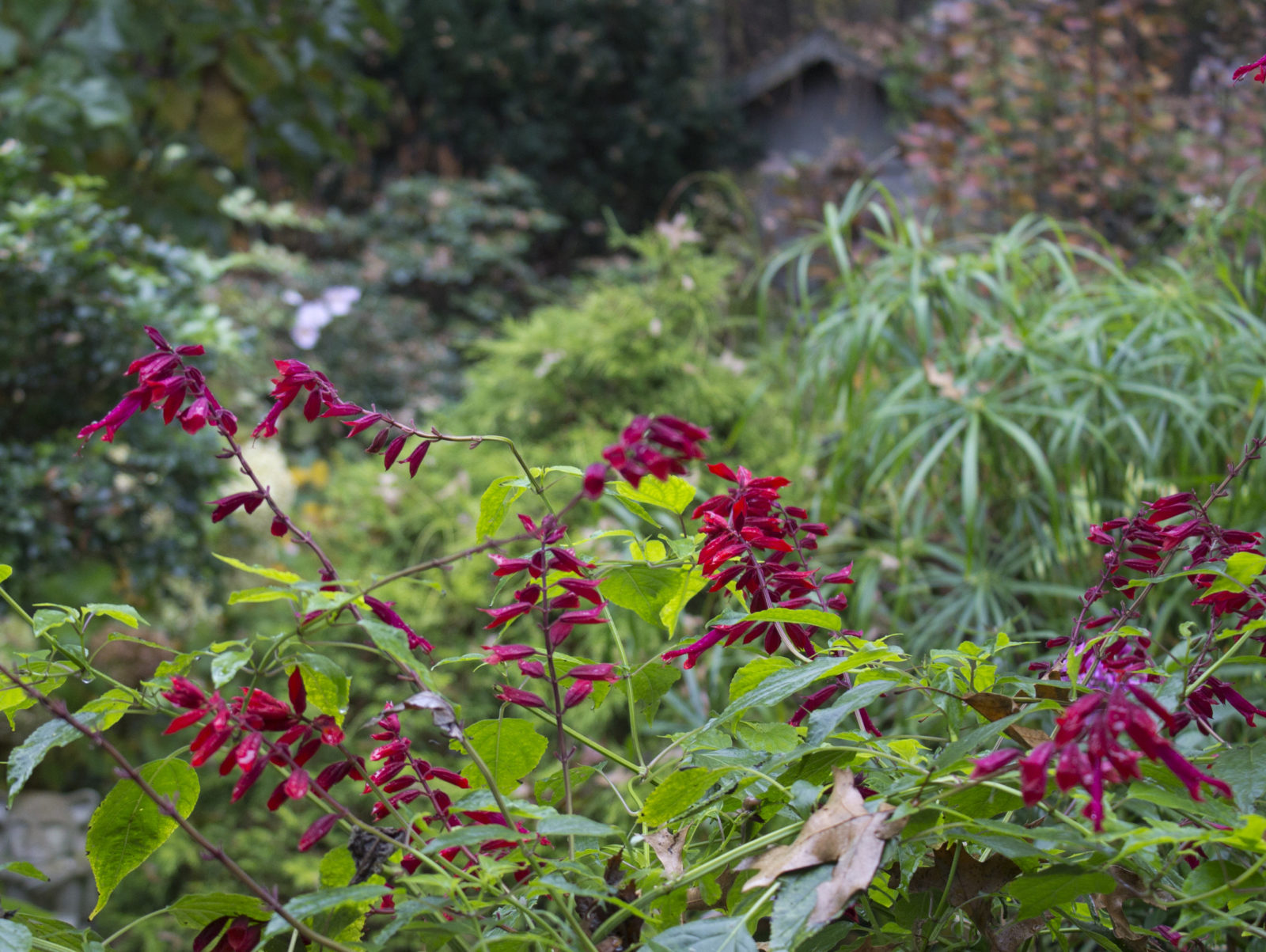
Some Salvias hit their stride in early Fall, tempting hummingbirds before their migration. Photo: Jean Starr
Final thoughts about which new plant to add for fall color
It’s best to plant ‘late bloomers’ for color in spring. Planting in May, or even April, gives them the time they need to reach fall with flair. Trees and shrubs may take two years or more to attain the size required to make their presence known. Some tropical plants and perennials may perform in their first year.
Related Featured Articles
Related Videos

Related Blogs
Here’s more information about gardening that you’re going to want

Watch a Gardening Video
Learn About Osmocote Products
Read a Gardening Blog

Find a Gardening Podcast
Membership has its perks!
Become a PlantersPlace member! Registered users can ask Marianne Binetti questions, create personal photo gallery and post product reviews.