

Creating Wildlife Havens with Logs and Wood
Views: 1492
When I was young, I used to love overturning logs to see what was hiding under them. I’d find worms, and snakes, and salamanders, and hundreds of rolly-pollies that would scatter as I watched in delight. Logs, I knew, even as a child, were a wildlife haven. And really, it couldn’t be simpler to recreate that same effect in our own gardens: simply add a few logs or dead branches. Logs and dead wood are among the most valuable resources you can offer to wildlife, supporting an amazing diversity of life that benefits your entire garden ecosystem.
Why? Food and Shelter
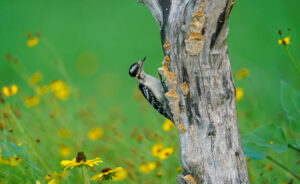
Dead wood might look untidy to human eyes, but to wildlife, it’s a five-star hotel. As logs slowly decompose, they provide food and shelter for an extraordinary diversity of creatures. Fungi, lichens, and mosses colonize the surface, while beetles, woodlice, centipedes, and spiders move into the crevices beneath the bark. These become food for larger animals such as snakes, frogs, and toads, which often shelter in and around log piles themselves. Birds benefit enormously from dead wood, too. For example, woodpeckers and nuthatches need wood to find the beetle larvae and other insects that they eat. In spring and summer, the caterpillars and larvae attracted to decomposing wood provide food for birds raising their young.
It’s So Easy to Do
Creating a log pile couldn’t be simpler. Stack logs loosely to create gaps and crevices. Mix different sizes and types of wood if possible, as various species prefer different conditions. Some beetles favor oak, while others prefer softer woods like willow or birch. Leave some logs in contact with the soil so fungi can colonize them more easily, and consider adding a few larger pieces that will take years to break down.
For a more structured approach, try creating a log pyramid or arranging logs in a criss-cross pattern to maximize hiding spaces. You can even half-bury logs vertically to mimic standing dead trees. I plant large dead limbs vertically in the ground to provide landing spots for birds feeding on my suet feeders. An added benefit is that birds landing on these branches are easy to photograph.
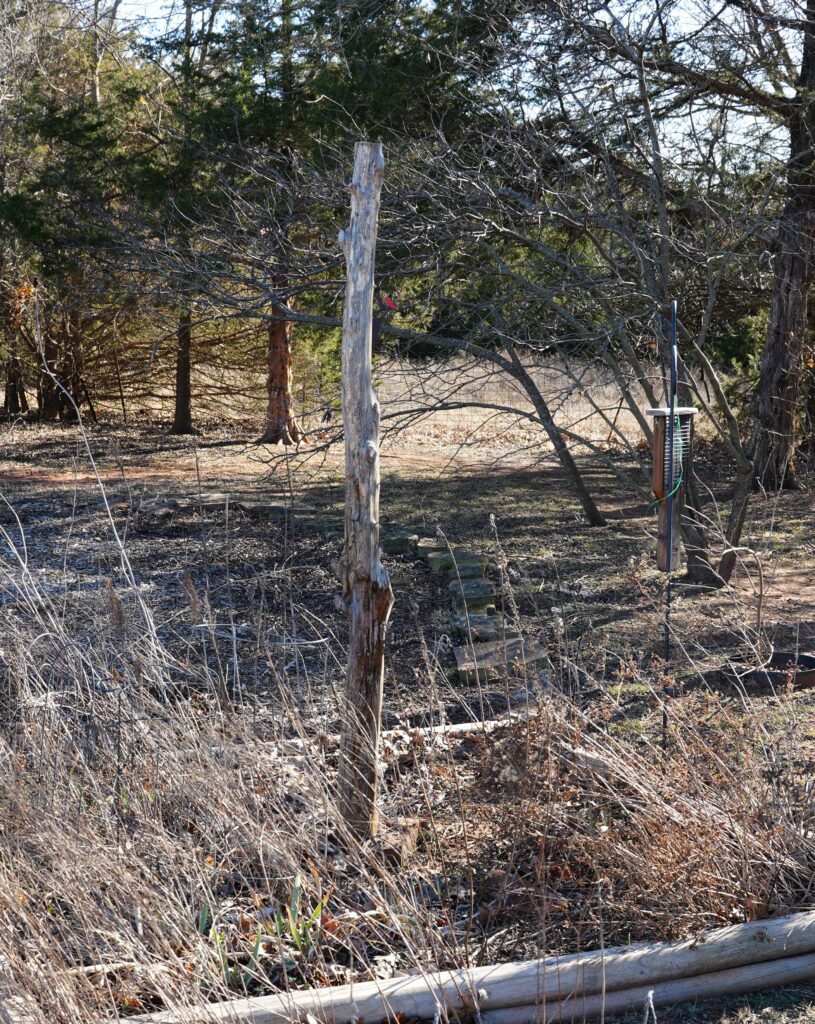
I added this standing log near my suet feeder. I get some great woodpecker shots on stumps like this (see featured photo).
Don’t overlook the value of a single log either. Even one piece of wood laid in a flowerbed or tucked behind a shed will attract wildlife. If you have tree stumps, resist the urge to grind them out. Left to decay naturally, they become incredibly biodiverse habitats.
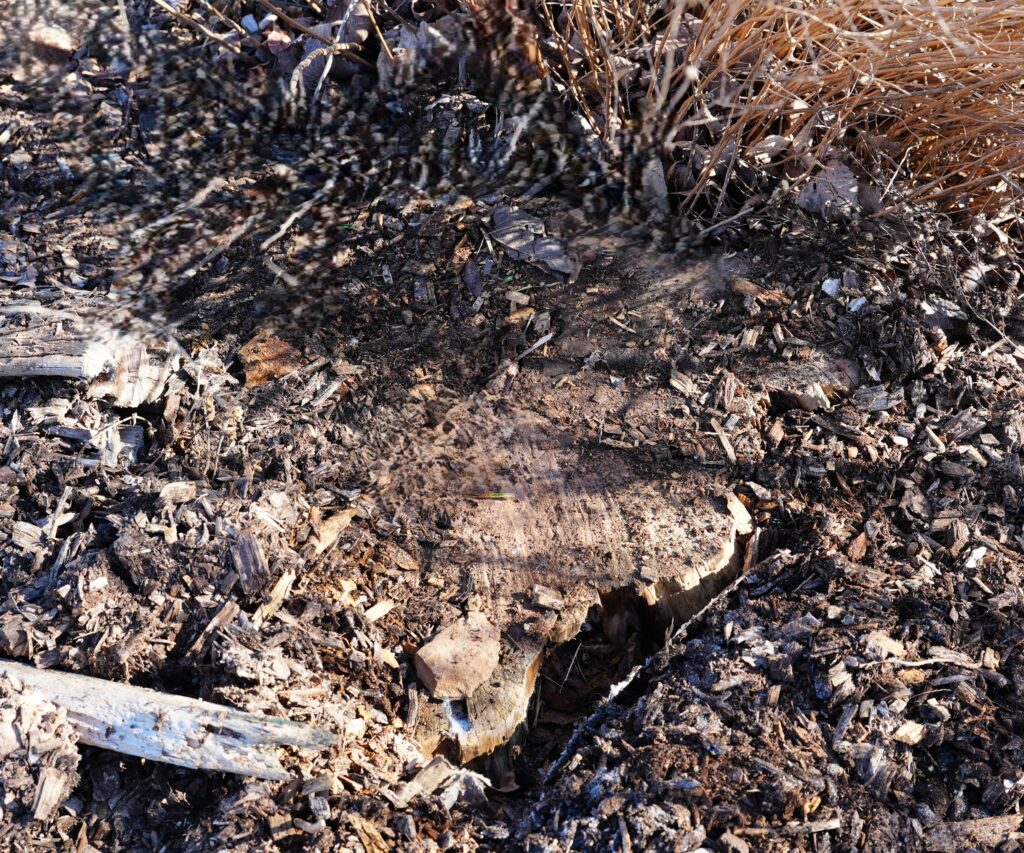
I left this tree stump in place, and now I have a beautiful aster sprouting from it.
These wildlife-friendly wood piles require virtually no maintenance. Over the years, you’ll notice mushrooms fruiting from the logs, bark peeling away to reveal busy invertebrate communities. In one woodpile in my yard, I noticed native bees coming and going, indicating they were using it for nests. And best of all: wood decomposes into rich soil. I convert clay beds into rich, fertile beds using nothing but wood mulch and logs.
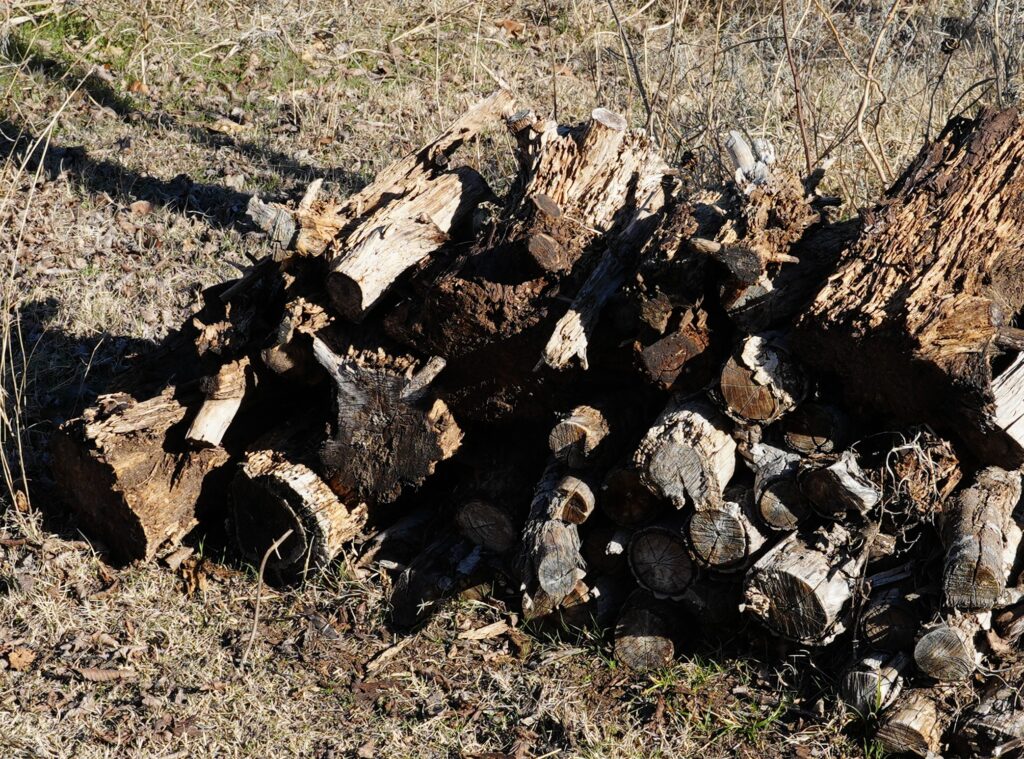
I had native bees nesting in this log pile last year.
Conclusion
When added to our gardens dead wood reminds us that decay is not an ending but a beginning. By embracing logs and allowing wood to rot down naturally, you’re actively creating habitat, supporting biodiversity, and giving wildlife exactly what it needs to thrive. Your garden will be richer, wilder, and more alive for it.
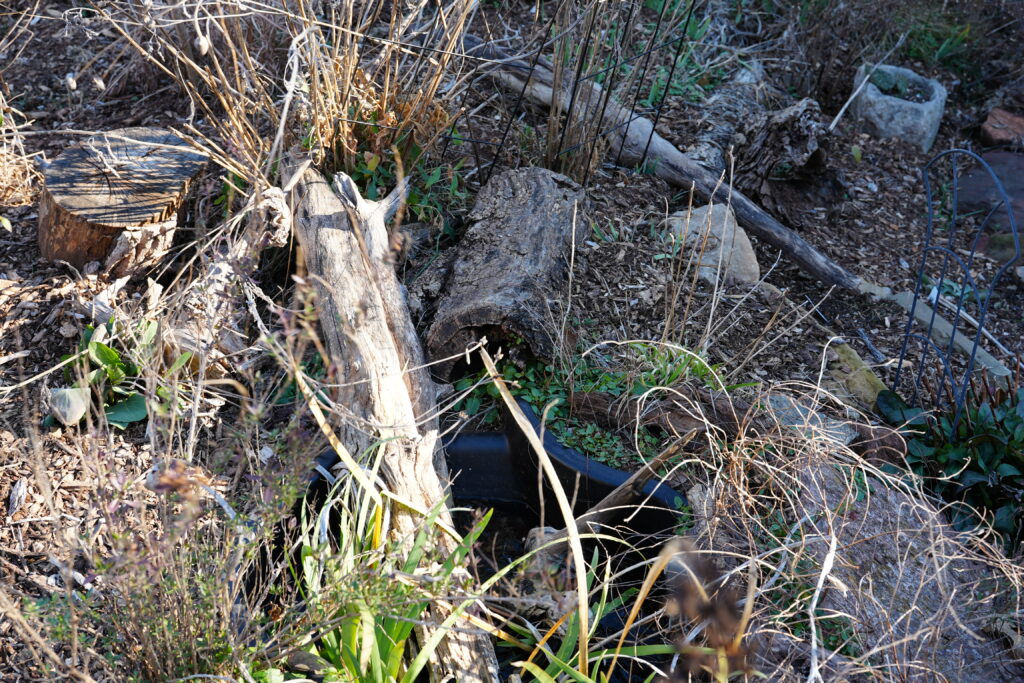
Adding wood to my garden beds enriches them in miriad ways.
Meet Leslie Miller

Leslie Ann Miller shares 3.5 acres in rural Oklahoma with birds, butterflies and wide variety of animals. She is currently transforming her yard with plantings…
Leslie's Recent Posts
Where They’re Going: The Fall Monarch Migration
Milkweed by Region: A Native Milkweed Guide
Membership Has Its Perks

- Ask The Expert Questions
- Newsletter Archive
- PlantersPlace Magazine
- Members Photo Gallery
- Product Ratings & Reviews
- Garden Club Samples
Here’s more information about gardening that you’re going to want

Watch a Gardening Video

Learn About Osmocote Products

Read a Gardening Blog