

Drummond’s Aster: a Native Beauty that Benefits Bees
Views: 2521
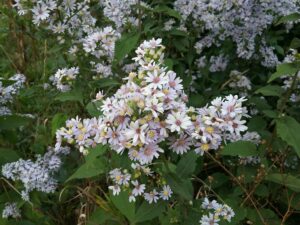
If you’ve followed this blog for very long, you’ll know I’m a fan of easy-care, drought-tolerant, wildlife-beneficial plants. One such gem that adds both ecological value and visual charm to my gardens is Drummond’s aster (Symphyotrichum drummondii). This perennial is not only a feast for the eyes with its delightful blooms but also serves as a critical resource for local wildlife, especially in the fall.
Why Choose Drummond’s Asters?
Drummond’s asters belong to the Asteraceae family, known for species that burst into bloom late in the gardening season when many other flowers have faded. Native to North America, particularly thriving from the Great Plains to the Midwest and into parts of Canada, these asters display a profusion of small, daisy-like flowers. The blooms range in color from deep lavender to pale blue, with sunny yellow centers that draw the eye and brighten any corner of your garden.
Their late flowering season, typically from September to November, makes them especially valuable. At a time when many ecosystems begin to wind down for the winter, Drummond’s asters provide critical sustenance to a variety of pollinators. Bees, butterflies, and other beneficial insects rely on their nectar and pollen for energy and nutrition, making these plants a hotspot of insect activity in the autumn months. In my yard, they are constantly buzzing with tiny bees.
Gardening Tips for Drummond’s Asters
Drummond’s asters are notably hardy and adaptable, thriving in hardiness zones 3 through 8. They prefer full sun but can tolerate partial shade, which makes them versatile for different garden designs. They perform best in well-drained soil, though they are relatively drought-tolerant once established. Mine seem to do well even if clay soil.
When planting Drummond’s asters, consider spacing them about 12 to 18 inches apart to allow sufficient room for growth. They can reach heights of up to 3 feet and can spread equally wide, so giving them enough space will promote healthier plants and better blooms.
One of the joys of cultivating Drummond’s asters is their low maintenance. However, to prevent overcrowding and to promote vigorous growth, consider dividing the plants every few years. This also helps manage their spread, as they can be somewhat aggressive in favorable conditions.
Companion Plants and Design Suggestions
Drummond’s asters pair beautifully with other late-season bloomers. Consider adding plants like goldenrods (Solidago), native grasses, or sedums to create a layered effect and extend your garden’s bloom period. Not only will this create a visually appealing display, but it will also enhance the habitat’s value for wildlife, offering varied sources of food and shelter.
For a more dramatic impact, integrate them with earlier blooming perennials like echinacea and rudbeckia. This strategy ensures that your garden provides continuous support for pollinators from spring through fall.
Environmental Benefits
By choosing to plant Drummond’s asters, you’re not just adding beauty to your garden; you’re also contributing to the conservation of native flora and fauna. Encouraging others to plant native species like these can amplify the positive impact on our local ecosystems.
Incorporating Drummond’s asters into your wildlife garden not only enhances its beauty and extends its bloom time but also significantly boosts the ecological health of your environment. Embrace these natives and watch your garden flourish into a thriving hub of wildlife activity.
Meet Leslie Miller

Leslie Ann Miller shares 3.5 acres in rural Oklahoma with birds, butterflies and wide variety of animals. She is currently transforming her yard with plantings…
Leslie's Recent Posts
Where They’re Going: The Fall Monarch Migration
Milkweed by Region: A Native Milkweed Guide
Membership Has Its Perks

- Ask The Expert Questions
- Newsletter Archive
- PlantersPlace Magazine
- Members Photo Gallery
- Product Ratings & Reviews
- Garden Club Samples
Here’s more information about gardening that you’re going to want

Watch a Gardening Video
Learn About Osmocote Products
Read a Gardening Blog