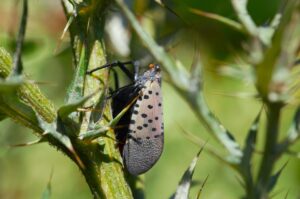
I just got back from a four-week trip to West Virginia, visiting a friend. I had a wonderful time, but I admit to being extremely disturbed by seeing all the invasive plants in Eastern forests, as well as the horrifying number of Lanternflies everywhere I went, from my friend’s front yard to Shenandoah National Park. I mean, I’d get out of a car in the Lowe’s parking lot, and suddenly a Lanternfly would buzz out of nowhere and land on my shoulder. Living in Oklahoma, I hadn’t been exposed to Lanternflies, so the sudden introduction to them was pretty nightmarish. These bugs are everywhere, causing tremendous damage to native trees and ecosystems.
It was a graphic, and somewhat brutal, illustration of what I’ve been preaching in this blog for years: Plant natives. If you care about North America’s forests, pollinators, and other wildlife, plant natives!!!
And the flip side of that coin is: Do not plant invasive species! Planting invasive species can have devastating effects on local ecosystems, economy, and biodiversity. However, some people may not realize that certain plants are invasive species, especially if they are sold at their local garden center or planted at their new house by misguided landscapers. So, here are five invasive species to avoid planting this fall (and always).
Tree of Heaven
The Tree of Heaven (Ailanthus altissima) is a notorious invasive in many parts of North America. Originating from China and Taiwan, it tolerates poor soil, drought, and pollution, enabling it to establish quickly in urban and suburban areas. It spreads rapidly and outcompetes native plants by poisoning them with a chemical called ailanthotoxin. Its relationship with the Spotted Lanternfly, an invasive insect from Asia, makes it even worse. Lanternflies feed on Tree of Heaven, using it as a host plant, enabling them to thrive. Lanternflies can damage a wide range of other plants (including our native trees). The presence of Tree of Heaven allows Lanternflies to spread, threatening agriculture, forests, and gardens.
Native alternatives: native maples, crab apples, or redbuds, which provide habitat and food for local wildlife, without overtaking native plant communities.
I wrote about my own experience with Japanese Honeysuckle (Lonicera japonica) several years ago, and the problem is only worse now. This vine is another invasive that smothers native plants through aggressive growth. It outcompetes local shrubs and trees. Its fragrant flowers attract pollinators, but it also forms dense mats that inhibit sunlight from reaching indigenous plants. This leads to decreased habitat for native insects, birds, and other wildlife.
Native alternatives: Lonicera sempervirens, Coral Honeysuckle, is a wonderful native, or other native vines such as Passiflora incarnata (host plant to Gulf Fritillaries) or Cross Vine (Bignonia capreolata), which will attract hummingbirds.
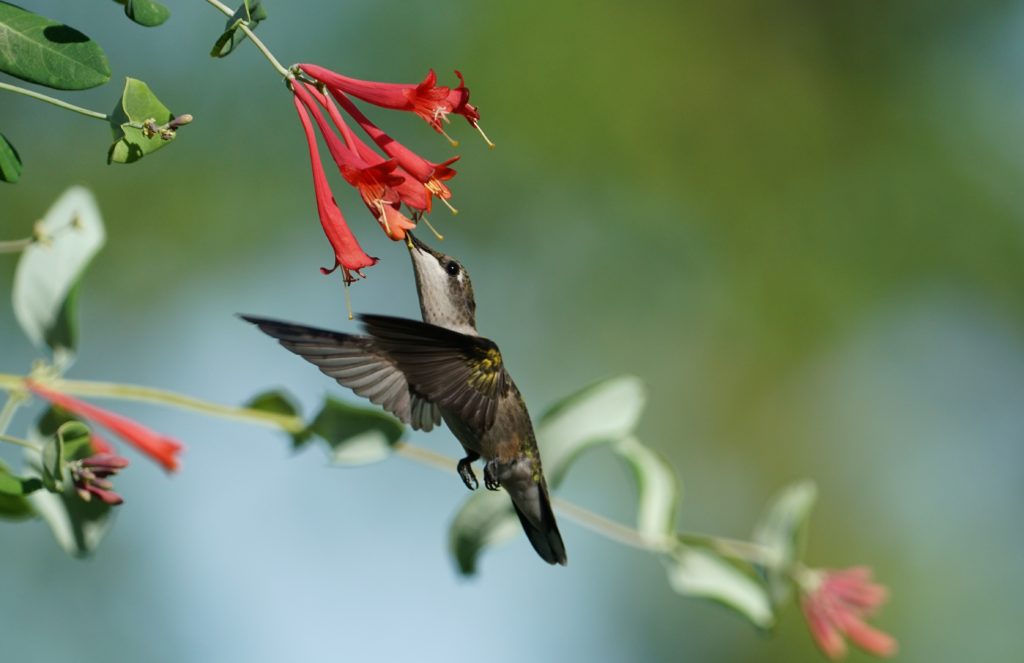
Lonicera sempervirensis a hardy and beautiful replacement for Japanese Honeysuckle.
Callery Pear
Callery Pear (Pyrus calleryana), commonly known by the brand name Bradford Pear, was originally planted as an ornamental tree due to its attractive white flowers. However, it’s highly invasive, outcompeting many native trees by establishing dense thickets, especially along roadsides and forest edges. Its early flowering can also disrupt local flowering cycles, adversely affecting pollinators.
Native alternatives: Dogwoods, Eastern Redbud, or Serviceberry, which provide similar aesthetic appeal and support native insects and birds.
English Ivy
English Ivy (Hedera helix), a popular ground cover and climbing vine, is invasive in many regions, particularly in the eastern U.S. It climbs over trees and shrubs, shading out native plants and sometimes causing physical damage to host trees. Its dense cover can lead to increased humidity and mold, further harming native flora and fauna.
Native alternatives: Options like Virginia Creeper or New Jersey Tea, which are less aggressive and support native wildlife. Virginia Creeper is also a host plant to several beautiful moths and turns a gorgeous red in the fall.
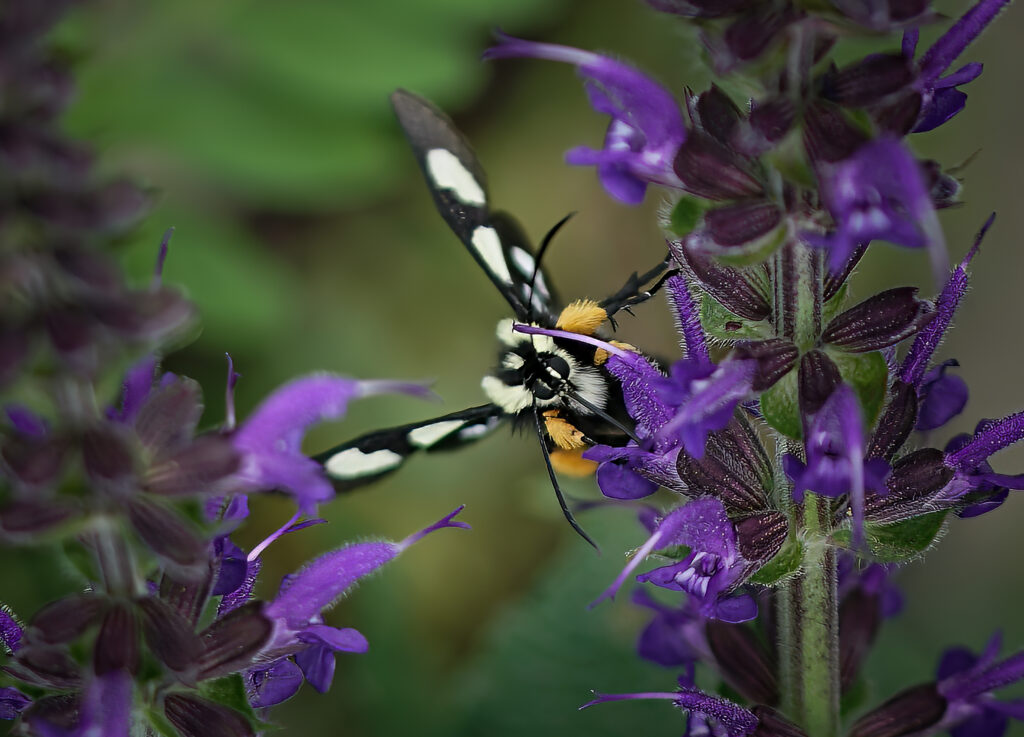
This spectacular Eight-Spotted Forester moth uses Virginia Creeper as a host plant. These moths are underappreciated pollinators.
Butterfly Bush
Butterfly Bush (Buddleja davidii) is so invasive in the Pacific Northwest that it is banned for sale in the states of Washington and Oregon. It’s also pretty invasive in other areas, too, including the East Coast and the South. You may think it’s harmless because it attracts a lot of pollinators, but it can still outcompete native plants that are also host plants for pollinators or are more beneficial to wildlife in other ways (such as providing seeds or berries for birds).
Native alternatives: Buttonbush, American elderberry, Desert Willow, Summersweet, or other flowering native shrubs. If you absolutely must have a Butterfly Bush, go with a cultivar developed for sale in Washington or Oregon, usually marketed as “summer lilacs.”