

Where They’re Going: The Fall Monarch Migration
Views: 278
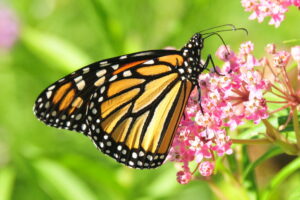
By the last week of September, I stop what I’m doing and watch the sky over my yard. Oklahoma sits along an important migration route, and on a good afternoon I’ll see several monarchs drifting south, stopping on my sunflowers just long enough to refuel. It’s one of the few things in my garden I can’t take any credit for. I just happen to live along the route.
The butterflies coming through now are not necessarily the ones that hatched in June. Summer monarchs are short-lived—typically just two to five weeks. But the monarchs of the fall migratory generation can live eight or nine months.
Diapause
Shortening days, cooler temperatures, and other environmental cues help trigger reproductive diapause. Their reproductive development is delayed, and instead of putting energy into reproduction, the butterflies devote themselves to feeding and building the fat reserves they will need for migration. That’s why they work our flowers so hard. They’re fueling a journey that can carry them more than 1,500 miles, with some monarchs traveling 2,000 miles or more to reach their overwintering grounds.
Where Monarchs Spend the Winter
Central Mexico. Monarchs from east of the Rocky Mountains—including the ones passing through Oklahoma—migrate south to mountain forests in Michoacán and the State of Mexico. They begin arriving at their overwintering sites in the fall, with most settled in by November. There, they cluster by the thousands in stands of oyamel fir and other high-elevation forest, conserving energy until the spring migration begins.
This is the population most of us east of the Rockies are gardening for.
Coastal California. Monarchs west of the Rockies follow a different migration route and overwinter in sheltered groves along the California coast. Eucalyptus, Monterey cypress, Monterey pine, and other trees can provide the protected microclimates they need—sheltered from wind and extreme temperatures and generally cooler and more humid than the surrounding landscape. The western population has declined dramatically since the 1980s, and the Xerces Society continues to track and monitor these western overwintering sites separately. I’m personally afraid we may lose this site in my lifetime due to climate change or some other natural disaster.
And Then There is Southern Florida. This is a different story. A small population of monarchs in southern Florida can remain in the region year-round rather than making the long-distance migration to Mexico. In parts of the southern United States, monarchs may also continue breeding into winter when suitable, evergreen milkweed is available. These butterflies shouldn’t be confused with the two major migratory populations and their established overwintering destinations.
Late Egg Laying (and the Problem with Tropical Milkweed)
Diapause isn’t a switch that flips on a particular date. The transition from summer breeding to fall migration is gradual, and the generations overlap. Some reproductive monarchs continue moving south and laying eggs late into the season while migratory monarchs are emerging at the same time. There is no exact date when every monarch you see suddenly becomes a migrant.
But one of the biggest problems a gardener can create, especially in southern regions, is providing milkweed that stays lush and green when native milkweeds have naturally died back. That’s where tropical milkweed (Asclepias curassavica) comes in.
I’ve warned about it before in my region-by-region native milkweed guide back in August. Tropical milkweed is not native to North America, and in warm climates it can remain evergreen long after native milkweeds have gone dormant. That persistent foliage can encourage monarchs to continue breeding instead of entering reproductive diapause and migrating. It can also allow the protozoan parasite Ophryocystis elektroscirrha, or OE, to build up on the plants and be passed to successive generations of monarchs.
Xerces calls tropical milkweed a “no-grow”. If you’ve got it in your garden, cut it back in the fall and keep it cut through the winter. The goal is to eliminate the persistent foliage that can encourage late-season breeding and to interrupt the buildup of OE on the plant.
Conclusion
If you find a late egg on your native milkweed, don’t panic—and don’t assume you need to rescue it. Fall is a messy transition. Some late-season eggs and caterpillars won’t develop before freezing weather arrives. Others may have enough time, depending on local temperatures. Development isn’t governed by a simple rule, so I would hope for the best, but let nature take its course if frost is on its way.
That’s part of the bargain when we garden for wildlife. We provide the habitat and let nature make the decisions.
So leave the native milkweed. Let the asters and goldenrod keep blooming. The late flowers will do their work. There are more butterflies coming through—and if you’re lucky, you’ll catch them in the afternoon sun, drifting south over the yard, one after another.
Meet Leslie Miller

Leslie Ann Miller shares 3.5 acres in rural Oklahoma with birds, butterflies and wide variety of animals. She is currently transforming her yard with plantings…
Leslie's Recent Posts
Milkweed by Region: A Native Milkweed Guide
Hawks in the Garden
Membership Has Its Perks

- Ask The Expert Questions
- Newsletter Archive
- PlantersPlace Magazine
- Members Photo Gallery
- Product Ratings & Reviews
- Garden Club Samples
Here’s more information about gardening that you’re going to want

Watch a Gardening Video

Learn About Osmocote Products

Read a Gardening Blog