

Milkweed by Region: A Native Milkweed Guide
Views: 864
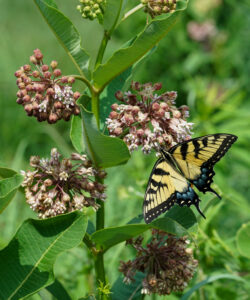
Every spring I walk my driveway looking for the green milkweeds pushing up along the ditch, and every spring I’m a little relieved to find them, because those clumps of milkweed are the main reason I get monarchs. Out here in rural Oklahoma, Asclepias viridis is what was already growing on this property before I ever planted a thing, and it’s still doing more work for monarchs than anything I’ve added since.
That’s really the heart of it. Milkweed (genus Asclepias) is the only thing monarch caterpillars eat, so no milkweed means no monarchs, full stop. But “plant milkweed” is only half the instruction, because the milkweed that thrives on my dry, rocky Oklahoma ground would sulk or outright die in a wet New England meadow, and the desert species that shrug off 100-degree Arizona summers would rot in a Midwest clay soil that stays soggy through May. Milkweed is regional the way tomatoes are seasonal — there’s a right one and a wrong one for where you’re standing.
I went through the Xerces Society’s regional milkweed guides and cross-referenced them against Monarch Joint Venture and USDA-NRCS resources to put together a region-by-region rundown of the milkweeds I’d actually plant if I gardened in each of these places. I stuck to species that are genuinely common and available, not the rare ones you’ll only find in a specialty seed catalog. Find your region, and plant accordingly. Fall is a great time to do it.
A Quick Word Before You Shop
Tropical milkweed (Asclepias curassavica) is controversial. It’s the bright orange-and-red milkweed sold at every big box garden center, and I understand the appeal — it’s cheap, it blooms nonstop, and monarchs will absolutely lay eggs on it. The problem is that it doesn’t die back in mild-winter areas (ie. southern states) the way native milkweeds do, which lets a protozoan parasite called OE build up on the leaves. It also disrupts monarch migration timing. Native, regionally appropriate milkweed doesn’t have that problem, so it’s worth the extra effort to track down.
Northeast (New England)
New England and the surrounding states have a shorter list of milkweeds than I do down here, but the ones they’ve got are workhorses.
- Common milkweed (Asclepias syriaca) is the one most Northeast gardeners picture when they hear the word — big, fragrant, football-shaped seed pods, and it spreads by rhizome, so give it room or plant it where a colony is welcome.
- Swamp milkweed (A. incarnata) is the better-behaved cousin, clumping instead of spreading, with clusters of pink flowers from July into August. It wants consistently moist soil, so it’s a natural fit for a rain garden or a low spot that stays damp. I’ve kept it successfully in large pots, as well.
- Butterfly weed (A. tuberosa) is the one for a tidy front border. It stays compact, doesn’t run, and puts out clusters of bright orange flowers most of the summer. It also happens to be one of the few milkweeds that skips the milky sap entirely, which I always think is a fun detail to point out to kids in the garden.
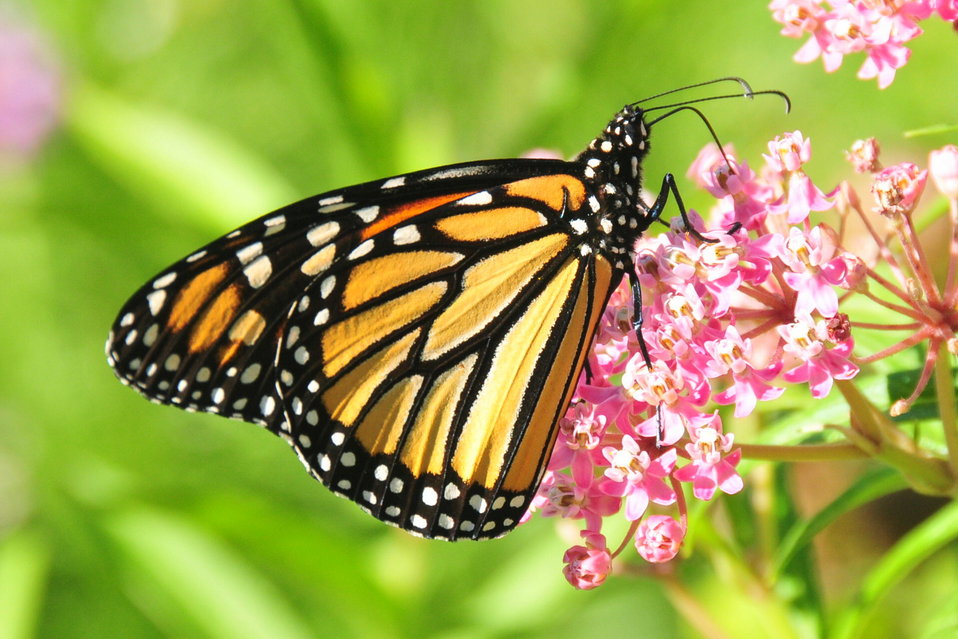
Monarch on swamp milkweed.
Mid-Atlantic (Pennsylvania to Virginia)
Much of the same lineup as the Northeast holds here — common milkweed, swamp milkweed, and butterfly weed all do well from Pennsylvania down through Virginia.
- Poke milkweed (A. exaltata) shows up in the shadier, wooded edges of this region, which makes it useful if your “wildlife garden” is really a wildlife garden clearing at the edge of trees. It has drooping, greenish-white flower clusters that look almost orchid-like up close.
- Purple milkweed (A. purpurascens) is less common but worth seeking out from a native plant sale if you find it — deep rose-purple flowers, and it tends to grow scattered rather than in the big colonies common milkweed forms.
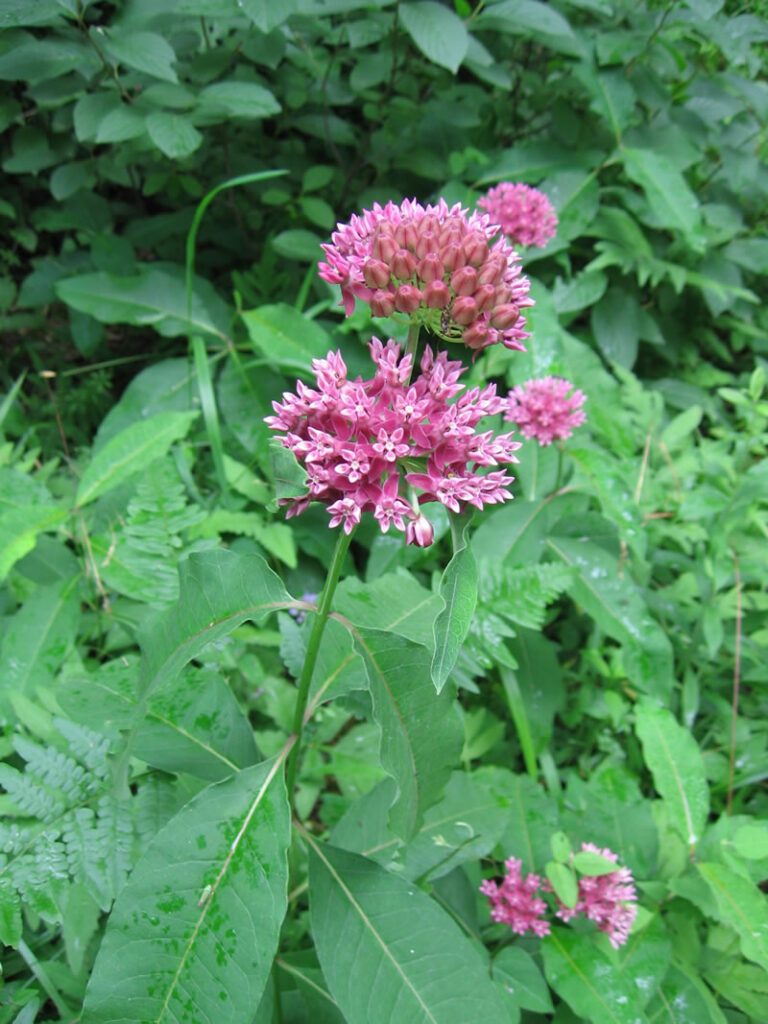
Purple milkweed.
Southeast (Georgia, the Carolinas, and Florida)
Warm, humid summers change the milkweed lineup quite a bit as you head into Georgia, the Carolinas, and Florida.
- Butterfly weed (A. tuberosa) still earns a spot here, tolerant of the region’s sandy soils and heat.
- Swamp milkweed (A. incarnata) does well too, especially useful given how much of the Southeast deals with seasonal wet spots.
- White milkweed (A. variegata) has clean white flower clusters and a preference for open woodland edges rather than full-blast sun, which makes it a good option if your yard has some canopy.
- Aquatic milkweed (A. perennis) is worth mentioning for anyone with genuinely wet or even seasonally flooded ground, since it tolerates conditions most other milkweeds won’t touch.
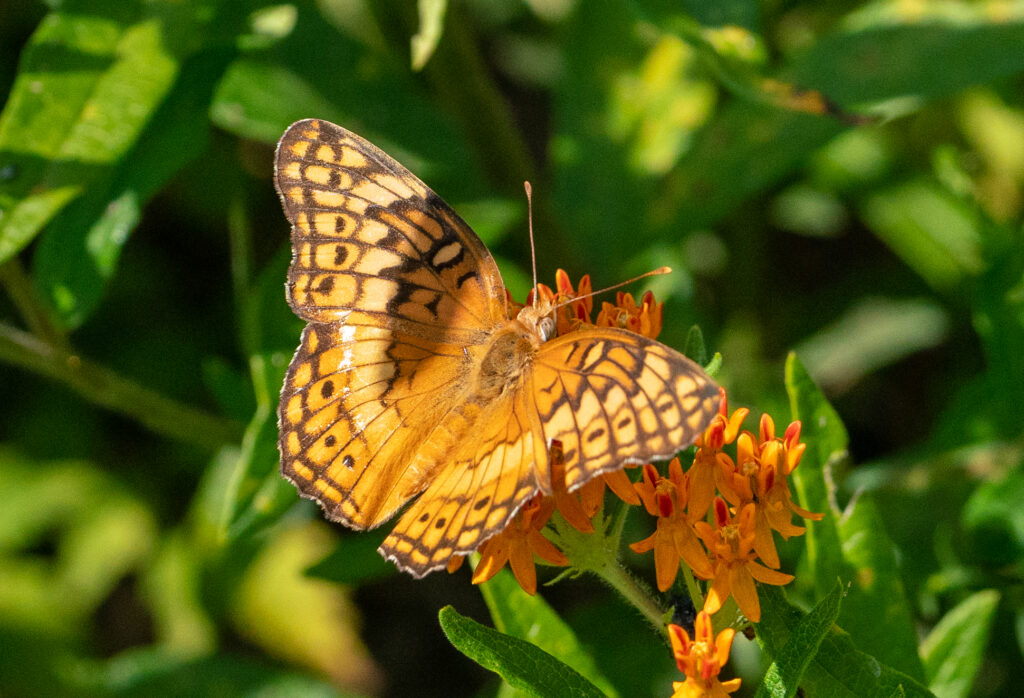
Variagated fritillary on butterfly weed.
South Central (Oklahoma, Texas, Arkansas, Louisiana, and Mississippi)
This is my own backyard, so I’ll linger here a little longer.
- Green milkweed (A. viridis) is an early bloomer. It isn’t an aggressive spreader, but once it’s established, it’s established for good. I planted some more this spring, and I’m looking forward to seeing it bloom next year.
- Antelope horns (A. asperula) is the one people confuse with green milkweed constantly, myself included some years. It’s fuzzier, paler, and tends to bloom a little later. Both are drought-tough prairie natives that laugh off our brutal Oklahoma summers.
- Zizotes milkweed (A. oenotheroides) fills a similar niche further south into Texas, especially on disturbed, gravelly ground.
- Swamp milkweed (A. incarnata) earns a spot in the wetter creek bottoms and low spots across the region, mine included, and it’s one of the few milkweeds here I’d call genuinely showy.
- Butterfly weed (A. tuberosa) rounds things out for anyone who wants a well-behaved, brightly-colored option for a more formal bed.
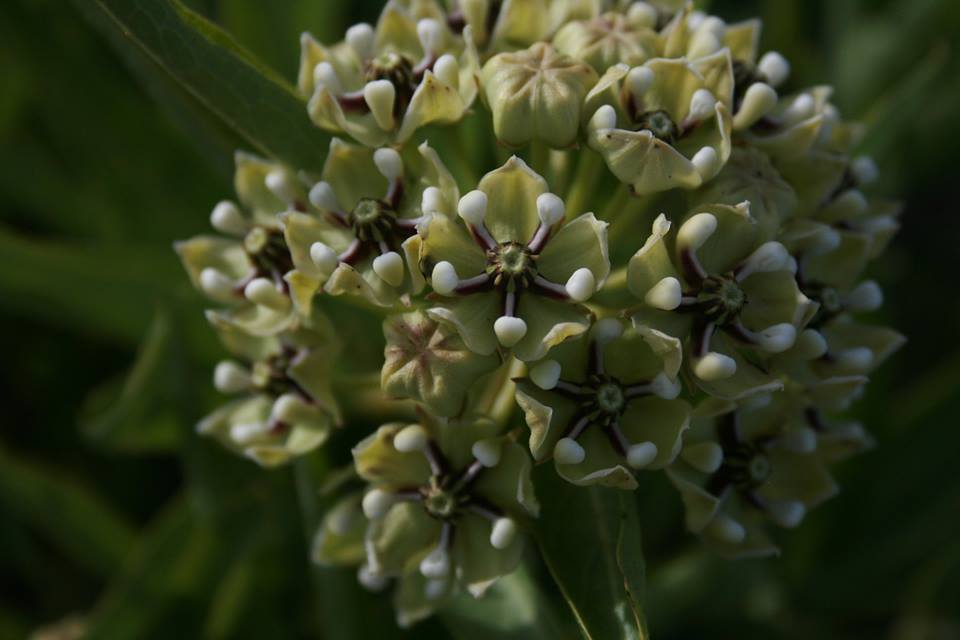
Antelope horn milkweed.
Great Lakes and the Upper Midwest (Minnesota, Wisconsin, Michigan)
Minnesota, Wisconsin, Michigan, and the surrounding states have some of the richest milkweed diversity in the country, largely thanks to the tallgrass prairie remnants still scattered through the region.
- Common milkweed (A. syriaca) is, again, the backbone species here — abundant, easy, and hugely important for monarchs moving through on migration.
- Swamp milkweed (A. incarnata) covers the wetter ground, marsh edges, and ditches.
- Butterfly weed (A. tuberosa) handles the drier, sandier sites.
- Whorled milkweed (A. verticillata) is the one worth knowing if you’ve got a smaller garden — fine, needle-like leaves and a much daintier look than its cousins, but still a full-fledged host plant. It is adaptable, growing well in both full sun and part shade.
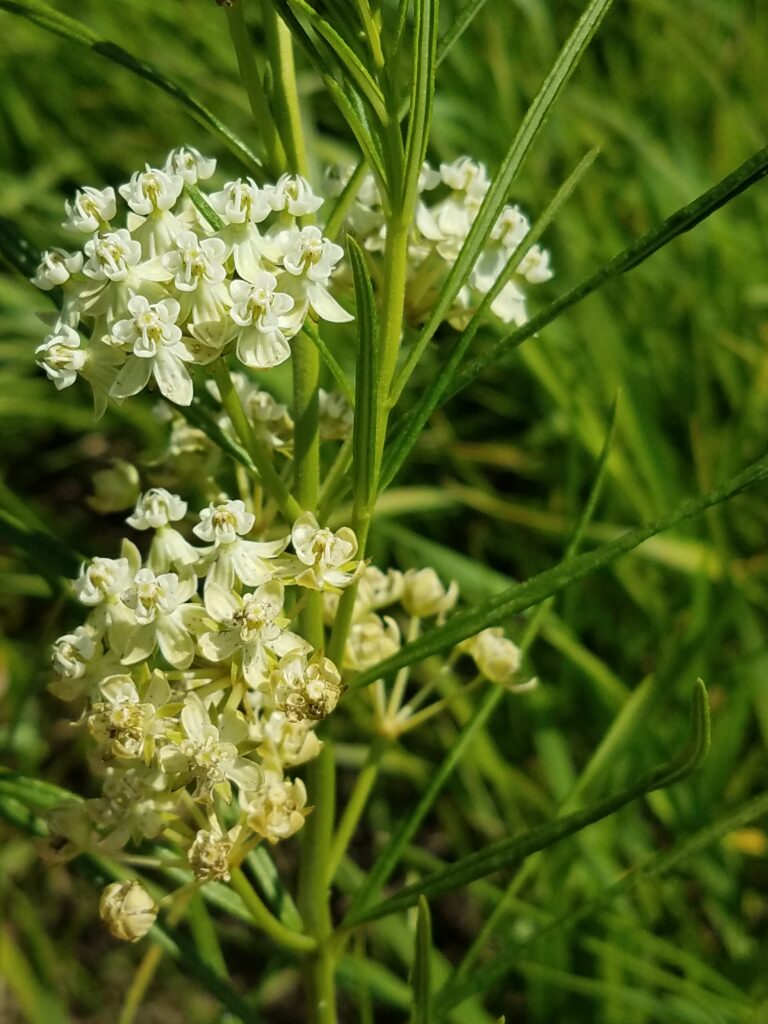
Whorled milkweed.
Central Plains and Prairie State (Iowa, Kansas, the Dakotas, Nebraska, Missouri)
This corridor is genuinely important monarch breeding ground, and the species list overlaps heavily with the Great Lakes region.
- Common milkweed (A. syriaca) and swamp milkweed (A. incarnata) both do the heavy lifting here, common milkweed on upland prairie and old field edges, swamp milkweed in the wetter draws.
- Butterfly weed (A. tuberosa) handles the driest, sandiest ground.
- Green milkweed (A. viridis) shows up on the region’s prairies too — upright to somewhat spreading, with greenish-white flowers tinged with purple.
- Prairie milkweed / tall green milkweed (Asclepias hirtella) is a slender prairie native that’s easy to overlook until its greenish-white flowers, often tinged with purple, appear in early summer. It thrives in sunny, well-drained soil, and it tends to grow as a narrowish, upright plant.
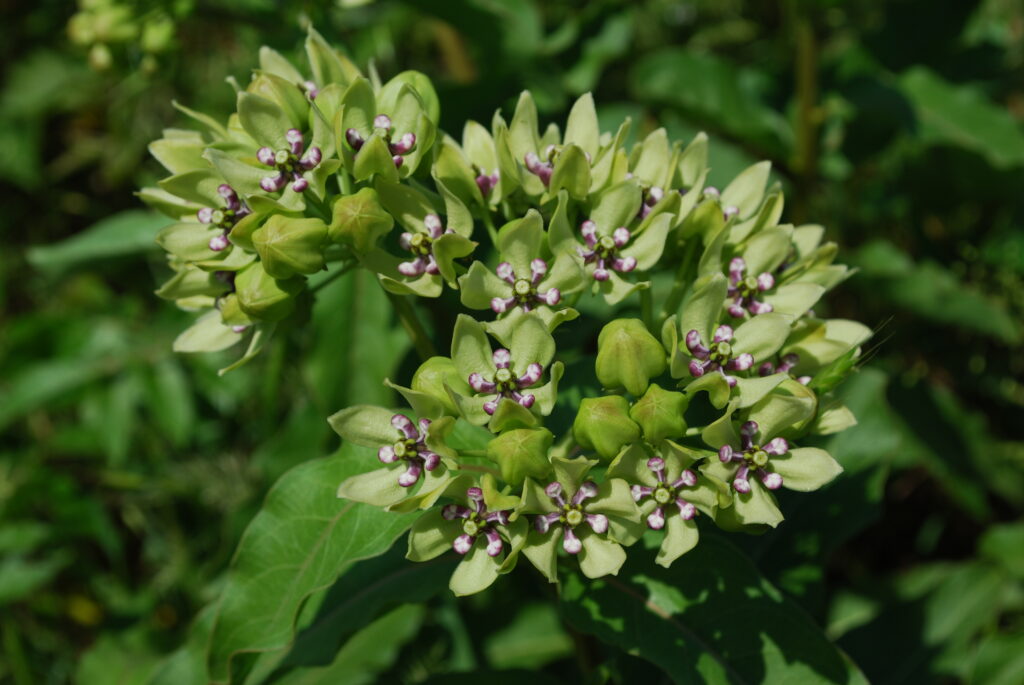
Green milkweed.
Mountain West and Great Basin (Colorado, Montana, Wyoming, Nevada, and Utah)
Elevation and aridity do a lot of the sorting here.
- Showy milkweed (A. speciosa) is the milkweed equivalent of common milkweed for the West — big, fragrant, star-shaped pink flowers, and it tolerates the swing between cold mountain winters and dry summers better than almost anything else in the genus. It is also drought tolerant.
- Broadleaf milkweed (A. latifolia) is the second-string choice, tougher and more drought-adapted for the lower, drier sites where showy milkweed struggles.
- Antelope horns (A. asperula) is also appropriate for this region.
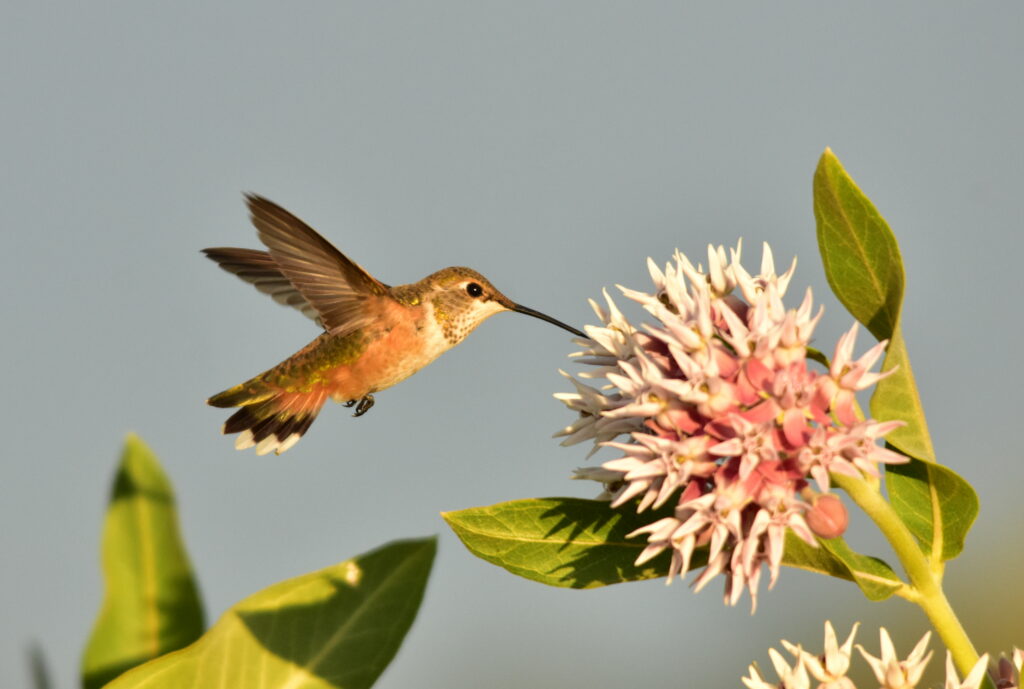
Rufous hummingbird sips nectar from showy milkweed.
Desert Southwest (Arizona and New Mexico)
Down here the milkweeds start looking genuinely strange, and I mean that as a compliment.
- Rush milkweed (A. subulata) barely has leaves at all — it photosynthesizes through pale green, almost leafless stems, an adaptation to serious desert heat that always strikes me as a clever bit of botanical problem-solving.
- Arizona milkweed (A. angustifolia) prefers the region’s canyon bottoms and riparian edges rather than open desert, so it’s the pick if your “desert garden” still has a shadier, damper corner.
- Horsetail milkweed (A. subverticillata) handles the drier grassland and roadside sites, with the same fine, needle-like leaves as its whorled milkweed cousin further east — worth noting, since it can be toxic to livestock, so know your setting before planting it near grazing animals.
- Showy milkweed (A. speciosa) still holds a place at the region’s higher elevations, where conditions start to resemble the Mountain West more than true desert.
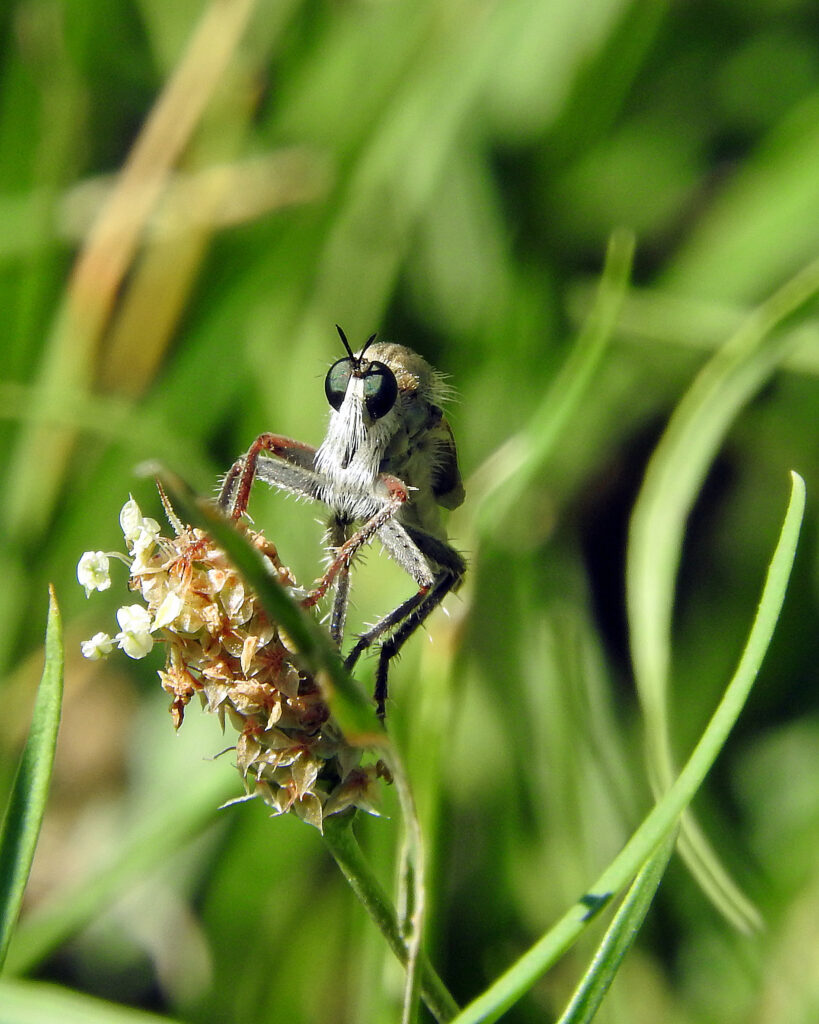
Robberfly on horsetail milkweed.
California
California’s milkweed diversity is enough to fill a guide of its own, but a few species carry most of the weight for home gardeners.
- Showy milkweed (A. speciosa) covers the northern and interior parts of the state.
- Narrowleaf milkweed (A. fascicularis) is one of the most broadly useful California milkweeds, particularly in the state’s drier regions. It has fine, willow-like leaves and clusters of pale pink-and-white flowers and is a strong pick for a low-water native garden.
- Desert milkweed (A. erosa) takes over in the hotter southeastern parts of the state, closely related to the desert species found across the border in Arizona.
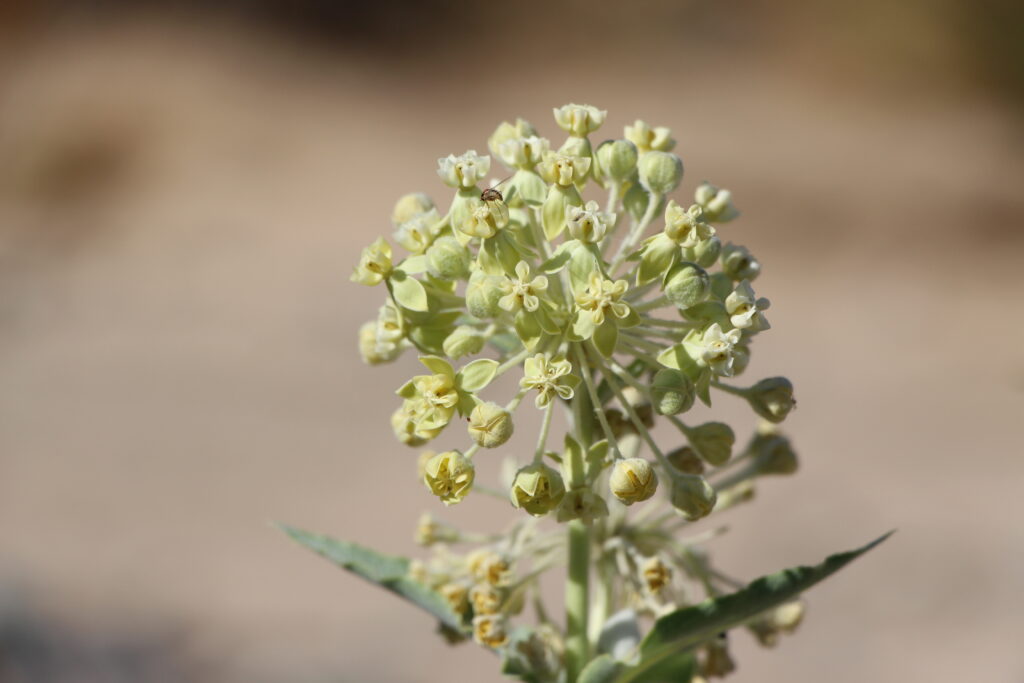
Desert Milkweed.
Californians will also want to check the Xerces Society’s Western Monarch Milkweed Mapper before planting, since western monarch populations are tracked separately from the eastern migration and timing recommendations differ.
Pacific Northwest (Washington, Oregon, and Idaho)
While not a milkweed powerhouse, this region still has some appropriate Asclepias species, particulary for drier, inland areas.
- Showy milkweed (A. speciosa) is once again the reliable backbone, found here on drier east-side sites and river corridors.
- Narrowleaf milkweed (A. fascicularis) rounds things out in the drier parts of Oregon, particularly toward the California border.
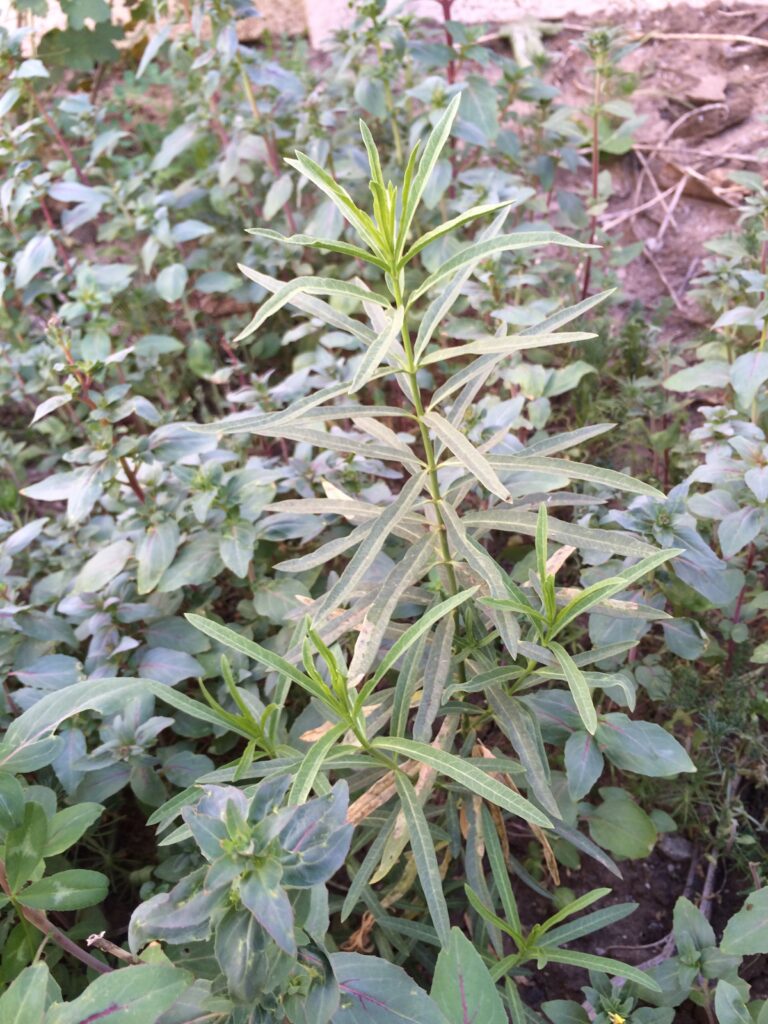
Narrowleaf Milkweed.
Wherever You Garden
It should be noted that this list isn’t a complete list of native milkweeds per region, and many species may overlap other regions. But however many species are on your regional list, the same rules apply everywhere: buy straight native species (not cultivars bred for a different bloom color or a “improved” habit), source seed or plants that are regionally local when you can, and be patient — most milkweeds take a year or two to really settle in before they bloom well. Once they do, they don’t ask much of you.
Meet Leslie Miller

Leslie Ann Miller shares 3.5 acres in rural Oklahoma with birds, butterflies and wide variety of animals. She is currently transforming her yard with plantings…
Leslie's Recent Posts
Where They’re Going: The Fall Monarch Migration

Hawks in the Garden
Membership Has Its Perks

- Ask The Expert Questions
- Newsletter Archive
- PlantersPlace Magazine
- Members Photo Gallery
- Product Ratings & Reviews
- Garden Club Samples
Here’s more information about gardening that you’re going to want

Watch a Gardening Video
Learn About Osmocote Products

Read a Gardening Blog