

Shrubby St. John’s Wort: A Golden Addition for Your Pollinators
Views: 520
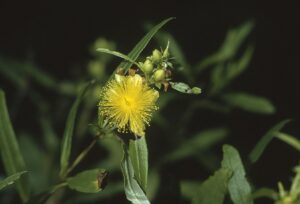
Four years ago, I purchased a small St. John’s Wort (Hypericum prolificum) and planted it at the back of a bed that gets drowned in spring and roasted in dry summers. It’s an extreme area where very few plants survive. Honestly, for the next two years, I forgot it was even there. I assumed it had died. Then in the third year, it branched out and flowered. Fifth year, it was still there, hiding behind my Slender Mountain Mint and Goldenrod. So, this Fall, I decided to move it into a more prominent position where it can stand out like it belongs. This native shrub offers far more than cheerful golden blooms; it serves as a vital resource for beneficial insects, birds, and other wildlife throughout the year.
A Pollinator Powerhouse
From late Spring through Fall, Shrubby St. John’s Wort is covered with bright yellow flowers, each bursting with prominent stamens that remind me of bottlebrushes. (These stamens give the plant its Latin name, prolificum.) These blossoms are irresistible to native bees, including bumblebees and sweat bees, as well as honeybees and various beneficial wasps. The flowers provide both pollen and nectar, making them a complete meal for visiting pollinators during the summer months when other food sources may be scarce. The first and only time I’ve seen tiny Least Skippers (Ancyloxypha numitor), they were on a Shrubby St. John’s Wort. As well, the flowers are always covered in tiny bees.
Year-Round Wildlife Value
As flowers fade, they develop into attractive capsule-like seed heads that persist into winter. These seeds serve as a vital food source for birds, including goldfinches and sparrows, especially during the winter months when all food sources are extremely important for survival. The dense, twiggy structure also provides excellent nesting sites for small birds and shelter for overwintering beneficial insects.
Easy Care and Growing
Shrubby St. John’s wort thrives in full sun to partial shade and tolerates a wide range of soil and moisture conditions, and I can testify to its survival in prairie pot conditions that are wet in Spring and dry in Summer. According to the Lady Bird Johnson Wildflower Center, it does extremely well in calcareous sites. Once established, it is extremely drought-tolerant, making it an excellent choice for water-wise wildlife gardens. It typically reaches 2-4 feet in height with a similar spread, creating a rounded, compact form that requires minimal pruning. It’s resistant to most pests and diseases, and doesn’t need regular fertilization.
Supporting Native Ecosystems
Shrubby St. John’s wort proves that wildlife-friendly gardening doesn’t require sacrifice. It’s easy to care for and provides ecological benefits to both pollinators and a variety of birds. This fall, in many places, it’s not too late to add this plant to your landscape.
Meet Leslie Miller

Leslie Ann Miller shares 3.5 acres in rural Oklahoma with birds, butterflies and wide variety of animals. She is currently transforming her yard with plantings…
Leslie's Recent Posts
Creating Wildlife Havens with Logs and Wood
Five Invasive Plants to Avoid This Fall
Membership Has Its Perks

- Ask The Expert Questions
- Newsletter Archive
- PlantersPlace Magazine
- Members Photo Gallery
- Product Ratings & Reviews
- Garden Club Samples
Here’s more information about gardening that you’re going to want

Watch a Gardening Video

Learn About Osmocote Products
Read a Gardening Blog