

Hawks in the Garden
Views: 8
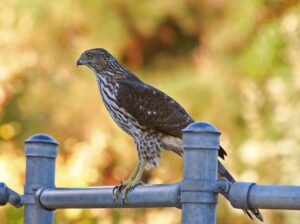
I was sitting on the porch one evening when everything went quiet — no chickadees, no titmice, not even a cardinal chip note. That eerie silence is usually the first sign a hawk has moved into the yard. Sure enough, I looked up to find a hawk perched in the elm tree, scanning the feeder area like it was doing inventory. Out here on my rural acres, hawks are as much a part of the wildlife garden as the butterflies and native bees, and once you start feeding birds, you’re feeding hawks too, whether you mean to or not.
Sharp-shinned vs. Cooper’s Hawk
In urban and suburban areas, these two are the ones most likely to show up at backyard feeders, and they are famously hard to tell apart. To be honest, I struggle with it. Both are small and fast. Mature adults are blue-gray above with rusty barring below, and both specialize in hunting songbirds. A few things help me sort them out:
Size and proportion: Cooper’s hawks are noticeably larger, closer to crow-sized, while sharp-shinned hawks are more like a jay.
Head shape: Cooper’s hawks have a blocky, prominent head. They also may have a crest-shape to them because they have a tendency to raise the feathers on the back of their head. Sharp-shinned hawks have a smaller, more rounded head that barely peeks out.
Tail: Cooper’s hawks have a longer, rounded tail tip (middle feathers are longest); sharp-shinned hawks have a squared-off, notched tail (outer feathers are longest).
In-flight appearance: Cooper’s hawks look more like a cross, whereas Sharp-shinned’s small heads barely stick out past their wings.
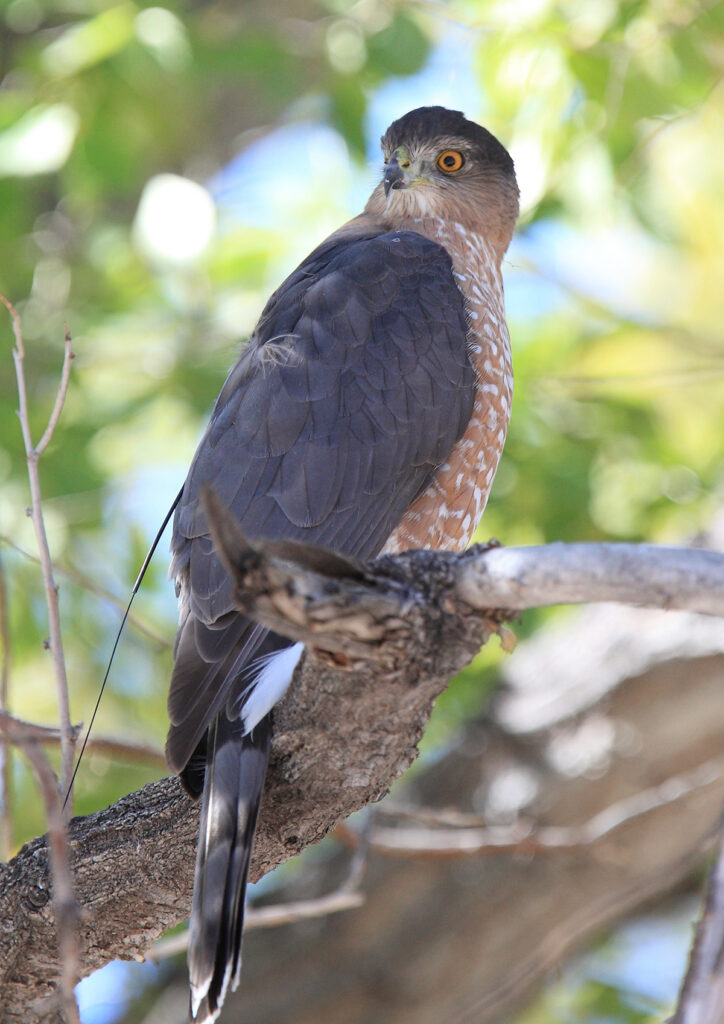
Cooper’s Hawk.
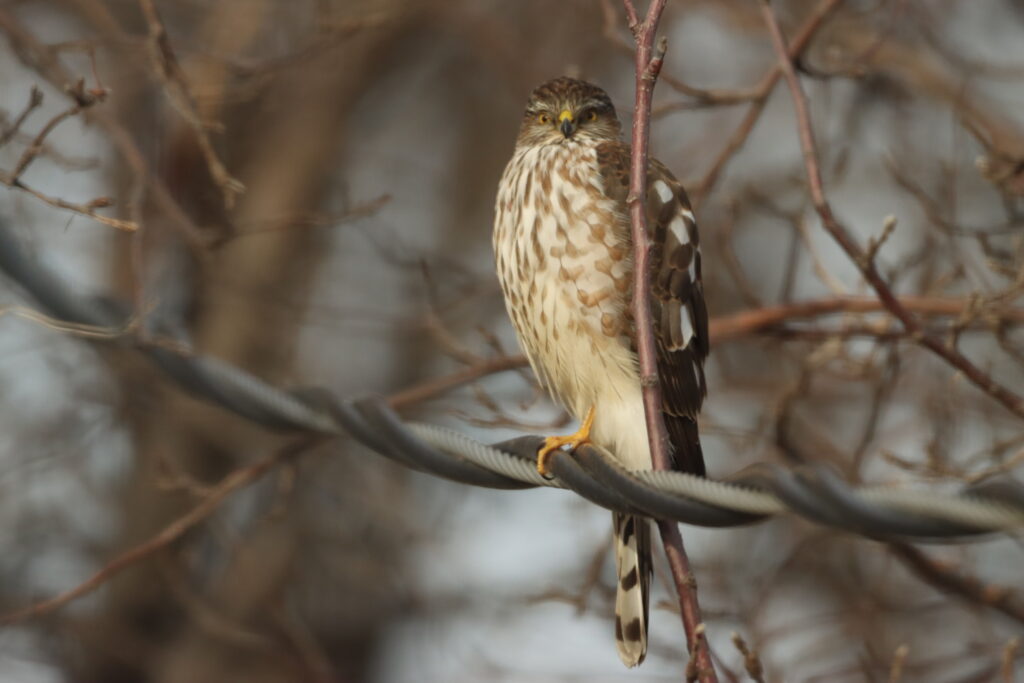
Juvenile Sharp-shinned Hawk.
Both feed almost entirely on small birds, occasionally supplemented with mice and large insects, so if your feeders suddenly go quiet, look for one of these two.
Side Story: My parents once had a Cooper’s hawk that learned to drive songbirds into their picture windows for a quick kill. This wasn’t a one-time thing. Last year, we had a Red-shouldered hawk that learned to do the same thing at our house.
The Bigger Players
Two of the more common species of hawk seen in rural and suburban areas include Red-shouldered hawks and Red-tailed hawks. These are large hawks. Both hawks can vary dramatically in color, but if you see a hawk with a solid-colored tail (no obvious white stripes), there’s a good chance it’s going to be a Red-tailed (especially if the tail appears to be pink or red), and Red-shouldered hawks always have some degree of red or brown striping on their breasts.
Red-shouldered hawks are the noisy ones, often heard before seen with their sharp kee-yer call. I find them near our creek edge, where they hunt frogs, snakes, crayfish, and small mammals in the damper corners of the area.
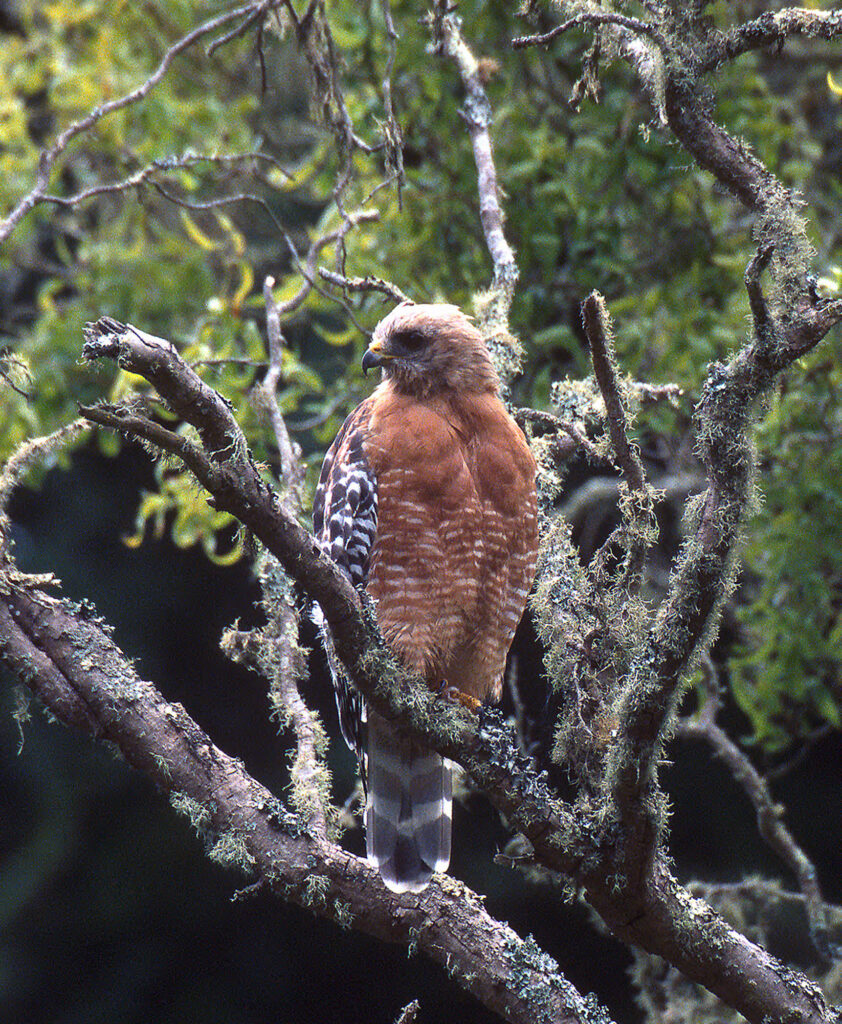
Red-shouldered Hawk.
Red-tailed hawks are the classic soaring hawk, the ones perched on fence posts or riding thermals overhead. They’re generalists, taking mostly rabbits, squirrels, and other rodents, which makes them valuable allies if rodents are tearing up your garden beds.
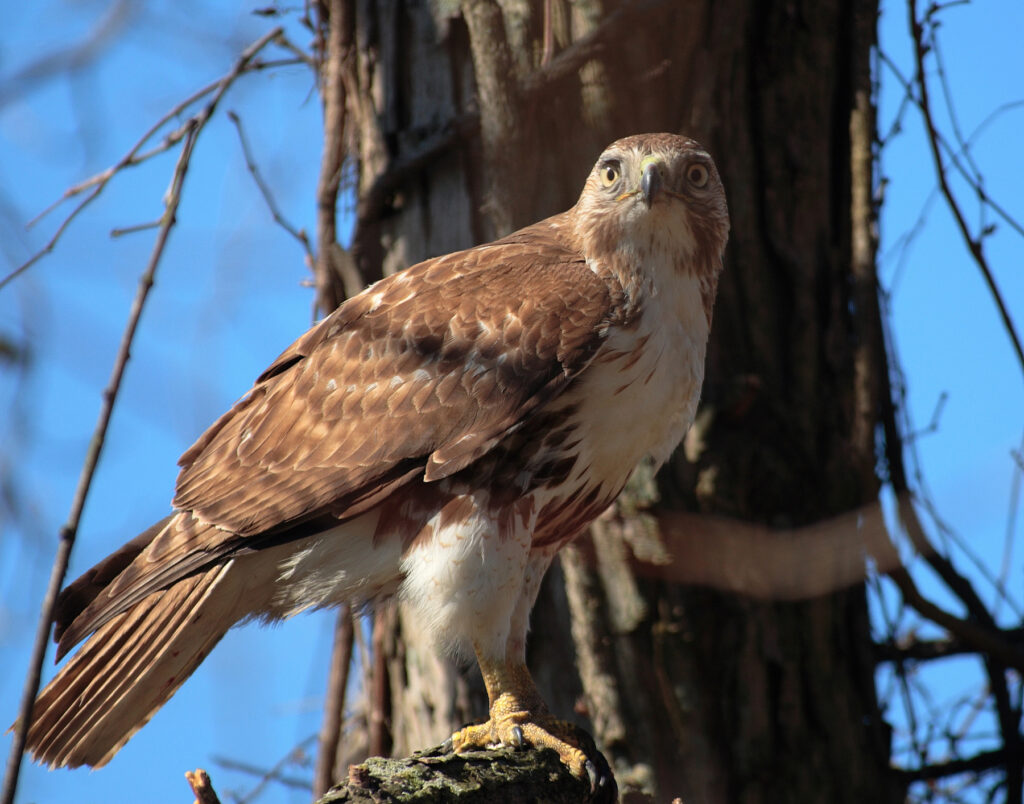
Red-tailed Hawk.
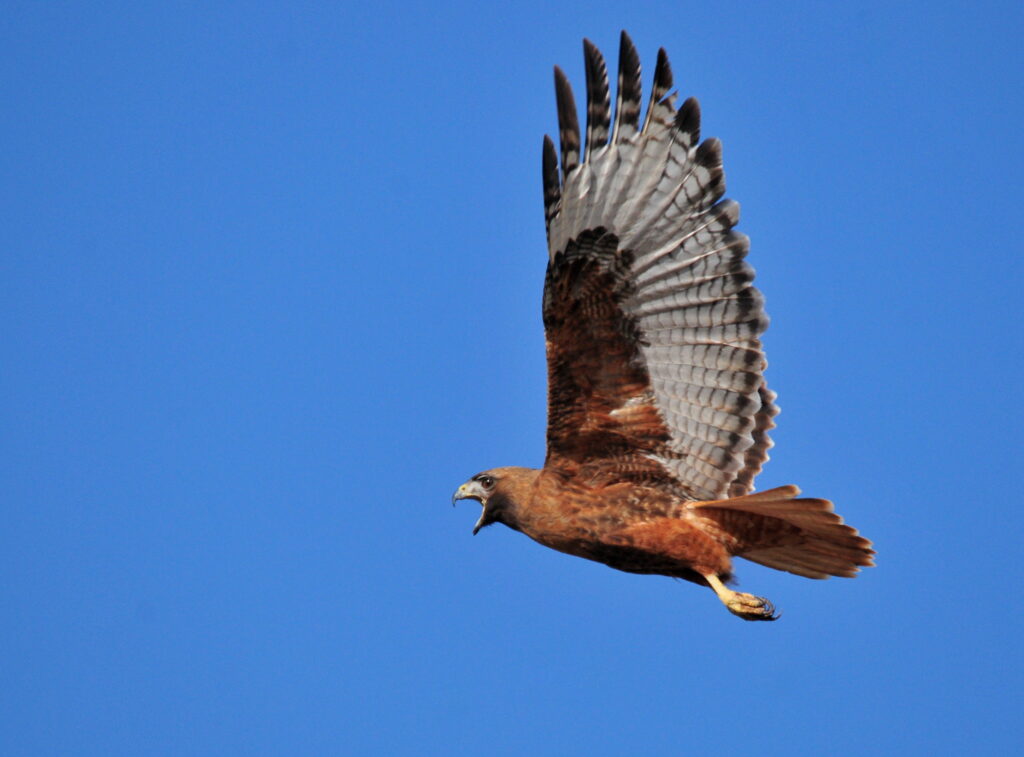
Red-tailed Hawk, dark-form.
Bonus Raptor
Mississippi kites are graceful, buoyant fliers I mostly see circling high over the pasture in summer. But they are commonly seen in urban and suburban areas too. Their diet is almost entirely large flying insects — dragonflies, cicadas, grasshoppers — caught and eaten on the wing, which makes them a good sign of a healthy insect population.
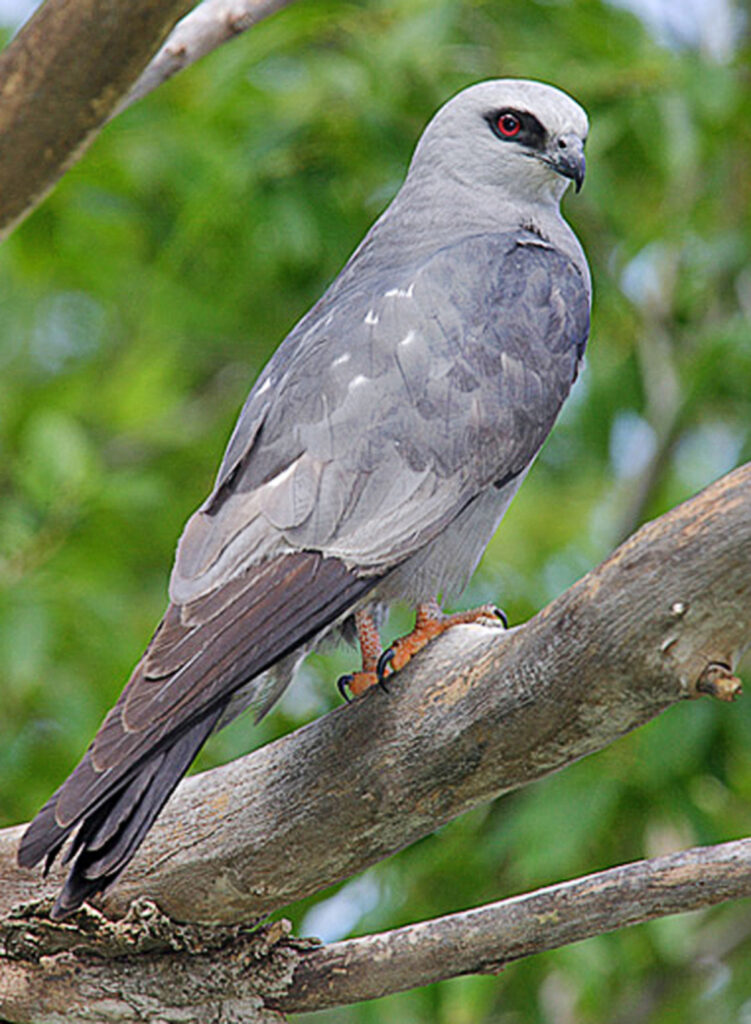
Mississippi Kite.
Living With Hawks
It’s tempting to see a hawk at the feeder as a problem, but they’re simply doing what every predator does, and a healthy wildlife garden has room for them too. Dense shrubs near feeders give songbirds an escape route, and honestly, watching a hawk hunt is its own kind of garden reward.
Meet Leslie Miller

Leslie Ann Miller shares 3.5 acres in rural Oklahoma with birds, butterflies and wide variety of animals. She is currently transforming her yard with plantings…
Leslie's Recent Posts
Plants That Will Feed Hummingbirds Through the Dry Spells
Planting for Rain Gardens: Turning Runoff into Habitat
Membership Has Its Perks

- Ask The Expert Questions
- Newsletter Archive
- PlantersPlace Magazine
- Members Photo Gallery
- Product Ratings & Reviews
- Garden Club Samples
Here’s more information about gardening that you’re going to want

Watch a Gardening Video
Learn About Osmocote Products
Read a Gardening Blog