

Planting for Rain Gardens: Turning Runoff into Habitat
Views: 489
I started a new rain garden this year, so I’ve been happy to have had a fairly wet spring and summer so far. A rain garden doesn’t have to be wet year-round, but it’s been helpful to get my new plants established. Many native plants have evolved for both wet and dry conditions, so I have many species to choose from. Think of low-lying areas in our prairies, that often have wet springs followed by dry summers, or wetland and woodland edges, where soil is moist until a dry spell hits. For wildlife gardeners, the real magic is what a rain garden becomes once it’s established: a pollinator magnet, bird buffet, and one of the toughest, lowest-maintenance beds you’ll ever plant.
What is a Rain Garden?
More than a suburban solution for stormwater runoff, a rain garden is simply a shallow depression planted with species that can handle a good soaking one week and baking sun the next. It captures runoff from your roof, driveway, or a low spot in the lawn. Then it lets the water soak into the ground instead of running off into a storm drain. In the process it filters out pollutants before they reach our creeks and streams. It may be a spot where you’d like to dig a French drain.
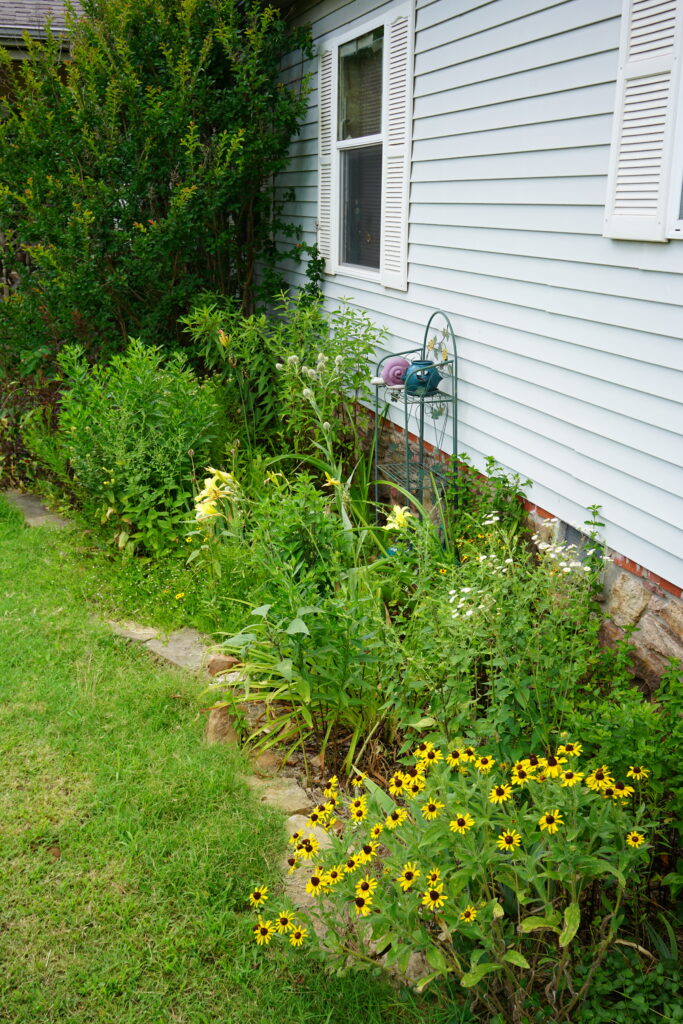
I was told to dig a French drain to control the water that pooled after rains. Instead, I planted it with a mix of mostly native plants.
Choosing Plants for Wet and Dry Spells
The key to a successful rain garden is picking natives that tolerate both extremes—soggy soil right after a storm and drought once it dries out. This is exactly the kind of resilience our native prairie and wetland-edge plants evolved for.
I like to think of a rain garden in three zones: the wet bottom, the moist middle slopes, and the drier rim. Matching the right plant to the right zone is really the whole trick. A few of my favorites, all of which have good value for wildlife:
- Giant Coneflower (Rudbeckia maxima) native to Oklahoma, Texas, Arkansas, and Louisiana. These spectacular flowers tolerate wet prairie pot conditions followed by long dry summers. Plant them as a tall centerpiece in the wet center.
- Blue Flag Iris (Iris versicolor) and Swamp Milkweed (Asclepias incarnata) as shorter companions to (or in lieu of) the Giant Coneflowers in the wet center of the basin.
- Cardinal Flower (Lobelia cardinalis), one of my favorites for areas that remain moist year around (may not tolerate drought). These would go well in the center of a rain garden if you commit to watering them during periods of drought.
- Purple Coneflower (Echinacea purpurea) tolerate moist soil yet are extremely drought-tolerant once established. Plant these away from the wettest areas of the rain garden, in middle sloping areas or around the drier rim.
- Joe Pye Weed (Eupatorium fistulosum) and New England Aster (Symphyotrichum novae-angliae) for late-season nectar.
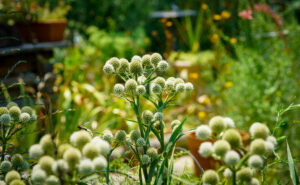
- Rattlesnake Master (Eryngium yuccifolium) prefers moist soil but also tolerates drought. Pollinators love its interesting flowers.
- Black-eyed Susan (Rudbeckia hirta) on the drier edges, where the soil dries out fastest.
- Drummond Aster (Symphyotrichum drummondii) on the drier edges, in part shade. Most websites will tell you this plant likes dry soil, but it is naturally a woodland plant, and in my yard it thrives in the soggier places along with my coneflowers. It does well in drought, but it’s hardy enough to withstand a lot of moisture, too.
- Switchgrass (Panicum virgatum) and Prairie Dropseed (Sporobolus heterolepis) for structure and erosion control on the slopes.
- Buttonbush (Cephalanthus occidentalis) if you want to add a good shrub.
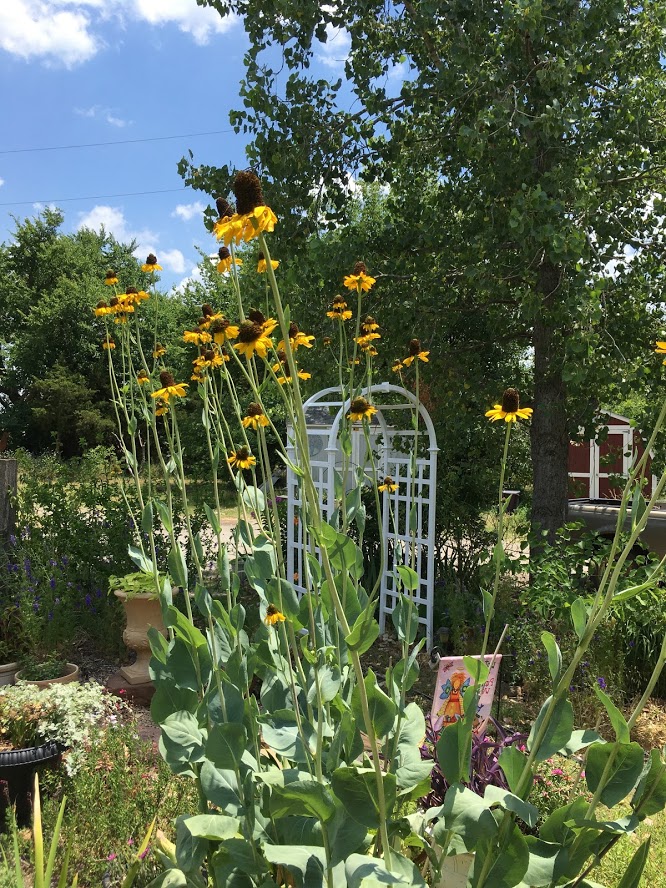
Rudbeckia maxima also called giant coneflowers.
Why it Matters for Wildlife
Once established, a rain garden becomes exactly the kind of layered, densely planted habitat that birds, bees, and butterflies depend on. The deep root systems of these natives—often several feet down—do the heavy lifting of soaking up excess water, while the flowers keep feeding pollinators.
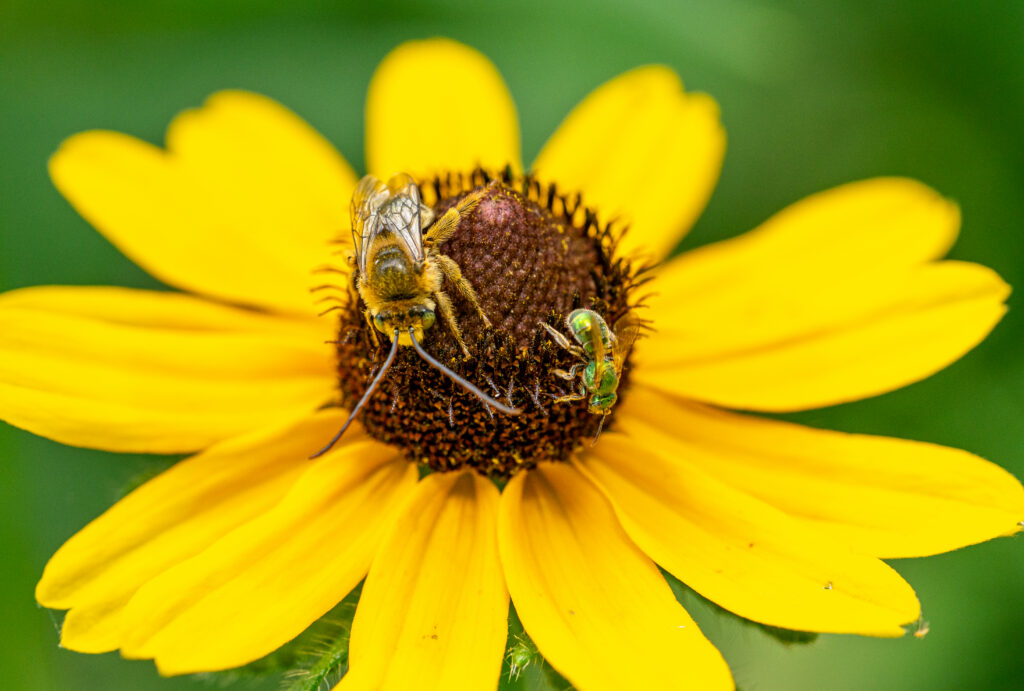
Black-eyed Susans are very popular with pollinators.
A Few Practical Notes
Most of these plants don’t need fertilizer. Water deeply the first season while roots establish, then step back and let nature take over. And resist the urge to over-tidy in fall; hollow stems and seedheads left standing over winter shelter overwintering insects and feed birds when little else is available.
A rain garden asks very little of you once it’s in, and gives back an enormous amount—cleaner water, fewer mosquitoes, and a season-long show of pollinators. If you’ve got a low spot that stays soggy after every storm, don’t fight it. Plant it.
Meet Leslie Miller

Leslie Ann Miller shares 3.5 acres in rural Oklahoma with birds, butterflies and wide variety of animals. She is currently transforming her yard with plantings…
Leslie's Recent Posts
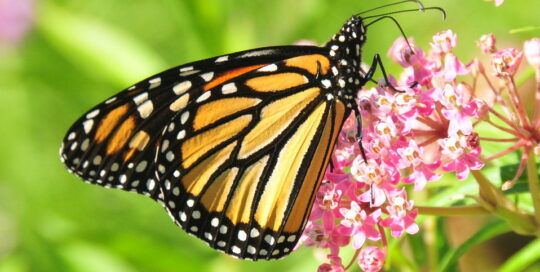
Where They’re Going: The Fall Monarch Migration
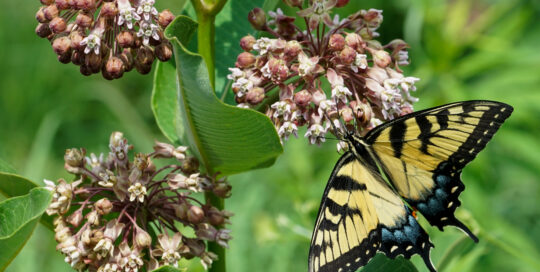
Milkweed by Region: A Native Milkweed Guide
Membership Has Its Perks

- Ask The Expert Questions
- Newsletter Archive
- PlantersPlace Magazine
- Members Photo Gallery
- Product Ratings & Reviews
- Garden Club Samples
Here’s more information about gardening that you’re going to want

Watch a Gardening Video
Learn About Osmocote Products
Read a Gardening Blog