

Plants That Will Feed Hummingbirds Through the Dry Spells
Views: 713
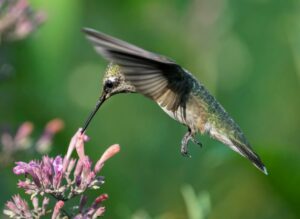
In July, right when my rain gauge gives up, my hummingbirds seem to multiply. (Probably because of baby hummingbirds…) Sometimes, the battles at my hummingbird feeders become fierce, especially for the youngsters. I like to provide as many food sources as possible. If you want a garden that supplements your feeders straight through a hot, dry summer, you need nectar-rich plants that thrive on neglect.
Five Drought-Tolerant Plants That Hummingbirds Love
Here are some good drought-tolerant hummingbird plants:
Agastache (Agastache spp.), or hummingbird mint, is a good place to start. These plants are practically built for this job—the name says so. Many agastache species need no supplemental water once established. Then they reward you with spikes of tubular flowers from early summer into fall. Bees love them too, but the hummingbirds treat it like a personal buffet, working up one spike and down the next.
Red Yucca (Hesperaloe parviflora) is another one I wouldn’t garden without. Don’t let the name fool you—it isn’t a true yucca, but it shares that same drought-tolerant toughness. Tall coral-pink flower stalks rise up out of grassy, spineless rosettes and bloom for months, right through the worst of summer’s heat. It asks for nothing but sun and decent drainage, and it looks sculptural in the landscape even when it’s not in bloom.
Autumn Sage (Salvia greggii) is hard to beat, and one of my favorite plants. I have five in my gardens. Their narrow red or coral flowers are exactly the shape hummingbirds are built for, and they flower in flushes all season into fall.
Coral honeysuckle (Lonicera sempervirens) is one I’d never leave out of a hummingbird garden. Unlike its aggressive Japanese cousin, this native vine behaves itself, twining politely up a trellis or fence without swallowing everything nearby. If you want a vine that pulls its weight for wildlife without the trumpet vine’s wandering habit, this is the one to plant instead.
Turk’s Cap (Malvaviricus drummondii, formerly Malvaviscus arboreus var. drummondii) handles part shade and dry soil as well as anything else I grow. Its twisted little red flowers bloom right through August’s worst without a drop of extra water. I think Turk’s Cap is an underappreciated plant for wildlife gardens.
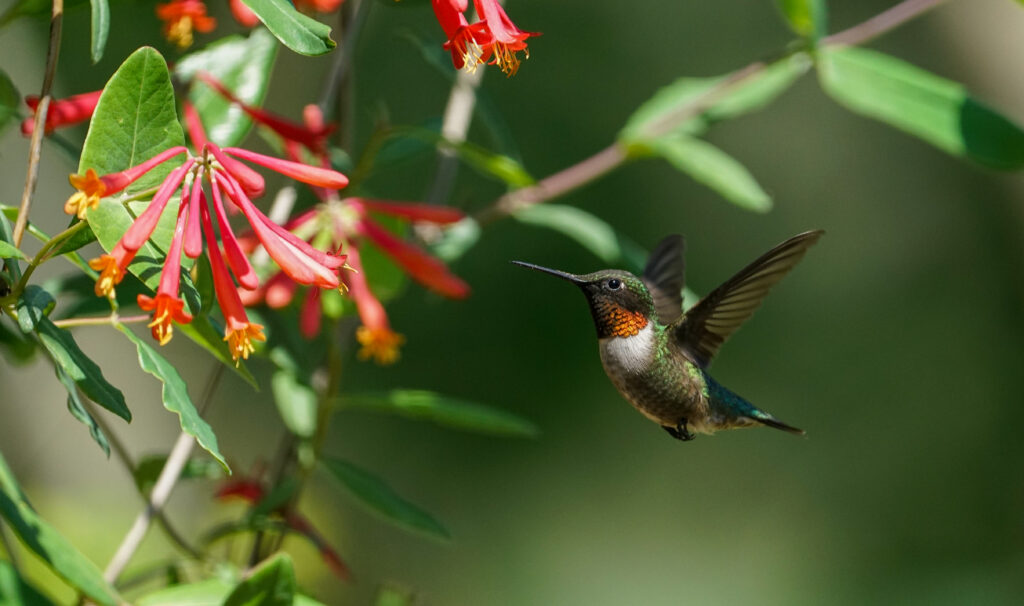
Ruby-throated hummingbird on Coral Honeysuckle.
A Bonus Non-Native Annual
Zinnia (Zinnia elegans), especially the tall, single-flowered heirloom types. It’s not a true native like the others, but it’s about as drought-tough as annuals come. Hummingbirds work the flowers all day long right alongside the butterflies. As a bonus, it blooms fast from seed, so it’s an easy way to fill a gap the first summer while your agastache and salvia are still getting established. Zinnias reseed freely, so once you plant them, it’s likely you’ll get a few next year, too.
Conclusion
None of these plants ask much of me. Once they’re rooted, I mostly stay out of their way. In return, my hummingbirds have multiple food sources all summer long.
Meet Leslie Miller

Leslie Ann Miller shares 3.5 acres in rural Oklahoma with birds, butterflies and wide variety of animals. She is currently transforming her yard with plantings…
Leslie's Recent Posts
Milkweed by Region: A Native Milkweed Guide
Hawks in the Garden
Membership Has Its Perks

- Ask The Expert Questions
- Newsletter Archive
- PlantersPlace Magazine
- Members Photo Gallery
- Product Ratings & Reviews
- Garden Club Samples
Here’s more information about gardening that you’re going to want

Watch a Gardening Video
Learn About Osmocote Products
Read a Gardening Blog