

April Checklist for Garden Pests and Problems
Views: 599
I thought we’d try something different with an April checklist so we know what to watch for, and what to do right now in each of our regions.
What to Buy Now to Battle Pests Later
Southeast
Winter weather has finally passed, flowers are blooming, and the pests are hungry.
~ Look for aphids on new growth. Blast them off with water before colonies explode.
~ Cabbage moths are flitting around the Brassicas. Before you see the first green worm, cover the plants with a lightweight floating row cover.
~ You find white flies, tiny moth-like insects found on the undersides of tomatoes and some ornamentals. Spray the foliage with Neem oil and set out sticky traps to check population levels.
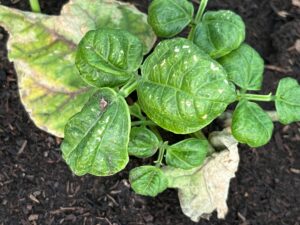
~ You notice yellowing or curling of young leaves. This could me physiological issues or fungal infections. Keep an eye on the plants to determine whether it’s something you’re doing (or not doing), or a cause that needs treatment.
Southwest
Record heat in some areas stresses plants and exacerbates pest problems.
~ Look for pale stippling or yellowing of leaves. While this often appears physiological, in this region, it might mean leafhoppers. Using row covers or silver reflective materials can prevent infestations, but if you already have them, spray the foliage with an insecticidal soap.
~ If you see large, bare areas with ant activity it is probably harvester ants, which can remove seeds if they’re in the area. They prefer dry areas, try watering deeply and regularly to discourage them.
~ If you see white patches on leaves or crispy leaf edges, you might have sunscald. Provide shade and water deeply.
Mid-Atlantic
It might be a slow start this year, but things happen quickly.
~ Look into the trees for the telltale webbing of tent caterpillars. Remove them before they spread onto more trees and shrubs.
~ Check in dark areas for slugs. Set out slug traps or barriers before they turn to your plants.
~ If the leaves on your peaches are curling, thickened and reddish, it could be peach leaf curl. Once infection occurs, it’s too late for treatment, but to be proactive by applying a copper-based fungicide in the early spring.
Central States
Planting begins with the cool season varieties.
~ If you see black specks jumping from the leaves of your plants, it’s probably flea beetles. They’re hard to catch in one place, so the best option is to use a floating row cover.
~ When the plants tip over like they’ve been cut at soil level, the culprit is cutworm moth larvae. Fortunately, it’s easy to keep the larvae away from the plants by using a collar, such as a toilet paper roll, on each one.
~ Discolored foliage and stunted growth early in the season when the soil is cold definitely affects their growth. Don’t be too quick to plant, even if there is a seemingly early warm-up. And, if you do, use a floating row cover to add a few degrees of warmth to the bed. ‘
Northeast
Spring tasks make the rest of the summer go smoothly.
~ Be ready to act if your apple trees suddenly looked scorched. Blackened branches and curled leaves mean fire blight. Treat it with a copper fungicide and prune out any infected branches.
University of Minnesota Fire Blight
~ Watch for birds eating your seed. Sometimes birds will pick the seeds as fast as you plant. Pull out that floating row cover again to keep them safe.
Pacific Northwest
Where rain is a blessing and a curse.
~ The Pacific Northwest is known for its rain, so if you see mats of green liverwort is making the most of the conditions. It does not hurt plants, per se, but it does block the soil. Use a digger or fork to break it up.
~ When your cabbage or broccoli goes limp, look for root maggots. Small gray larvae burrow into the roots and harm the plants. If you are prone to them, use a floating row cover to keep them away from the transplants or add collars around each plant.
April is less about reacting, and more about reading the garden to ensure a smooth season. Here are just a handful of pests and problems to watch for now, so you can be proactive before they become problematic.
Meet Amy Grisak

Amy is a freelance author and photographer in Great Falls, MT who specializes in gardening, foods, and sustainable agriculture. She provides information on every kind…
Amy's Recent Posts
The Pros and Cons of a Sunflower Forest
Peony Problems
Amy's Videos
Membership Has Its Perks

- Ask The Expert Questions
- Newsletter Archive
- PlantersPlace Magazine
- Members Photo Gallery
- Product Ratings & Reviews
- Garden Club Samples
Here’s more information about gardening that you’re going to want

Watch a Gardening Video
Learn About Osmocote Products
Read a Gardening Blog