

Five Non‑Native Shrubs to Replace with Native Alternatives
Views: 1074
There are many non-native shrubs that are extremely popular in landscapes. I even have some in my own yard. They’re popular for good reasons: they’re often pest-free and have lovely flowers. The problem is also that they’re pest-free (meaning not beneficial to native wildlife) and sometimes escape our tidy neighborhoods to become invasive monsters in our native landscapes. The good news is that we have lots of native shrubs that are just as attractive, but better for our wildlife. Here are five common non‑native shrubs you can replace with native alternatives to improve your garden’s ecological value, particularly if you are in the eastern half of the country.
Burning Bush (Euonymus alatus)
Burning bush is known for its brilliant red fall color, but it’s also a prolific spreader that is displacing native woodland plants across large parts of North America. Birds disperse the seeds widely, helping this plant escape into natural areas.
Native replacement: Highbush blueberry (Vaccinium corymbosum)
Highbush blueberry offers fiery autumn foliage that rivals burning bush, plus spring flowers for pollinators and nutrient‑rich berries for people and wildlife. It requires acidic, well-drained soil and full to part sun to thrive.
Japanese Barberry (Berberis thunbergii)
This shrub was widely planted for its color and deer resistance, but it creates dense thickets that outcompete native plants and alter soil chemistry. It also provides an ideal habitat for ticks. Surprisingly, its berries are not very nutritious for birds.
Native replacement: New Jersey tea (Ceanothus americanus)
New Jersey tea produces fragrant white flower clusters beloved by pollinators, especially specialist native bees. It stays compact like barberry, works well in foundation plantings, and supports dozens of butterfly and moth species. It’s a host plant for Spring Azure butterflies.
Chinese Privet (Ligustrum sinense)
Privet hedges are durable and easy to shape, but they produce abundant berries that birds spread aggressively. Escaped privet dominates understories in many regions, especially in the South, reducing biodiversity. I had privet in my previous landscape and loved it for its butterfly-attracting ability, but I didn’t understand just how harmful it was to the overall environment. Knowing better now, I took a surprise volunteer out of my garden last fall.
Native replacement: Spicebush (Lindera benzoin)
Spicebush is a native that blooms early in spring and is the host plant for the Spicebush Swallowtail. It is aromatic and has brilliant yellow leaves in the fall. Its red berries are beloved by birds. It prefers moist, rich, and slightly acidic to neutral soil, but can tolerate clay as long as it gets enough water. Spicebush is also a good replacement for forsythia.
Butterfly Bush (Buddleja davidii)
Despite the name, butterfly bush feeds only adult butterflies—and even then, it provides nectar but no habitat for reproduction. Worse, it spreads rapidly and can outcompete native plants. I’ve written about butterfly bush before, if you’d like a bit more information.
Native replacement: Buttonbush (Cephalanthus occidentalis)
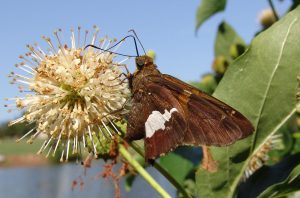
Buttonbush is a pollinator magnet whose spherical blooms draw butterflies, bees, and hummingbirds. It’s also a host plant for several moth species, making it far more valuable to Lepidoptera than butterfly bush ever could be.
Multiflora Rose (Rosa multiflora)
Originally introduced as a living fence, multiflora rose is now a widespread invasive species that forms impenetrable thickets and crowds out nearly everything around it.
Native replacement: Pasture rose (Rosa carolina)
Pasture rose has fragrant pink flowers, provides excellent wildlife cover, and produces hips that feed birds in fall. It spreads gently rather than aggressively and thrives in the same sunny conditions.
Conclusion
Replacing these non‑native shrubs with native alternatives is one of the most impactful steps a wildlife gardener can take. It doesn’t just improve your own yard, it strengthens local ecosystems, supports declining pollinator populations, and helps restore plant communities that wildlife relies on. Additionally, native plants are often better suited to your local area and require fewer resources, such as fertilizer and water, to keep them looking nice.
Meet Leslie Miller

Leslie Ann Miller shares 3.5 acres in rural Oklahoma with birds, butterflies and wide variety of animals. She is currently transforming her yard with plantings…
Leslie's Recent Posts
Where They’re Going: The Fall Monarch Migration
Milkweed by Region: A Native Milkweed Guide
Membership Has Its Perks

- Ask The Expert Questions
- Newsletter Archive
- PlantersPlace Magazine
- Members Photo Gallery
- Product Ratings & Reviews
- Garden Club Samples
Here’s more information about gardening that you’re going to want

Watch a Gardening Video
Learn About Osmocote Products
Read a Gardening Blog