

Gardening for Moths
Views: 358
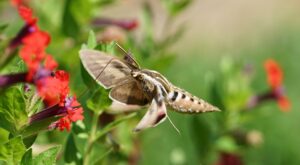
While butterflies get most of the attention, moths are some of the most important—and overlooked—pollinators in North America. Their species greatly outnumber butterflies (I read one quote of 10:1), feed countless birds and bats, and really just play an important role in keeping ecosystems healthy. There is evidence that moths are also responsible for pollinating some important crops. I have waxed poetic about my love of moths before, but here’s a blog dedicated to how wildlife gardeners can help support our nighttime pollinators.
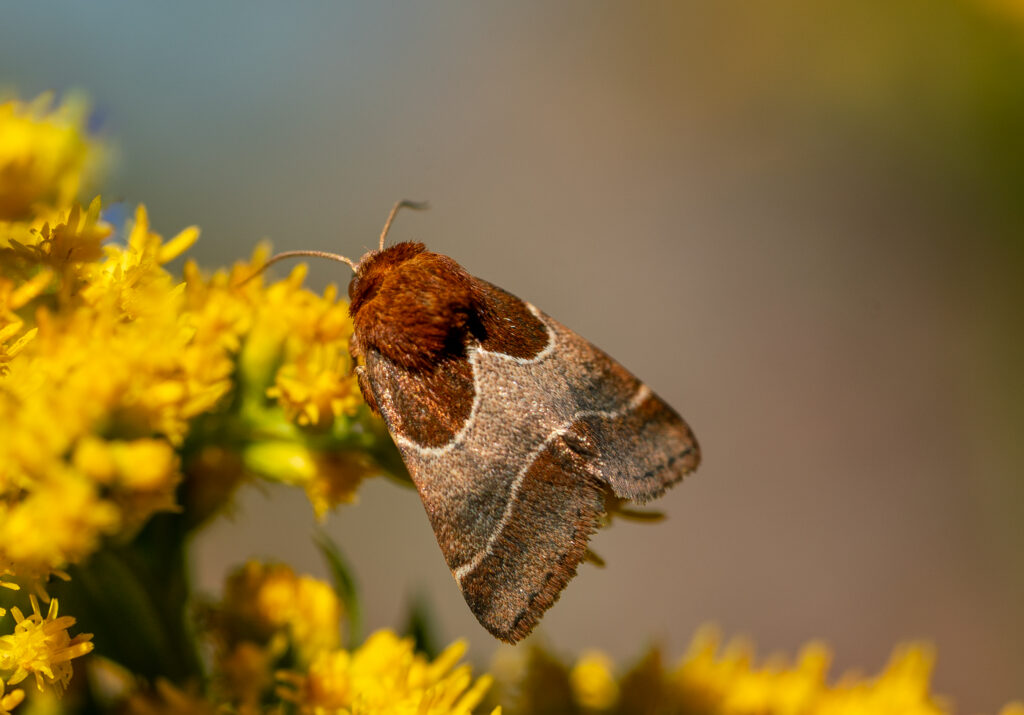
An Arcigera Flower Moth pollinating my Goldenrod.
Plant Host Plants
Just like butterflies, moths need host plants to lay their eggs on and feed their caterpillars. As always, this goes back to planting native plants. Moths and native plants evolved together. If you have space for trees: oaks, cherries, hackberries, willows, maples, poplars, cottonwoods, and birches host spectacular numbers of moths. Oaks are larval hosts to over 500 species of moths, so if you want to plant a single tree, make it an oak. Smaller gardens can still make a huge impact by planting native perennials such as goldenrods, leadplant, wild grape, asters, monarda, liatris, Joe Pye weed, and evening primrose. These plants feed caterpillars while also providing nectar for adult moths. There are so many moth species, I would guess that almost any native plant with flowers will benefit moths in some way.
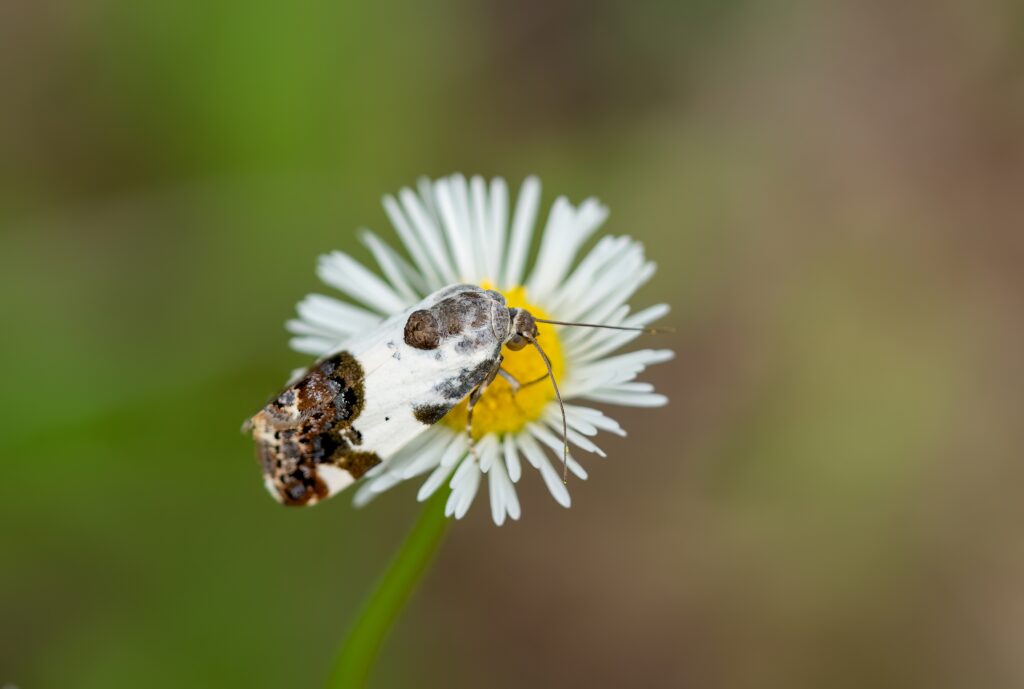
This is a Bird Dropping Moth on Prairie Fleabane. Prairie Fleabane is a host to many different species of moth, although you may not see it listed on the lists of “best plants for moths.” It’s just one example of how important native plants are to moths.
Early-, Late-, and Night-Blooming Flowers
The relationship between moths and flowers that open at night, in the evening, or very early in the morning is not completely clear, but since butterflies and bees are typically less active during these times, it is fairly safe to assume that they are largely being pollinated by moths. So, you can help them out by planting species such as:
- Four O’Clocks
- Evening primrose
- Moonflower
- White gaura
- Foamflower (Tiarella sp.)
- Yucca species (many of which are completely dependent upon species of yucca moths)
- Monarda
- Night phlox (Zaluzianskya capensis)
By planting these species, you create a dusk‑to‑dawn buffet that benefits both moths as well as other night‑visiting pollinators like certain beetles and bats.
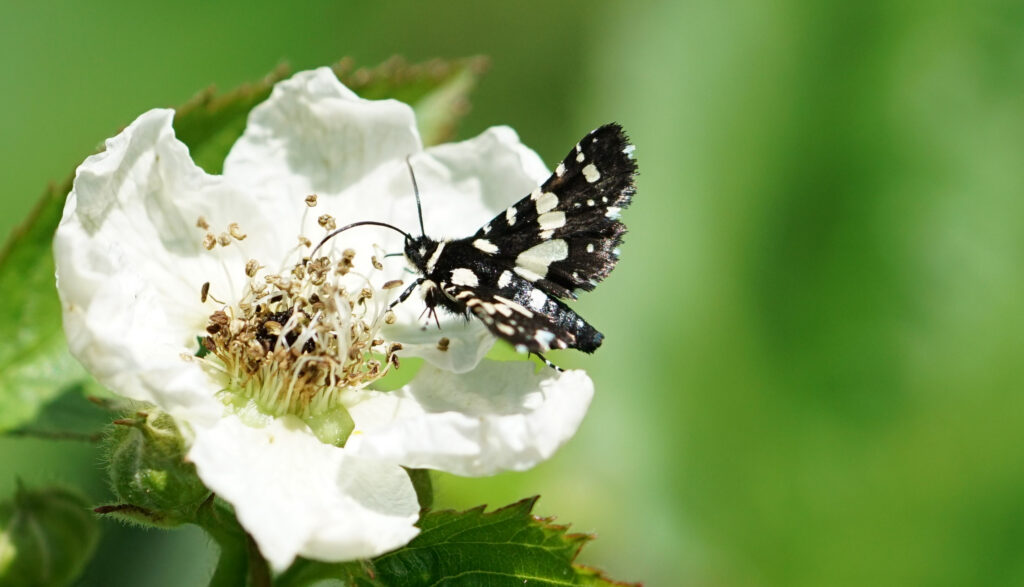
Moths are often attracted to white flowers that remain open overnight. This is a Mournful Thyris Moth on a blackberry blossom.
Dim Your Lights
If you’ve ever left a porchlight on, you know that it will attract moths. One of the biggest threats to moths is artificial light at night, which disrupts their navigation, feeding, and reproduction. Wildlife gardeners can help by installing motion‑activated lights, using warm‑coloured bulbs, or placing shields over fixtures to direct light downward. Even small reductions in nighttime glow dramatically increase moth safety.
Provide Shelter
Caterpillars need sheltered spots to feed, hide, and pupate. Leaf litter, brush piles, and undisturbed corners of the garden provide refuges for them. Resist the urge to over‑tidy—moths depend on fallen leaves, hollow stems, loose bark, and decomposing wood. The messier the garden edges, the more moth species you are likely to support.
Grow Larval Food Plants for Specialists
Some moths rely on very specific plants (and visa versa). Including a few of these specialist hosts can attract unique species that many gardeners never notice. For example:
- Sphinx moths love native viburnums, evening primrose, and willow
- Tussock moths thrive on oaks, hackberries, and dogwoods
- Yucca require specific moths for pollination
Conclusion
Moths are underappreciated pollinators and add much to the biodiversity of our gardens. Some plants, like yuccas, have evolved to be entirely dependent on moths for reproduction. By adding native plants that are beneficial to these beautiful, diverse insects, you can increase your chances of adding them to your landscape.
Meet Leslie Miller

Leslie Ann Miller shares 3.5 acres in rural Oklahoma with birds, butterflies and wide variety of animals. She is currently transforming her yard with plantings…
Leslie's Recent Posts
Plants That Will Feed Hummingbirds Through the Dry Spells
Planting for Rain Gardens: Turning Runoff into Habitat
Membership Has Its Perks

- Ask The Expert Questions
- Newsletter Archive
- PlantersPlace Magazine
- Members Photo Gallery
- Product Ratings & Reviews
- Garden Club Samples
Here’s more information about gardening that you’re going to want

Watch a Gardening Video
Learn About Osmocote Products
Read a Gardening Blog