

Xeriscaping for Wildlife
Views: 409
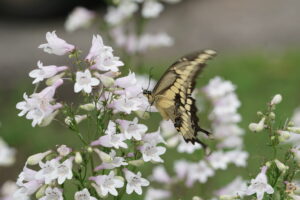
In my social media feeds, there are a lot of stories about data centers sucking up all our water. Additionally, in real life, I live in an area that is in moderate to severe drought. But here’s the good news: you don’t need a lot of water to garden if you focus on xeriscaping, like I do much of the time. Here’s a very basic introduction to xeriscaping for wildlife, plus ten great native plants to get you started.
Xeriscaping for Wildlife
Xeriscaping can be a complex topic, with varying philosophies, design concepts, and even water-wise designations for plants. I’m just going to scratch the surface by saying this: a wildlife‑supporting xeriscape focuses on three principles: conserving water, planting species adapted to local conditions, and designing habitat structure with food, shelter, and nesting sites in mind. By planting drought‑tolerant native plants, you can create a garden that thrives with minimal irrigation while offering nectar, seeds, cover, and habitat for pollinators, birds, and beneficial insects. Once established, the right natives can survive drought, support local ecosystems, and bring year‑round beauty to your yard.
Ten Drought-Tolerant Native Plants for Xeriscapes
Here are ten plants that will do well in most xeriscape gardens.
Butterflyweed (Asclepias tuberosa)
A monarch favorite that does well in dry soils, butterfly weed offers vibrant orange blooms loaded with nectar. It supports monarch caterpillars and attracts countless pollinators. Mine is blooming right now, and it’s covered in Silvery Checkerspot butterflies.
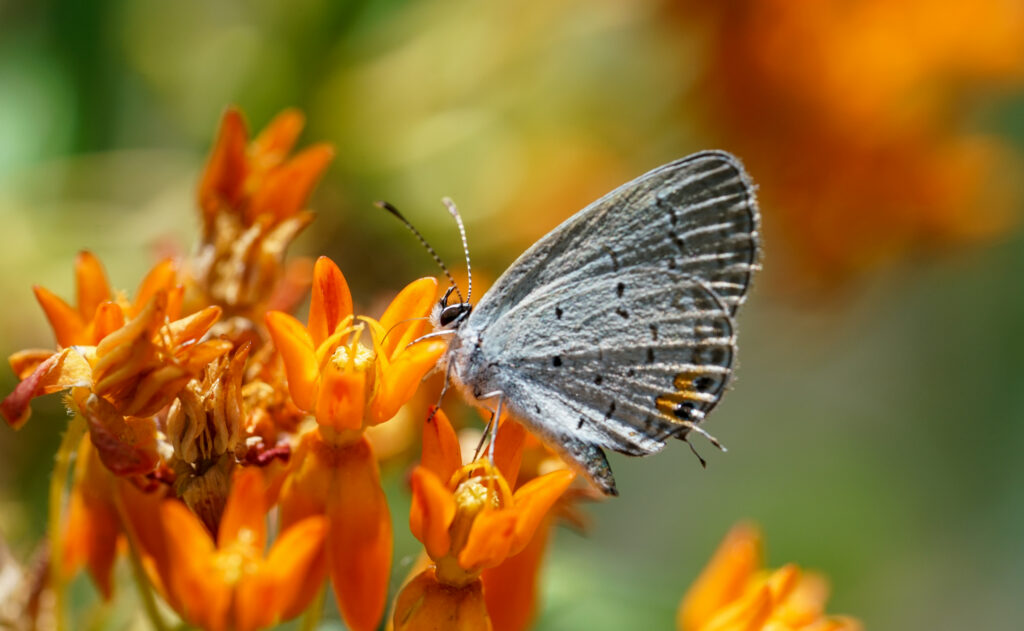
Eastern Tailed-Blue on Butterflyweed.
Desert Willow (Chilopsis linearis)
This small tree provides hummingbird‑loved tubular flowers all summer long. It thrives in extreme heat and requires minimal water.
Blackfoot Daisy (Melampodium leucanthum)
A tidy, low‑growing perennial covered in white daisies, this plant blooms for months and supports native bees. Perfect for rock gardens and hot, sunny slopes. I planted this last year, and it was gorgeous. Alas, it did not come back this year, but I’d plant it even as an annual.
Prairie Dropseed (Sporobolus heterolepis)
One of the most elegant native grasses, prairie dropseed forms fine, fountain‑like tufts. Its seeds feed small birds, while its deep roots stabilize soil and improve water infiltration.
Red Yucca (Hesperaloe parviflora)
Though not really a Yucca, this highly drought‑tolerant and visually striking plant sends up tall coral flower spikes beloved by hummingbirds. It thrives in harsh, dry conditions and offers strong architectural form.
Penstemon (Penstemon species)
There are many penstemons that are worthy of your garden, and most of them don’t need much watering. These natives are hummingbird and bee magnets. Mine are currently blooming, and I have little carpenter bees all over them.
Asters (Symphyotrichum species)
Asters are late‑season bloomers, doing their thing when most other plants fade. They support migrating monarchs and fall pollinators, and some are host plants to lepidoptera, including Painted Lady butterflies. Asters are very low water and low maintenance, too.
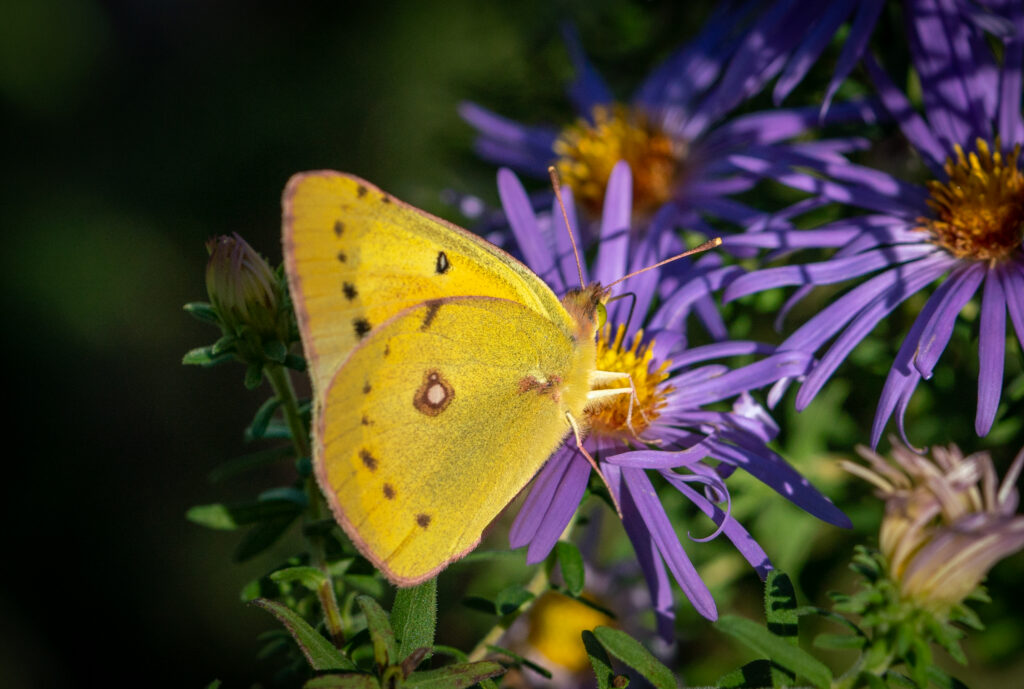
Orange sulphur on asters.
Gaura (Gaura lindheimeri)
Interestingly, the Lady Bird Johnson Wildflower center states that White Gaura is best suited to moist soils. Yet once established, it has a deep taproot that makes it suitable for xeriscaping. I have two of these plants in my gardens, and they are favorites because I never, ever have to water them, and they bloom cheerfully from spring to summer. They are visited by many native bees, and their seeds are eaten by birds.
Agastache (Agastache species)
There are multiple species and cultivars of Agastache; you might be more familiar with their common name, Hummingbird Mint. Almost all do well in dry conditions (and many are happy in sand soils) and are beloved by hummingbirds and bees. With such variety available, you have plenty of options for crafting your flowerbeds.
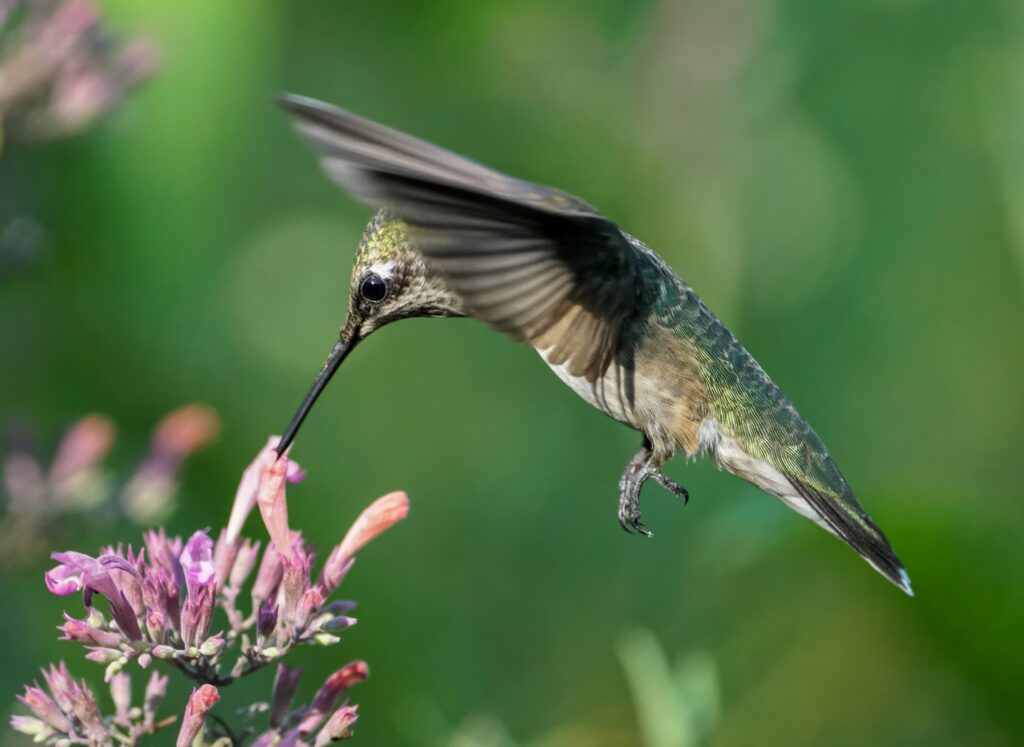
Hummingbird nectaring Agastache.
Yarrow (Achillea species)
I came late to the Yarrow party. I kept planting them and killing them. What I eventually learned is that I overwatered them. The secret to thriving Yarrow is to plant them and then ignore them. I have both natives and a colored (yellow) cultivar, and both are visited by tiny bees and small butterflies.
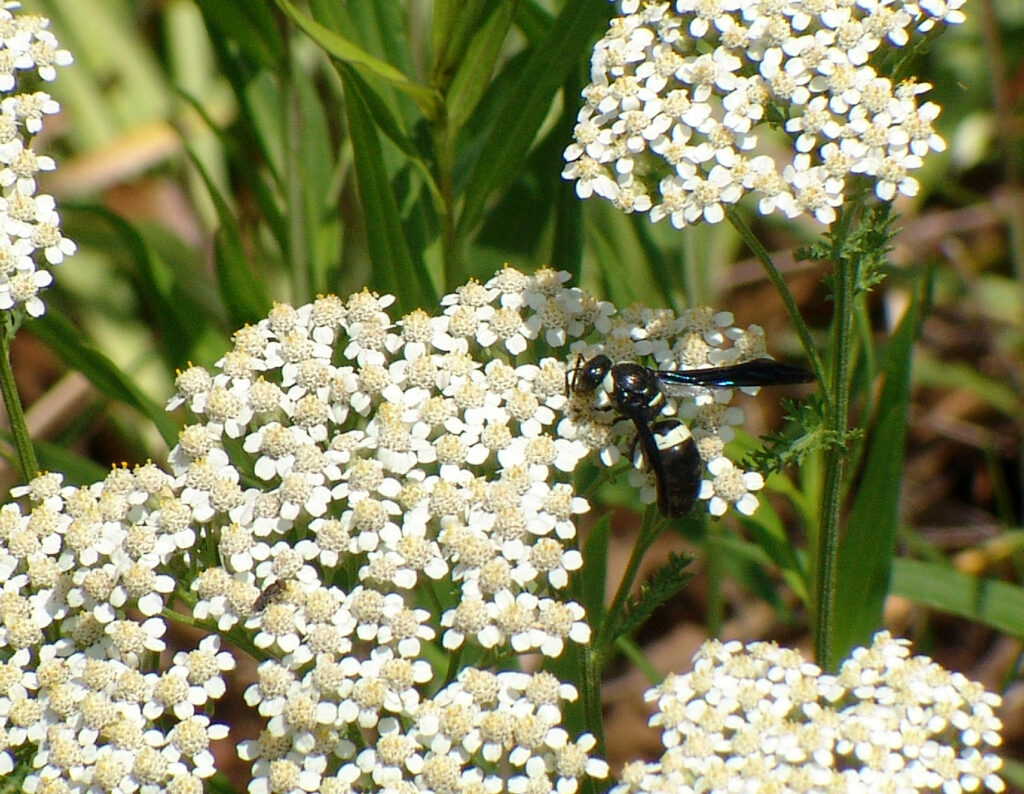
Native wasp on Yarrow.
Meet Leslie Miller

Leslie Ann Miller shares 3.5 acres in rural Oklahoma with birds, butterflies and wide variety of animals. She is currently transforming her yard with plantings…
Leslie's Recent Posts
Plants That Will Feed Hummingbirds Through the Dry Spells
Planting for Rain Gardens: Turning Runoff into Habitat
Membership Has Its Perks

- Ask The Expert Questions
- Newsletter Archive
- PlantersPlace Magazine
- Members Photo Gallery
- Product Ratings & Reviews
- Garden Club Samples
Here’s more information about gardening that you’re going to want

Watch a Gardening Video
Learn About Osmocote Products
Read a Gardening Blog